Delhi govt’s Rs 3.2 crore cloud-seeding experiment fails, experts call it costly, unsustainable

New Delhi: Despite high hopes and a hefty budget, Delhi government's much-publicised cloud-seeding experiment has failed to bring significant rainfall, leaving experts questioning the efficacy of the initiative.
The Delhi government’s cloud seeding trials, conducted on Tuesday, have been described as a “hugely expensive, temporary and unsustainable” measure to tackle the capital’s toxic pollution, according to experts cited by the Times of India. Even if artificial rain briefly reduces pollutants, they warn, pollution levels rebound within a day or two.
Under a memorandum of understanding between the Delhi environment department and IIT-Kanpur, over Rs 3.2 crore has been allocated for five cloud-seeding trials — roughly Rs 64 lakh per trial. Three trials conducted in north Delhi failed to produce any major rainfall. Meanwhile, the city’s Air Quality Index (AQI) has continued to hover in the ‘very poor’ to ‘poor’ range.
Anumita Roychowdhury, Executive Director of Research and Advocacy at the Centre for Science and Environment, noted that substantial rainfall has yet to be recorded after cloud seeding. “Even if the rains wash out the pollutants, the pollution will bounce back quickly. The impact lasts from hours to a couple of days,” TOI quoted her as saying.
Roychowdhury added that the initiative is not sustainable and cannot be repeated throughout the winter. She emphasised that investments should focus on reducing emissions at the source for long-term improvements in air quality and public health.
Sunil Dahiya, founder and lead analyst of the think tank EnviroCatalysts, said that improving air quality requires tackling sector-specific emissions from transport, power, and construction. He added that no real impact can be achieved without addressing these sources.
"Cosmetic measures may create short-term visibility benefits but are not sustainable solutions. The focus should instead be on coordinated action across states and agencies through an airshed-based approach that targets the actual sources of pollution," TOI quoted him as saying.
Environmental activist Bhavreen Kandhari pointed out that Delhi’s atmosphere already had enough moisture due to a western disturbance, which naturally brings rain. “Under such circumstances, cloud seeding adds little scientific value; it becomes a costly experiment chasing what nature is already prepared to deliver. Clean air will not come from artificial rain, but from sustained reductions in emissions, dust control, and responsible policy," Kandhari added.
While cloud seeding may seem futuristic, experts stress that Delhi’s true challenge is on the ground, not in the sky. With increasing construction dust, vehicle emissions, and industrial pollution, the city’s air quality cannot be improved through one-off measures. Sustainable progress, they say, depends on strict enforcement of pollution control norms, coordinated regional action, and long-term policy initiatives.
Let the Truth be known. If you read VB and like VB, please be a VB Supporter and Help us deliver the Truth to one and all.
Pawan Khera denied anticipatory bail in passport case: Cong stands up for senior member
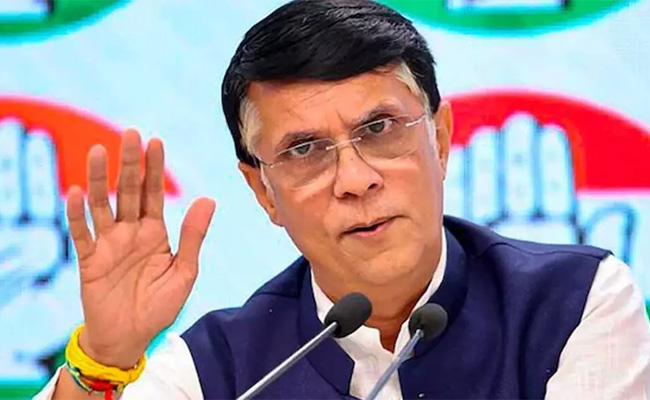
New Delhi: The Congress party has stood by Pawan Khera, the Chairman of the party’s Media and Publicity Department, expressing confidence that regardless of hurdles like politics of threat and intimidation, justice would emerge victorious.
Khera was denied anticipatory bail by the Gauhati High Court on Friday in the case filed against him by Assam Chief Minister Himanta Biswa Sarma's wife Riniki Bhuyan Sarma for alleging that she possessed not only multiple passports but also undisclosed properties abroad.
Senior Congress leader Jairam Ramesh has said in a post in Hindi on his ‘X’ account, “The entire Indian National Congress stands in solidarity with Pawan Khera, the Chairman of its Media and Publicity Department. The process to challenge the Gauhati High Court’s decision in the Supreme Court is underway.” In the post, which he put up on Friday, Ramesh has added, “We are confident that justice will prevail over the politics of threats, intimidation, and harassment.”
Bhuyan Sarma has lodged also an FIR seeking legal action against Pawan Khera for his allegations that she possesses passports of three countries and owns a company in the US, which had invested Rs. 50,000 crores. She has filed criminal cases against the Congress leader at the Guwahati Crime Branch Police Station under various sections of the Bharatiya Nyaya Sanhita (BNS).