Delhi HC allows reopening of Nizamuddin Markaz during Ramzan
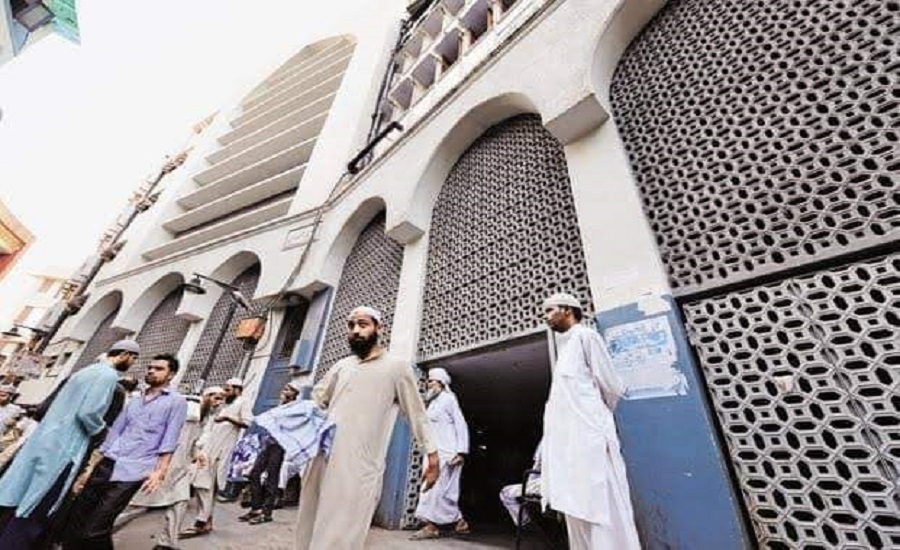
New Delhi, Apr 1: The Delhi High Court on Friday allowed the re-opening of certain areas of Nizamuddin Markaz, where the Tablighi Jamaat congregation was held in March 2020 amid the COVID-19 pandemic and has remained shut since then, to enable devotees to offer prayers during the month of Ramzan.
Justice Jasmeet Singh, who was hearing a plea by the Delhi Waqf Board seeking a direction to open the mosque for the holy month, clarified that no "Tablighi activities" and lectures can take place on the premises and only prayers can be offered.
"It is directed that for Ramadan, namaz and religious prayers shall be permitted to be offered on the ground floor and four floors at Masjid Bangle Wali. This arrangement is only for the one month of Ramzan culminating with Eid Ul Fitr," ordered the court.
"Religious prayers and namaz (are allowed) but no Tablighi activities. Let's not dilute it. There will be no lectures. Prayers can be made. But no lectures," the court stated.
It added that the instant permission was in continuation of the March 16 order which imposed various conditions for the reopening of the premises for the ocassion of Shab-e-Bharat.
The court further directed the installation of CCTV cameras at the entry, exit and stairs of each floor of the premises and said that it shall be the responsibility of the markaz management to ensure that the cameras are fully functional during the period of Ramzan.
For the ocassion of Shab-e-Bharat, the court had removed the 100-person limit at one floor and said it has been agreed that the management of the mosque will ensure that COVID-19 protocols and social distancing will be followed while allowing devotees to enter the mosque to offer namaz.
Lawyer Rajat Nair, appearing for Delhi police and central government, opposed the grant of permission to offer prayers on the fourth floor and said that mosque was only restricted to the ground floor which is borne out of the site plan.
"If there are more floors, there is more space... If there is a reason (to oppose opening of the fourth floor), tell us. More surface area, better it is. More area is always conducive," the court remarked.
The judge stated that as per the joint inspection report, the fourth floor was part of the masjid area and the present observations are only prima face and subject to adjudication.
Central government lawyer also said that no "Tablighi activities" and lectures can be permitted in the markaz and only prayers are allowed.
Senior advocate Sanjoy Ghose, appearing for the petitioner, and senior advocate Rebecca John, representing the management of the markaz, urged the court to permit offering of prayers on the fourth floor as well.
The application for reopening the markaz was filed in the Board's 2021 petition which has sought the reopening of the premises on the ground that even after unlock-1 guidelines permitted religious places outside containment zones to be opened, the Markaz -- comprising the Masjid Bangle Wali, Madarsa Kashif-ul-Uloom, and attached hostel -- continues to be locked up.
The high court had earlier asked the petitioner, represented through advocate Waqeeh Shafiq, to file an application before the SHO of Hazrat Nizamuddin Police Station seeking permission to open the other three floors of Nizamuddin Markaz to enable devotees to offer prayers during the two occasions.
The Central government, in its affidavit, has opposed fully re-opening the Nizamuddin Markaz and stated that only a few people may be allowed to offer prayers on certain religious occasions.
The counsel for the Delhi Waqf Board has argued that the mosque, which is under the lock of Delhi Police, should be opened as the Delhi Disaster Management Authority (DDMA) has now lifted all restrictions that were imposed on account of the pandemic.
Several FIRs were registered under the Epidemic Diseases Act, the Disaster Management Act, the Foreigners Act and various provisions of the penal code in connection with the Tablighi Jamaat event held at the Nizamuddin Markaz and the subsequent stay of foreigners there during the COVID-19 lockdown in 2020.
Let the Truth be known. If you read VB and like VB, please be a VB Supporter and Help us deliver the Truth to one and all.
NEET-UG: 2 more held, role of several NTA officers under scanner; CBI focussing on source of leak
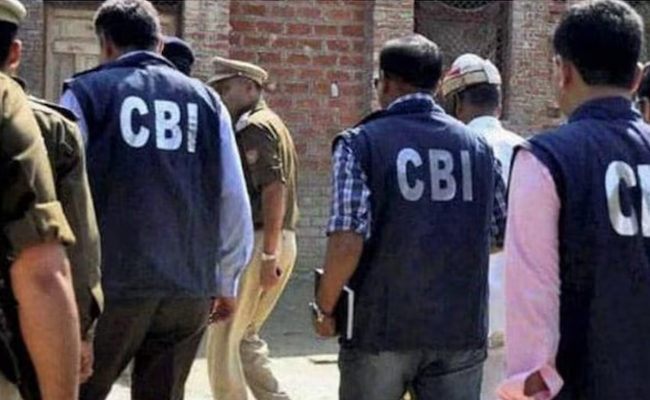
New Delhi (PTI): The CBI has arrested two more persons in connection with the NEET (UG) paper-leak case, with the role of several officers of the National Testing Agency (NTA) and other organisations, who had access to the printing press where the papers were printed, coming under the scanner, officials said on Thursday.
The agency has arrested Dhananjay Lokhanda from Ahilyanagar and Manisha Waghmare from Pune and conducted searches at 14 locations across the country in the last 24 hours, they said.
The CBI is focussing on identifying the source of the leak that has caused massive disappointment to lakhs of aspirants eyeing a seat in undergraduate medical courses, which are allotted after the highly-competitive examination, the officials said.
According to the CBI probe so far, the involvement of public servants in the leak cannot be ruled out.
The Central Bureau of Investigation (CBI) has arrested three individuals from Jaipur -- Mangilal Biwal, Vikas Biwal and Dinesh Biwal -- along with Yash Yadav from Gurugram and Shubham Khairnar from Nashik.
Khairnar was in touch with Yadav and informed him in April that Mangilal Biwal was ready to pay Rs 10-12 lakh for arranging leaked NEET (UG) 2026 questions for his younger son.
Khairnar allegedly provided 500 to 600 questions from the leaked paper to Yadav, the officials said, adding that the questions could have helped score enough marks to get a seat in a reputed medical college.
Mangilal Biwal allegedly procured the paper from Yadav, who was known to his elder son Vikas Biwal from an NEET coaching in Rajasthan's Sikar. The deal between Mangilal Biwal and Yadav was for Rs 10 lakh, if 150 questions from the question bank matched with those in the National Eligibility-cum-Entrance Test (NEET) paper, the officials said.
Mangilal Biwal shared the paper with his son and further distributed it among relatives.
Yadav also told Vikas Biwal to find additional candidates for the questions to recover some of the money that he had spent on getting those, the officials said.
An analysis of digital devices has given the agency incriminating chats, leaked question papers and other digital evidence. The CBI will subject the devices to a forensic examination to get the deleted data, the officials said.
The federal agency has registered an FIR and formed teams to probe the alleged NEET (UG) paper leak that resulted in the cancellation of the exam held on May 3.
The NEET (UG) 2026 was conducted across 551 Indian cities and at 14 overseas centres. Nearly 23 lakh candidates had registered for the test, which was administered by the NTA at centres across the country.
According to the NTA, information regarding alleged malpractice was received on the evening of May 7, four days after the examination was held. The NTA said the inputs were escalated to central agencies the following morning for "independent verification and necessary action".
The Rajasthan Police's Special Operations Group (SOG) has claimed that a "guess paper" for chemistry, allegedly circulated among students ahead of the examination, had approximately 410 questions, including roughly 120 that appeared in the test.