Delhi HC allows woman's plea to abort 23 week plus abnormal twin foetus
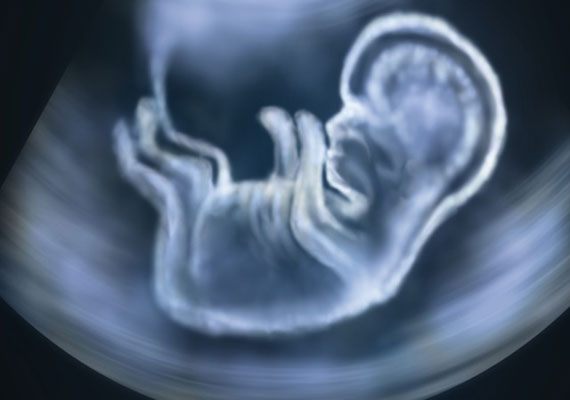
New Delhi, May 25: The Delhi High Court Tuesday allowed a woman to abort 23 week pregnancy after an AIIMS medical board said the twin foetus she was carrying did suffer from abnormalities and once born would face long term developmental issues.
The All India Institute of Medical Sciences (AIIMS) medical board also told the high court that the termination procedure would be "reasonably safe" at the present stage of gestation of the pregnancy.
In view of the board's report, Justice Rekha Palli allowed the woman to terminate her pregnancy and disposed of her plea.
Both the woman and her husband were present during the proceedings on Tuesday and said they were aware of the risks associated with the woman, in her plea, had sought permission for abortion as her twin foetus suffered from 'dandy walker malformation', a rare congenital brain abnormality.
The court had asked AIIMS to constitute a board, examine the woman and submit a report to the court by May 24 after the petitioner and her husband said that their doctors have said that after 24 weeks of gestation, abortion would not be advisable.
According to the petition, 'dandy walker malformation' is a rare brain condition in which the part joining the two hemispheres of the cerebellum does not fully form.
The couple had told the court on May 20 that they initially found about the malformation on April 28, but their doctors wanted to confirm the diagnosis and that is why they took time to file a petition.
They also said that they did not know earlier that they would require a court order to abort a pregnancy which was at such an advanced stage and got to know about this only when the doctors said that an abortion can be carried out only on orders of a court.
Let the Truth be known. If you read VB and like VB, please be a VB Supporter and Help us deliver the Truth to one and all.
Sujit Nair raises concerns over speculation of DMK-AIADMK understanding to block TVK
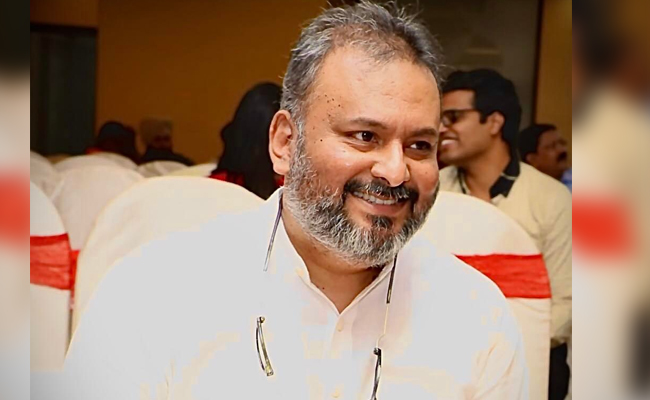
Chennai: Journalist and political commentator Sujit Nair has expressed concern over speculation that the Dravida Munnetra Kazhagam and the All India Anna Dravida Munnetra Kazhagam could explore a post-poll understanding to prevent Vijay-led Tamilaga Vettri Kazhagam from forming the government in Tamil Nadu.
In a social media post, Sujit Nair said the election verdict in Tamil Nadu reflected a clear public demand for political change and argued that the mandate should be respected irrespective of political preferences.
Referring to reports and political discussions surrounding a possible understanding between the DMK and AIADMK, he said he hoped such developments remained only speculative conversations and did not turn into reality.
Nair stated that if such an alliance were to take shape, it would raise serious questions about ideological politics in the country. He said TVK had emerged through a democratic electoral process and that the legitimacy to govern in a parliamentary democracy comes from the people’s verdict.
According to him, attempts to prevent an electoral winner from forming the government through unexpected political arrangements may be constitutionally valid, but many people could view them as politically opportunistic.
He further said that such a move could particularly affect the political image of the DMK, which has historically projected itself around ideology, social justice and opposition politics. Nair said that in ideological terms, the DMK appeared closer to TVK than to the AIADMK, and joining hands with its long-time political rival only to remain in power could weaken its broader political narrative.
He added that the same questions would apply to the AIADMK as well, as the party had spent decades positioning itself against the DMK and such an arrangement could create discomfort among its cadre and supporters.
Drawing a comparison with Maharashtra politics in 2019, Nair said he had expressed similar views when the Shiv Sena formed an alliance with the Indian National Congress and the Nationalist Congress Party after the Assembly elections.
He said post-poll alliances between long-standing political rivals often create a public perception that ideology and electoral mandates become secondary when political power equations come into play.
Nair also said such developments increase public cynicism towards politics and reinforce the belief among voters that ideology is often sidelined after elections.
He maintained that the Tamil Nadu verdict was emphatic and said respecting both the spirit and substance of the mandate was important for the credibility of democratic politics.