Delhi HC asks Centre why GST on air purifiers can’t be lowered
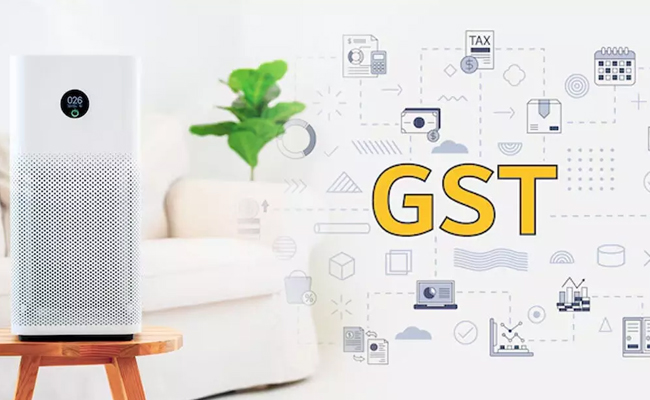
New Delhi (PTI): The Delhi High Court on Friday asked the Centre why it cannot reduce the GST charged on air purifiers to make it affordable for the common man in view of the worsening air quality in the national capital and nearby areas.
The court’s query came after the counsel for the Centre submitted that the GST Council is a constitutional body and it is no longer a unilateral levy of Delhi. It is a federal levy in all over India so all 30 states and union territories have to agree and involves union finance minister as its member.
Additional Solicitor General N Venkataraman, representing the Centre, said voting has to be done physically and it cannot be done through video conferencing and added that the government will file an extremely detailed counter affidavit in the matter.
A vacation bench of Justices Vikas Mahajan and Vinod Kumar granted 10 days' time to the central government to file its reply to the petition and listed the matter for further hearing on January 9.
“But the court's concern was that, having regard to the situation in Delhi and surrounding areas, why the goods and services tax (GST) should not be reduced from 18 percent to 5 percent.
“Whatever way you want to do you, may do that and find a way out. The price range is starting from Rs 10-12,000 and goes up to Rs 60,000, it is beyond the reach of common man. Why not bring it down to a reasonable level which is in the reach of a common man,” the bench said.
The court was hearing a public interest litigation (PIL) seeking directions to the central government to classify air purifiers as "medical devices" and reduce the goods and services tax (GST) to the five per cent slab. Air purifiers are currently taxed at 18 per cent.
The petition by advocate Kapil Madan said purifiers cannot be treated as luxury items in view of the "extreme emergency crisis" caused by severe air pollution in Delhi.
During the hearing, the bench told the petitioner that in the last hearing also, the court was with him because the issue raised is such that “everybody is concerned”.
Agreeing to this, the ASG said, “certainly milords our hearts are there, no doubt”.
He said this matter was deliberated at the highest level involving the finance minister and they had an urgent meeting on Thursday but have some concerns with this writ petition.
The law officer said if the petitioner wants this petition to be treated as a representation by the GST Council through the secretariat, the court may pass an order today itself.
If the petitioner wants to contest the petition, we want to file an extremely detailed counter affidavit. It’s a loaded petition and we really want to know who is behind it, he added.
“Two prayers have nothing to do with GST. Health Ministry is not a party to the petition and a prayer is sought regarding it….
“Somebody wants a monopoly in air purifiers, we don't know. We are really concerned about it. Only on December 12, 2025, the parliamentary standing committee passed the proposal to look into the matter of GST but MoEF is not a party. Standing committee is a constitutional arm under the legislature and there is a process involved and how can the process be scuttled,” the ASG submitted.
He urged the court to grant some time to file a counter affidavit as they were not able to react in two days’ time.
Petitioner Madan said "Maybe the counsel appearing for the Centre has not seen the notification by which slabs have been imposed… I will say that on bare reading of notification, I will convince the court that they are taxing air purifiers in the wrong slab”.
To this, the bench said today the court cannot say that they are taxing it under a wrong slab without calling for a counter affidavit. It said the issue requires deliberations and let it go before the roster bench.
Madan read the notification concerned and said, "I have shown an entry which talks about breathing devices. All medical devices are falling in schedule 1".
The court asked the ASG as to what is the difficulty in conducting the meeting of the GST Council and then they can take a call.
The ASG said, “This will open up a pandora box. The committee has recommended something to us. That’s the process. We are not saying anything at the moment, whether we will reduce or not. I am not giving any commitment…. We are scared from the constitutional perceptive. Let this be converted into representation and sent to the Council."
On December 24, the court had directed the GST Council to meet at the earliest and consider lowering or abolishing GST on air purifiers.
The matter was listed today to inform the court as to when the Council can meet and whether it was possible for the Council to meet virtually, if not physically.
Earlier, the high court had expressed displeasure over the authorities doing nothing to grant exemption from taxes on air purifiers in this "emergency situation" when the air quality index (AQI) is 'very poor'.
The court had noted the petitioner's contention that air purifiers qualify as medical devices in terms of the notification of February 2020 which has been issued under the Drugs and Cosmetics Act.
The petitioner further said that on medical devices, GST was being charged at five percent whereas it was 18 percent for air purifiers. He sought a direction to the authorities to consider charging five percent on air purifiers as well considering the ever worsening air condition in Delhi and nearby areas.
Let the Truth be known. If you read VB and like VB, please be a VB Supporter and Help us deliver the Truth to one and all.
Davangere South bypoll: Congress ahead by narrow lead after 14th round
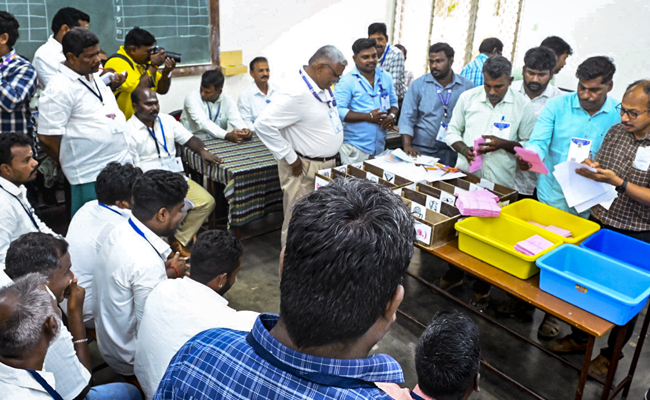
Davangere: The Congress candidate is leading in the Davangere South Assembly by-election after the completion of the 14th round of counting.
According to the latest figures, the Congress has secured 46,460 votes, while the BJP stands at 39,037 votes, trailing by 7,423 votes.
The SDPI candidate has polled 15,303 votes so far.
Counting is still underway, and final results are awaited.