Delhi HC asks J&K MP Engineer Rashid to deposit Rs 4 lakh for going to Parliament in custody
Terror funding case
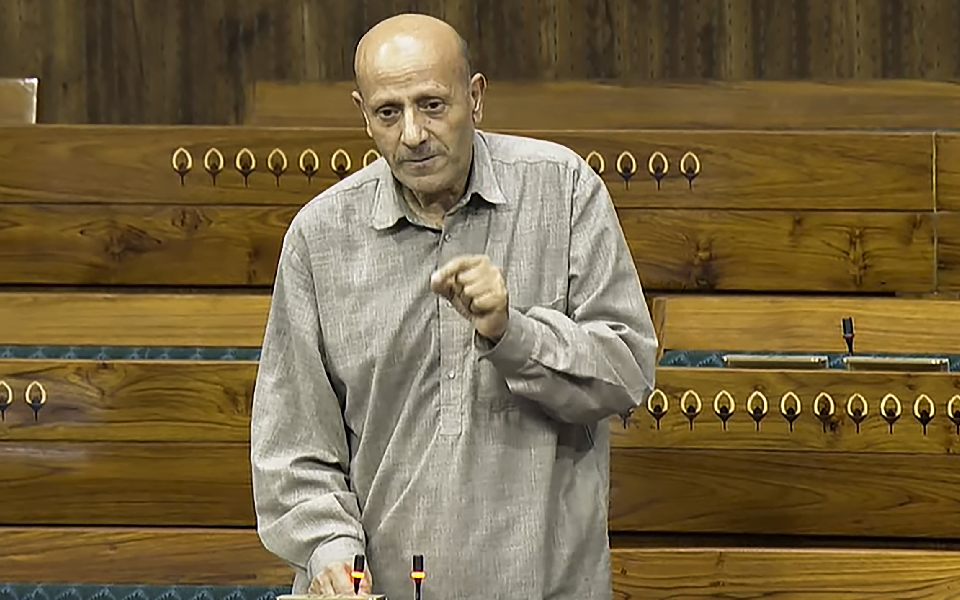
New Delhi, Mar 29 (PTI): The Delhi High Court on Friday asked Jammu and Kashmir MP Abdul Rashid Sheikh, alias Engineer Rashid, to deposit Rs 4 lakh with the prison authorities as travel expenses for attending Parliament.
A bench of Justices Chandra Dhari Singh and Anup Jairam Bhambhani on March 25 allowed him to attend the ongoing Parliament session "in-custody" till April 4 and rejected the NIA's apprehension that he was a flight risk.
Rashid counsel on Friday said he had already deposited Rs 1.45 lakh with the authorities and would deposit the remaining Rs 2.55 lakh within three days.
The bench said upon depositing the amount, he would be taken to the Parliament to attend the session.
The court observed it did not want the purpose of its order on allowing Rashid to attend the Parliament session to be defeated and therefore it was trying to strike a balance between the interest of both the parties.
Rashid, the court said, should at least deposit 50 per cent of the total amount of Rs 8.74 lakh and posted the matter on May 19.
The NIA, in the meantime, was directed to respond to Rashid's plea for a waiver of the condition to bear travel expenses to attend the Parliament session within four weeks.
Rashid said the March 25 order granting him permission to attend Parliament was uploaded on the court’s website on March 26 afternoon and in the evening his counsel received an e-mail from the jail authorities that he was required to pay around Rs 1.45 lakh each day for travel and other arrangements.
It summed up to Rs 8.74 lakh for the six-day duration, the plea said.
Rashid claimed of not being in afinancial position to bear the “excessively high” cost and he was going to fulfil his constitutional duties and not allowed to be prejudiced with such high costs.
His plea was opposed by the NIA counsel who said it was a gross misuse of the law.
Rashid's counsel said the parliamentarian did not have money to give to the authorities which hampered him from attending the Parliament sessions and he would have to crowd fund the amount.
While allowing him to attend Parliament, the court had asked plain-clothed policemen to escort Rashid from prison to Parliament on days of the Lok Sabha session between March 26 and April 4 aside from bearing the expenses for the to-and-fro travel and other arrangements.
Rashid, who is facing trial under the Unlawful Activities (Prevention) Act (UAPA) in a 2017 terror funding case, had challenged a March 10 trial court order refusing him custody parole or interim bail to attend Lok Sabha proceedings till April 4.
In the high court, he gave up his plea for interim bail or custody parole and sought to attend the Parliament sessions "in-custody".
The NIA had opposed the plea saying by allowing him to attend Parliament, would enable him a platform to air his opinions which he could misuse.
The high court, however, said the control of parliamentary proceedings was within the remit of the Lok Sabha speaker and it had no doubt that the proceedings would be conducted with requisite discipline.
The Baramulla MP, who defeated Omar Abdullah in the 2024 Lok Sabha polls, is facing trial in a terror funding case with allegations that he funded separatists and terror groups in Jammu and Kashmir.
He has been lodged in Delhi's Tihar Jail since 2019 after the NIA arrested him in the 2017 terror-funding case. He was granted interim bail for one month in September last year to campaign in the Jammu and Kashmir Assembly election.
The NIA's FIR alleged Rashid's name cropped up during the interrogation of businessman and co-accused Zahoor Watali.
After being chargesheeted in October 2019, a special NIA court framed charges against Rashid and others in March 2022 under Sections 120B (criminal conspiracy), 121 (waging war against the government), and 124A (sedition) of the Indian Penal Code and for offences relating to terrorist acts and terror funding under UAPA.
Let the Truth be known. If you read VB and like VB, please be a VB Supporter and Help us deliver the Truth to one and all.
SC refuses to adjourn hearing on pleas against EC law, says this matter is more important
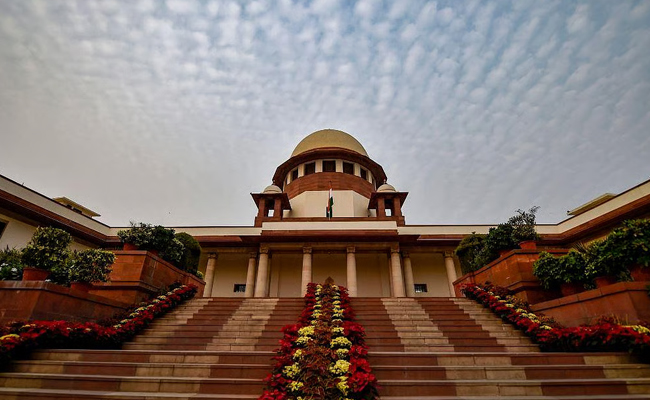
New Delhi (PTI): The Supreme Court on Wednesday refused to accede to the Centre's request to adjourn the hearing on pleas challenging the constitutional validity of a 2023 law that removed the CJI from a committee responsible for appointing the chief election commissioner and the deputies, saying the matter is "more important" than the Sabarimala case.
A nine-judge constitution bench headed by Chief Justice Surya Kant is currently hearing petitions regarding discrimination against women at religious sites, including the Sabarimala temple in Kerala, as well as the scope of religious freedom across various faiths.
A bench comprising justices Dipankar Datta and Satish Chandra Sharma turned down the request by Solicitor General Tushar Mehta, appearing for the Centre, to adjourn the hearing on the ground that he was currently occupied before a nine-judge bench in the Sabarimala reference case.
Referring to the gravity of the current challenge to the Chief Election Commissioner and Other Election Commissioners (Appointment, Conditions of Service and Term of Office) Act, 2023, Justice Datta said, "This matter is more important than any other matter."
"Let your (solicitor general's) associates take notes today. Let the petitioners start. All matters are important. We read in the newspapers that there is an observation that the PIL in Sabarimala should not have been entertained by the court. So, with due respect to the judges, nine judges are occupied in a matter where there is an observation that it should not have been entertained in the first place," Justice Datta said.
ALSO READ: Girl mauled to death by stray dogs in Punjab's Hoshiarpur
The bench then directed the petitioners to conclude their arguments by Thursday, allowing the Centre to present its submissions on a subsequent date. The bench then proceeded with the hearing which is underway.
Earlier on March 20, CJI Surya Kant recused himself from hearing the petitions. "I will be accused of conflict of interest. There is a conflict of interest," the CJI had said. The law, enacted by Parliament in December 2023, came months after a landmark verdict by which the apex court directed that election commissioners be appointed by a committee comprising the prime minister, the leader of the Opposition, and the chief justice of India.
The bench had said that the system will remain in force till a law is enacted.
Under the 2023 Act, the selection committee consists of the prime minister, a Union minister nominated by the prime minister and the leader of Opposition (or leader of the largest opposition party in the Lok Sabha).
The PILs said the exclusion of the CJI from the panel undermines the independence of the appointment process.
The law has been challenged by multiple petitioners, including Congress leader Jaya Thakur and the Association for Democratic Reforms.
Earlier, the Centre defended in the Supreme Court the appointment of two new election commissioners under the 2023 law that excludes the chief justice of India from the selection committee, saying the independence of the Election Commission does not arise from the presence of a judicial member on the committee.
In an affidavit filed in the apex court, the Union law ministry rejected the petitioner's claim that the two election commissioners were hastily appointed on March 14, 2024, to "pre-empt" the orders of the top court the next day, when the matters challenging the 2023 law were listed for hearing on interim relief.
The apex court also refused to stay the appointment of new election commissioners under the 2023 law.
A five-judge constitution bench had in March 2023 ruled that the chief election commissioner and election commissioners shall be appointed on the advice of a committee comprising the prime minister, the leader of the Opposition in the Lok Sabha and the chief justice of India.