Delhi HC backs Uniform Civil Code, says ‘traditional barriers of religion are slowly dissipating’
New Delhi, July 9: Favouring the introduction of Uniform Civil Code (UCC), the Delhi High Court has said the Indian youth need not be forced to struggle with issues arising due to conflicts in various personal laws in relation to marriage and divorce.
The modern Indian society was gradually becoming homogenous, the traditional barriers of religion, community and caste are slowly dissipating and thus UCC ought not to remain a mere hope , Justice Prathiba M Singh stated in an order dated July 7.
The youth of India belonging to various communities, tribes, castes or religions who solemnise their marriages ought not to be forced to struggle with issues arising due to conflicts in various personal laws, especially in relation to marriage and divorce," the order said.
While referring to several decisions of the Supreme court on the need for UCC, including the historical Shah Bano case of 1985, the high court said: "The hope expressed in Article 44 of the Constitution that the State shall secure for its citizens Uniform Civil Code ought not to remain a mere hope.
In the Shah Bano case, the apex court had said that a common civil code would help the cause of national integration by removing disparate loyalties to laws having conflicting ideologies. It had also observed that the State was charged with the duty of securing UCC for the citizens of the country.
The high court observed that the need for UCC was reiterated from time to time by the Supreme Court, however, it is unclear as to what steps have been taken in this regard till date .
It directed that a copy of the order be communicated to the Secretary, Ministry of Law & Justice, Government of India, for necessary action as deemed appropriate.
The court was dealing as to whether the marriage between the parties who belonged to the Meena community were excluded from the ambit of the Hindu Marriage Act, 1955 (HMA).
When the husband sought divorce, the wife contended that HMA did not apply to them as Meena community was a notified Scheduled Tribe in Rajasthan.
The court rejected the wife's stand and said that cases like the present one highlight the need for such a Code - 'common to all', which would enable uniform principles being applied in respect of aspects such as marriage, divorce, succession etc.
It recorded that since inception of the litigation, both parties have pleaded that their marriage was solemnised according to Hindu rites and ceremonies and they follow Hindu customs.
The same, the court noted, as reflected in several documents including the marriage invitation and complaint filed under domestic violence act.
The court said that although there was no definition of Hindu, the Supreme Court has held that if members of Tribes are Hinduised, HMA would be applicable to them.
Codified statutes and laws provide for various protections to parties against any unregulated practices from being adopted. In this day and age, relegating parties to customary Courts when they themselves admit that they are following Hindu customs and traditions would be antithetical to the purpose behind enacting a statute like the HMA, 1955, the court opined.
The court also stated that there nothing was placed before it to show that the Meena community Tribe has a specialised Court with proper procedures to deal with these issues.
Let the Truth be known. If you read VB and like VB, please be a VB Supporter and Help us deliver the Truth to one and all.
Primary accused in 96.6 pc POCSO cases were close acquaintances: NCRB
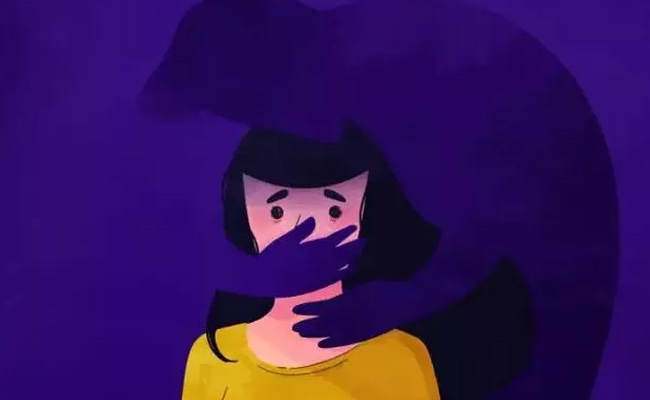
New Delhi (PTI): In 96.6 per cent of 44,126 cases of sexual abuse of minors, close acquaintances have emerged as the primary offenders, according to the latest data released by the NCRB.
In its report 'Crime in India 2024' released by the National Crime Records Bureau (NCRB), 44,126 total cases have been registered under the Prevention of Children from Sexual Offences (POCSO) Act under Sections 4 and 6 which pertain to penetrative sexual assault on minors during the year across the country.
The figures present a grim picture as close acquaintances emerged as primary accused in 42,634 (around 96.6 per cent) of the 44,126 total cases falling in that category, according to the latest NCRB data.
The data shows that family members were involved in 3,658 cases, while family friends, neighbours, employers or other known persons were named in 16,668 cases.
The largest share came from friends, online friends or live-in partners acting on the pretext of marriage, with 22,308 cases.
Cases where the offender was unknown or not identified stood at mere 1,492, or 3.4 per cent of the total.
Among states, Tamil Nadu reported the highest number of POCSO cases at 5,320, followed by Maharashtra at 4,829 and Madhya Pradesh at 3,721. Uttar Pradesh was next with 3,671 cases.
In Union territories, Delhi accounted for the highest number of cases at 1,038, followed by Jammu and Kashmir at 228 and Puducherry at 82. The Andaman and Nicobar Islands reported 77 cases.
The data also shows that Andhra Pradesh, Arunachal Pradesh, Himachal Pradesh, Nagaland, Sikkim, Uttarakhand, Tripura and several Union territories, including Chandigarh, Andaman and Nicobar Islands, Dadra and Nagar Haveli and Daman and Diu, Lakshadweep, Ladakh and Puducherry, reported 100 per cent of cases involving known offenders.