Delhi HC directs GST Council to meet at earliest, consider lowering GST on air purifiers
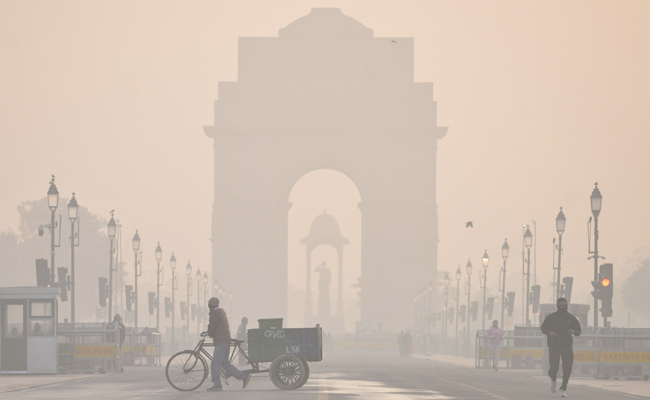
New Delhi (PTI): The Delhi High Court on Wednesday directed the GST Council to meet at the earliest and consider lowering or abolishing goods and services tax on air purifiers in view of worsening air quality in the national capital.
A bench of Chief Justice Devendra Kumar Upadhyaya and Justice Tushar Rao Gedela listed the matter for December 26 to enable the counsel for the authorities to inform the court as to when can the council meet.
Earlier in the day, the high court expressed displeasure over the authorities doing nothing to grant exemption from taxes on air purifiers in this "emergency situation" when the air quality index (AQI) is 'very poor'.
ALSO READ: Kumaraswamy seeks Vande Bharat service linking Bengaluru with Goa via coastal Karnataka
The court was hearing a public interest litigation (PIL) seeking directions to the central government to classify air purifiers as "medical devices" and reduce the goods and services tax (GST) to the five per cent slab. Air purifiers are currently taxed at 18 per cent.
The petition by advocate Kapil Madan said that purifiers cannot be treated as luxury items in view of the "extreme emergency crisis" caused by severe air pollution in Delhi.
It contended that access to clean indoor air has become indispensable for health and survival.
"Imposition of GST at the highest slab upon air-purifiers, a device that has become indispensable for securing minimally safe indoor air, renders such equipment financially inaccessible to large segments of the population and thereby inflicts an arbitrary, unreasonable, and constitutionally impermissible burden," the plea said.
Let the Truth be known. If you read VB and like VB, please be a VB Supporter and Help us deliver the Truth to one and all.
Injured Phil Salt returns home for scans

New Delhi (PTI): Royal Challengers Bengaluru opener Phil Salt has returned to England for scans on a finger injury sustained last month.
The injury has kept Salt out of RCB's last three matches, with compatriot Jacob Bethell stepping in at the top of the order.
The 29-year-old is reported to have "damaged a finger on his left hand" while diving to save a boundary at deep backward square leg during RCB's defeat to Delhi Capitals at the M. Chinnaswamy Stadium on April 18.
"Salt, who is centrally contracted by the ECB, has since returned home at the request of England's management and has undergone scans on his finger," ESPNCricinfo reported.
According to the report, both RCB and Salt are hopeful of a speedy recovery and the opener can return to India later this month.
Salt had enjoyed a strong start to the season, amassing 202 runs in six innings at an impressive strike rate of 168.33.
RCB are currently second on the points table behind Punjab Kings. They take on Lucknow Super Giants (LSG) on Thursday next.