Delhi HC for content regulation, says vulgar language on social media needs to be taken seriously
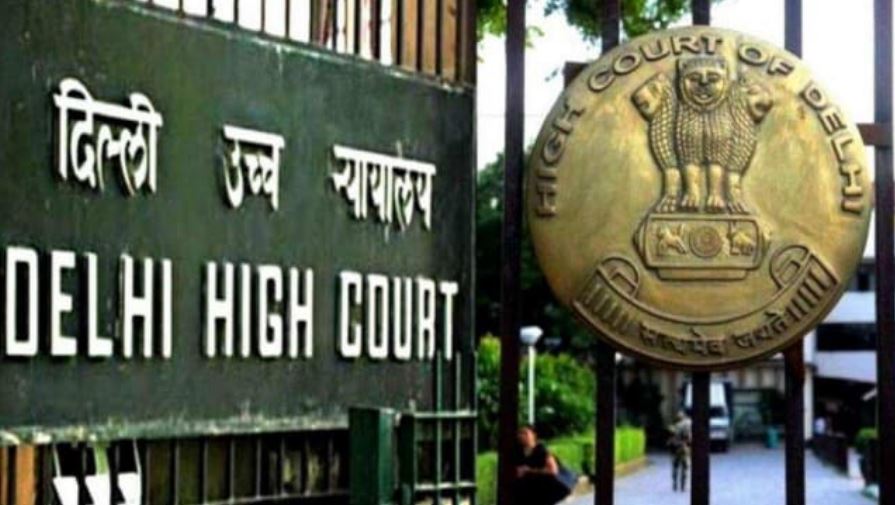
New Delhi, Mar 7: Framing rules and guidelines to regulate the content on social media and OTT platforms needs urgent attention, the Delhi High Court has said, underlining the need for taking seriously the use of vulgar language in public domain and on social media platforms which are open to children of tender age.
Coming down heavily on the language used in TVF web series College Romance', the high court said the use of obscenities in the form of foul language degrades women so they may feel victims as the expletives and obscenities refer to women being objects of sex.
"This court is of the opinion that use of vulgar language including profanity and bad words in public domain and in social media platforms which are open to children of tender age needs to be taken seriously.
"The use of obscene words and foul language in social media platforms have to be regulated when it crosses a particular line, as it can be a true threat to impressionable minds and cannot receive constitutional protection of free speech," Justice Swarana Kanta Sharma said in a 41-page judgement.
The judge said while in schools, offices etc., students and workers can be punished for using profane speech, the authorities also need to regulate "profanity which enters into the domain of indecent speech by a broadcast medium".
The high court's verdict came while upholding an order of the Additional Chief Metropolitan Magistrate (ACMM) asking the Delhi Police to register an FIR against TVF, the show's director Simarpreet Singh and actor Apoorva Arora under the Information Technology Act.
It clarified that the direction to register FIR does not include a direction to arrest any of the accused or petitioner.
The court said the challenge faced by India, as faced by many other countries, for enacting appropriate law, guidelines and rules to regulate the content on social media and on OTT platforms needs urgent attention.
"This court draws the attention of the Ministry of Information and Technology to the situations which are fast emerging on a daily basis and to take steps for enforcing stricter application of its rules qua the intermediaries as notified in Information Technology (Intermediary Guidelines and Digital Media Ethics Code) Rules, 2021 and make any laws or rules as deemed appropriate in its wisdom, in light of the observations made in this judgment," it said.
After watching a few episodes of the series, the court found excessive use of swear words', profane language' and vulgar expletives' were there and the judge had to watch the episodes with the aid of earphones, in the chamber, as the profanity of language was such that it could not have been heard without shocking or alarming the people around and keeping in mind the decorum of language maintained by a common prudent man.
"Most certainly, this court notes that this is not the language that nation's youth or otherwise citizens of this country use, and this language cannot be called the frequently spoken language used in our country," it said.
The court said if the web series using such obscene and abusive words and foul language is allowed to be aired without setting any boundaries, it will fail to send message that a certain standard of decency and civility is expected from electronic media.
"As this court has observed, the impressionable minds consume what they have been served and they will serve the same on the streets, in schools, in their houses and all other places resulting in absence of civilized society. Societal standards fall if no effort is made to ensure that they are upheld. The petty incivilities will certainly lead to declining standard of civility and the fallen language standards will lead to moral depravity," it said.
Justice Sharma said there is no doubt that the courts cannot do moral policing nor do the courts ever want to.
The jurisprudence of judicial restraint, however, cannot remain separate from the civil social sciences and the orders and judgments in different cases, different situations and situations arising for the first time cannot be subject to straight jacket formula and be condemned as moral policing, it said.
The court said the use of profanity is also a moral issue and society has to deal with it by its own means, too.
"However, when the content is shown through social media, the sheer enormous power of electronic media and its reach to people of all ages will certainly invite attention of the court, law enforcement and law making authorities to regulate it. One cannot lean in favour of unrestricted, unfettered freedom of profane, indecent and obscene speech and expression by way of web series without classification of the same," it said.
The court said youth is the most valuable asset of this country who carries on its able shoulders, the responsibility of maintaining the magnificence of the valuable culture including the linguistic pride of this nation.
A web series cannot be allowed to run unhindered taking shade and safety of arguments that no law makes it punishable or some people use such language which has the tendency to corrupt the young minds, and project that the young generation speaks such language, it said.
The court said the Indian cinema which has now also extended to such web series and other short films at social media and OTT platforms, undoubtedly is not the same as was in the old films where the romance between two persons was symbolically shown by showing two birds or flowers meeting on the screen.
When examined in the practical light of common man, this court reaches a conclusion that the majority of this country cannot be said to be using such vulgar, profane, indecent, swear words and expletives as projected in the web series in day-to-day spoken language even in educational institutions.
It said even if a judgment triggers a debate in the society about an issue at the heart of a societal problem, it will serve the ends of justice, that is, the ultimate goal of a judge.
Let the Truth be known. If you read VB and like VB, please be a VB Supporter and Help us deliver the Truth to one and all.
Cong says Modi 'has lost authority to continue as PM', cites Ram Madhav's remarks on oil, tariffs
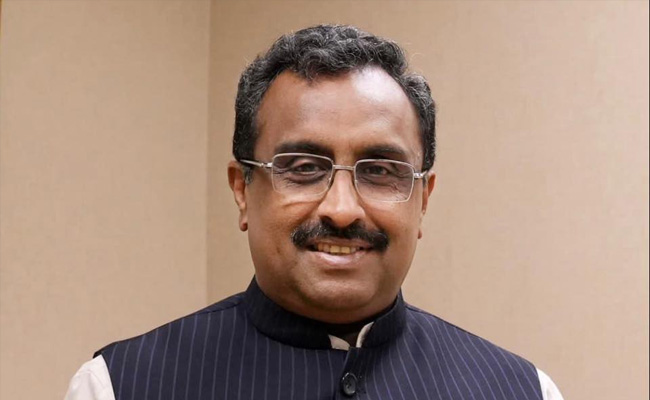
New Delhi (PTI): The Congress on Friday said Narendra Modi has lost his authority to continue as the prime minister, claiming that a senior RSS leader has made a "clear admission" that Modi is "dancing to Washington's tunes".
Congress general secretary, Organisation, K C Venugopal shared a video of RSS leader Ram Madhav on X where the latter says that India agreed to stop buying oil from Iran and Russia and also agreed to higher tariffs imposed by the US.
Madhav, however, later apologised saying what he said was "wrong as India did not agree to stop import of oil from Russia. "What I said was wrong. India didn't agree to stopping import of oil from Russia anytime."
"Also it vigorously protested 50 per cent tariff imposition. I was trying to make a limited counterpoint to the other panellist. But factually incorrect. My apologies," Madhav said in a post on X while sharing his video.
ALSO READ: Noida International Airport appoints Nitu Samra as interim CEO
Madhav along with RSS general secretary Dattatreya Hosabale are on a visit to the United States and attended an event at the Hudson Institute in Washington.
In a post on X, Venugopal said, "Clear admission by a senior RSS leader - PM Modi is dancing to Washington's tunes.
"There was once a time when the US' 7th Fleet was in the Bay of Bengal, and India didn't budge. And then there is today, where a Compromised PM has handed over India's sovereignty to the US," Venugopal said in a post on X.
The Congress leader said this is exactly what Leader of Opposition in Lok Sabha Rahul Gandhi and the entire Opposition has been saying. "India has lost its independent voice on the world stage.
"After this surrender, it's clear that Narendra Modi has lost his authority to continue as Prime Minister," Venugopal said in his post.
In the video shared by Venugopal along with his post, Ram Madhav is heard saying, "India agreed to stop buying oil from Iran. We agreed to stop buying oil from Russia, facing so much criticism from our Indian opposition."
"We agreed to a 50 per cent tariff...Agreed means, we did not say anything. We maintained our patience. 50 per cent tariffs we agreed. Today, in the new trade deal also we agreed for 18 per cent tariffs higher than what it used to be.... I mean, average tariff.
"So, where is India lagging behind in that. What are those issues where India is not doing enough?" Madhav is heard saying in the video during an interactive session at the Hudson Institute.