Delhi HC imposes Rs 20K cost on Centre for not paying pension to 96-year-old freedom fighter
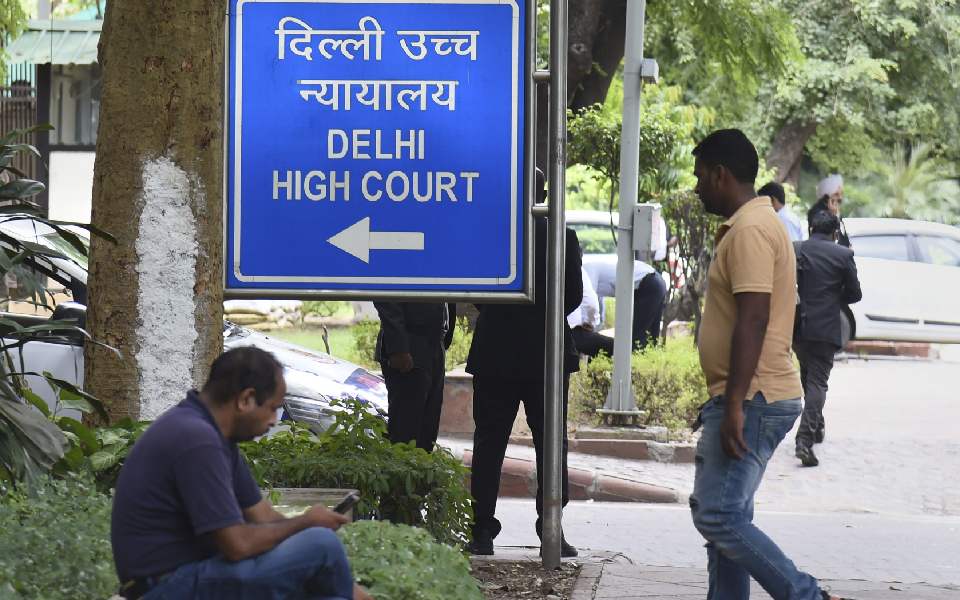
New Delhi, Nov 4: The Delhi High Court has imposed cost of Rs 20,000 on the central government for its "lackadaisical approach" in granting pension to a 96-year-old freedom fighter.
The high court said the case reflected "complete sad state of affairs" as freedom fighter Uttim Lal Singh was made to wait for over 40 years and run from pillar to post to get his rightful pension.
Justice Subramonium Prasad directed the Centre to pay Swatantrata Sainik Samman Pension to Singh within 12 weeks with interest from 1980.
"It is painful to see the way in which the freedom fighters are being treated and the insensitivity shown by the Union of India towards freedom fighter who has fought for the independence of the country," the high court said.
"For the lackadaisical approach of the Union of India, this court deems it fit to impose costs of Rs 20,000 on the Union of India. Let the costs be paid to the petitioner within 6 weeks from today," the court said in its judgement passed on November 2.
It noted that the government of Bihar had recommended the petitioner's case and sent the original documents to the central government in March 1985. However, the documents got lost while they were with the central government.
The court noted that the Bihar government had verified the petitioner's name once again and sent a letter to the central government on July 14, 2022. The pension, however, was not released yet, it said.
"The inaction of the Central Government is actually an insult to the freedom fighter who was declared as a proclaimed offender and probably his entire land would have been attached in the proceedings initiated by the British Government. The very spirit of the pension scheme is being defeated by the stonewall approach of the Government of India which cannot be appreciated by this court," the high court said.
The court was dealing with a petition by Singh who said he was born in 1927 and had participated in the Quit India Movement and other movements associated with the freedom struggle.
It said he was made an accused by the British government and declared a proclaimed officer in September 1943.
He had applied for the Swatantrata Sainik Samman Pension in March 1982 and his name was sent by the Bihar government to the Centre in February 1983. The recommendation was reiterated in September 2009, the plea said.
In November 2017, the central government said Singh's records were not available with the Ministry of Home Affairs and the Bihar government was requested to share verified copies of the relevant documents.
Even after that, several communications were exchanged between various authorities but the petitioner did not get his pension.
Let the Truth be known. If you read VB and like VB, please be a VB Supporter and Help us deliver the Truth to one and all.
Rickelton's ton in vain as SRH beat MI by 6 wickets
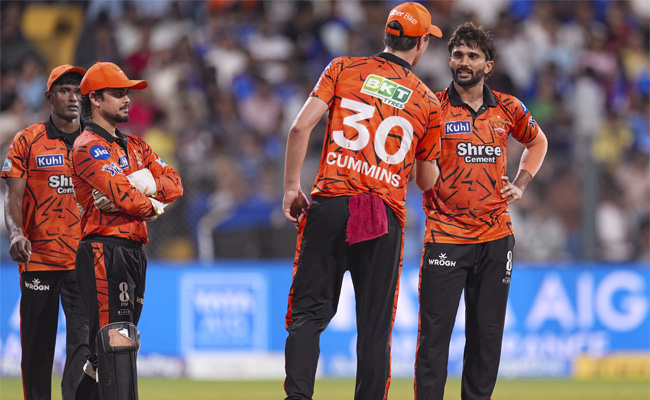
Mumbai (PTI): Ryan Rickelton's whirlwind unbeaten ton was overshadowed by Heinrich Klaasen's unbeaten 65 as Sunrisers Hyderabad defeated Mumbai Indians by six wickets in an IPL match here on Wednesday.
Chasing an imposing 244-run target, Travis Head (76 off 30) and Abhishek Sharma (45 off 24) shared 129 runs for the opening wicket to set the platform for SRH.
Klaasen (65 not out off 30 balls) then displayed his all-round hitting abilities to guide SRH home with the help of Nitish Kumar Reddy (21) and Salil Arora (30 not out off 10) in 18.4 overs.
Earlier, Rickelton's knock powered MI to 243 for five.
MI rode on a 93-run stand between Rickelton (123 not out off 55 balls) and Will Jacks (46 off 22) in 7.1 overs for the opening stand to power the side.
MI skipper Hardik Pandya scored a valuable 31 off 15 balls before being dismissed.
Praful Hinge (2/54), Eshan Malinga (1/29), Sakib Hasan (1/39) and Nitish Kumar Reddy (1/31) were the wicket-takers for SRH.
Brief Scores:
Mumbai Indian: 243 for 5 in 20 overs (Ryan Rickelton 123 not out; Praful Hinge 2/54).
Sunrisers Hyderabad: 249 for 4 in 18.4 overs (Travis Head 76, Heinrich Klaasen 65 not out; AM Ghazanfar 2/51).