Delhi HC refuses to entertain bail plea of PFI leader Abubacker
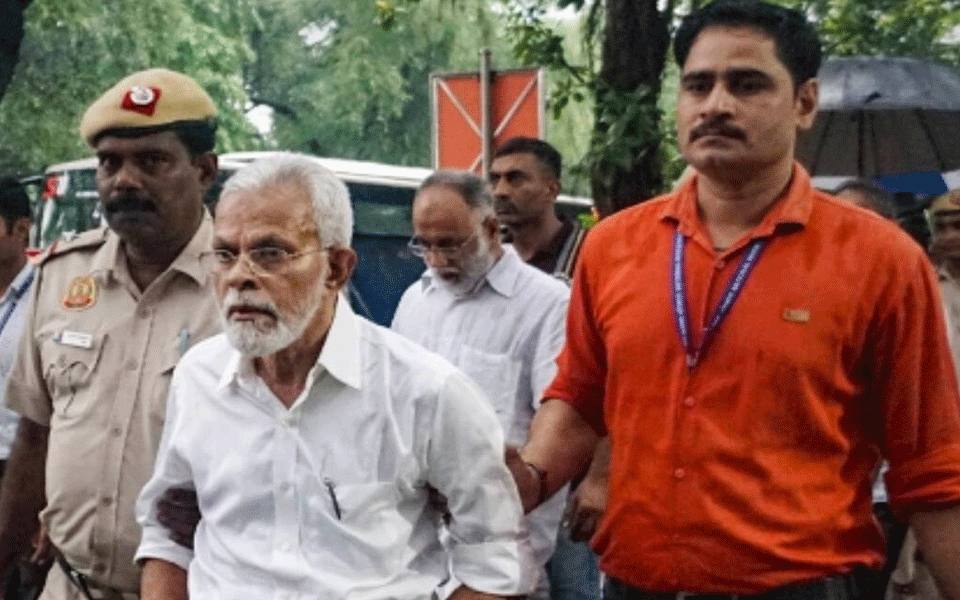
New Delhi (PTI): The Delhi High Court Thursday refused to entertain the bail plea of former chairman of the Popular Front of India (PFI) E Abubacker, arrested by the NIA during a massive crackdown on the recently banned organisation, seeking release on medical grounds.
Justice Anoop Kumar Mendiratta allowed the 70-year-old petitioner to withdraw his bail plea, observing his court does not have the requisite "power" to take a decision on it.
Special public prosecutor Akshai Malik, who represented the National Investigation Agency, contended the bail plea was not maintainable as the law mandates the petitioner to move the high court in appeal under the NIA Act after an order has been passed by a trial court, which is then heard by a division bench of the high court.
The NIA (law) is a special Act. We don't have the powers (to pass orders on the bail plea), the judge told the petitioner who withdrew his application.
The petitioner, who was arrested on September 22 by the anti-terror probe agency and is currently in judicial custody, had sought bail on the ground that he was suffering from various serious ailments including cancer, Parkinson's disease and diabetes.
A large number of alleged PFI activists were detained or arrested in several states during the massive raids preceding the nation-wide ban imposed on September 28.
The plea before the high court said the petitioner moved an application for interim release on October 1 due to his deteriorating health but the trial court refused to grant him relief and instead extended his police remand by six days.
It said the petitioner's fundamental right to personal liberty and health, guaranteed under Article 21 of the Constitution of India, was being violated on account of his continued incarceration. His medical condition was critical , it added.
The petitioner, it claimed, has no role or involvement in the alleged crime and no purpose exists for prolonging the continuous detention in custody of the petitioner, especially during his deteriorating health condition".
The present crime involves numerous FIRs and complaints across India, wherein over 200 arrests have been made till date. Hence, there exists no definitive period as to the completion of investigation. Thus, under critical medical conditions, the petitioner cannot be compelled to languish in custody, which would ultimately prove to be fatal for his life and wellbeing, the plea said.
Let the Truth be known. If you read VB and like VB, please be a VB Supporter and Help us deliver the Truth to one and all.
Caste census will form basis for future policy decision, says CM Siddaramaiah
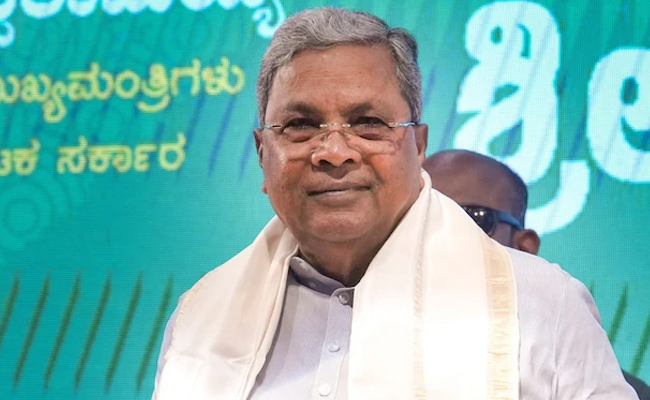
Mysuru (Karnataka) (PTI): Karnataka Chief Minister Siddaramaiah on Wednesday said that the ongoing caste census would form the basis for future policy decisions, asserting that the exercise was crucial to advancing social justice in the state.
Addressing a gathering at the Siddarameshwara Jayanti celebrations here, he said caste enumeration was being carried out for the first time since 1931 and would be followed by deliberations once the report is submitted.
"At present, a caste census (Jaati Sameekshe) is underway. After the report comes, we will discuss it and take necessary decisions," Siddaramaiah said.
He underlined the government’s commitment to equality, stating, "We are committed to social justice. No one should face injustice. Even if not 100 per cent, we will strive to ensure 99 per cent justice."
Referring to measures aimed at addressing intra-caste disparities, the chief minister said the government had already implemented internal reservation based on revised classifications.
"We have gone beyond the Nagamohan Das report and implemented internal reservation… now it has been revised to 5.25 per cent, 5.25 per cent, and 4.5 per cent. This has been approved by the Cabinet," he said.
Siddaramaiah said the broader objective was to ensure equitable distribution of resources and opportunities, while reiterating that policy interventions would be guided by constitutional principles.
"Our objective is equal share and equal life for all," he said.
He also emphasised the role of education in eliminating inequalities, particularly among marginalised communities, and said empowerment was essential to dismantle entrenched caste hierarchies.
"Only when people gain such empowerment can caste divisions be eradicated. Education is essential for this," he added.
The CM said the government would examine demands raised by various communities and take decisions based on feasibility, while ensuring that benefits reached all sections without discrimination.