Delhi minister seeks documents of redevelopment colonies from Union Ministers
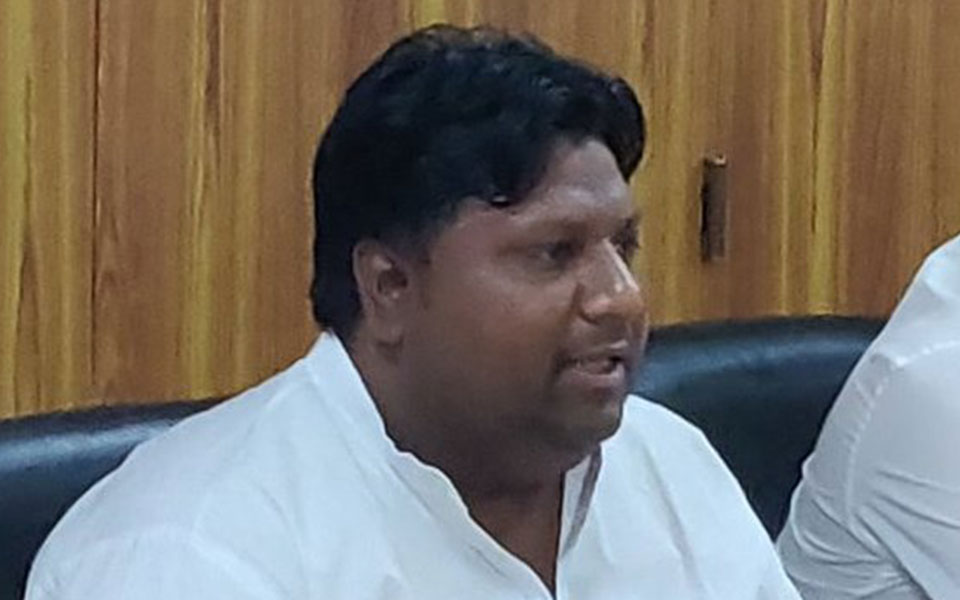
New Delhi, June 26: Delhi Environment Minister Imran Hussain on Tuesday wrote to Union Environment, Forest and Climate Change Minister Harsh Vardhan and Housing and Urban Affairs Minister Hardeep Singh Puri demanding various clearances for a number of Central government employees' colonies, for which thousands of trees were to be cut in the national capital.
The documents he sought were an Environment clearance dated November 27, 2017, and all the other environment clearances granted by the Union Environment, Forest and Climate Change Ministry for these General Pool Residential Accommodation (GPRA) colonies along with the Environment Impact Assessment reports for these projects.
"In order to fully understand/appreciate the concerns of all the stakeholders and to ensure equity and justice to all, it is requested that following documents may kindly be made available to the Environment and Forest Department, Government of NCT of Delhi for further examination," he wrote in the letter to Harsh Vardhan.
He also demanded a copy of the assessment by the Central Groundwater Authority with regard to the impact on groundwater and complete project report and the MoU between the government and the NBCC or any other party with respect to these projects.
In the letter to Puri, he also said that he was "made to understand that these projects are being taken up on behalf of Ministry of Housing and Urban Affairs".
The Central government-run construction company NBCC will chop 16,500 trees in different areas of south Delhi including Sarojini Nagar and Nauroji Nagar to construct flats for Central government employees.
The issue of cutting of trees for the redevelopment of these colonies triggered a blame game between the Central and the Delhi government since last week with Harsh Vardhan claiming that the Delhi government was responsible for granting the permission for tree cutting in the non-forest areas while the Delhi government claimed that that the clearance for the same was issued by the Union Environment and Forest Ministry in November last year.
Let the Truth be known. If you read VB and like VB, please be a VB Supporter and Help us deliver the Truth to one and all.
AIITA welcomes Karnataka’s ban on obscene songs in school events

Bhatkal: The Karnataka unit of the All India Ideal Teachers Association (AIITA) has welcomed the Karnataka government’s decision to strictly ban school children from dancing to obscene songs during educational and cultural programmes in government, aided, and private schools across the state.
AIITA Karnataka State President M. R. Manvi congratulated the government for taking what he termed an important step to preserve the sanctity of education.
“Such decisions to safeguard the dignity of school children and uphold the values of education are the need of the hour. This rule should not be limited to government schools alone but must be strictly implemented in all private educational institutions as well,” he said.
He further urged the government to address other concerns within school programmes.
“The government should not only prohibit obscene dances in the name of school anniversaries, but also ensure that plays and dialogues that incite religious hatred are avoided. Schools should be centres of harmony, not platforms for spreading hatred,” he added.
According to a recent circular issued by the Department of School Education and Literacy, obscene dances are adversely affecting the mental health and moral values of students.
In this regard, schools have been advised to use songs that promote nationalism, positive thinking, the greatness of Kannada culture, and value-based traditions instead of inappropriate content during programmes.
The circular also emphasises that students should be dressed in decent attire.
AIITA also backed the department’s warning that disciplinary action would be taken against head teachers if such guidelines are violated. The association has further demanded that district Deputy Directors of Public Instruction strictly monitor the implementation of these rules.