Delhi Police arrests sharpshooter, arms supplier linked to Kapil Sangwan gang

New Delhi (PTI): Delhi Police has arrested a sharpshooter and an arms supplier linked to the Kapil Sangwan alias Nandu gang, and seized two country-made pistols and five live cartridges from their possession, officials said on Saturday.
The main accused, Sumit Punia (25), a resident of Mahendergarh in Haryana, was arrested in Dwarka with a country-made semi-automatic pistol and five live rounds, a senior police officer said.
During interrogation, police found that Sumit was absconding in a 2021 encounter case registered by the Special Cell, and had links with the Nandu gang, where he allegedly worked as a sharpshooter.
At his instance, police arrested the gang's alleged weapons supplier, Badar Islam (32), from Bulandshahr in Uttar Pradesh and recovered a country-made pistol from his possession, the officer said.
Police said the accused were part of a network supplying illegal firearms to members of the gang, which were used to threaten victims who resisted extortion.
According to investigators, Sumit, who joined the gang around 2020-21, was known to gangster Kapil Sangwan since childhood, as they belonged to neighbouring villages.
Earlier arrested in an arms case in Haryana, Sumit was involved in multiple criminal cases lodged in Delhi and Haryana.
Badar, who allegedly supplied weapons for quick money, has also been named in several criminal cases registered in Uttar Pradesh, police said.
The duo has been booked under the relevant sections of law, including the Arms Act, at the Crime Branch police station, the officer said.
Let the Truth be known. If you read VB and like VB, please be a VB Supporter and Help us deliver the Truth to one and all.
Lebanon appoints new representative for talks with Israel, rejects linkage to Iran
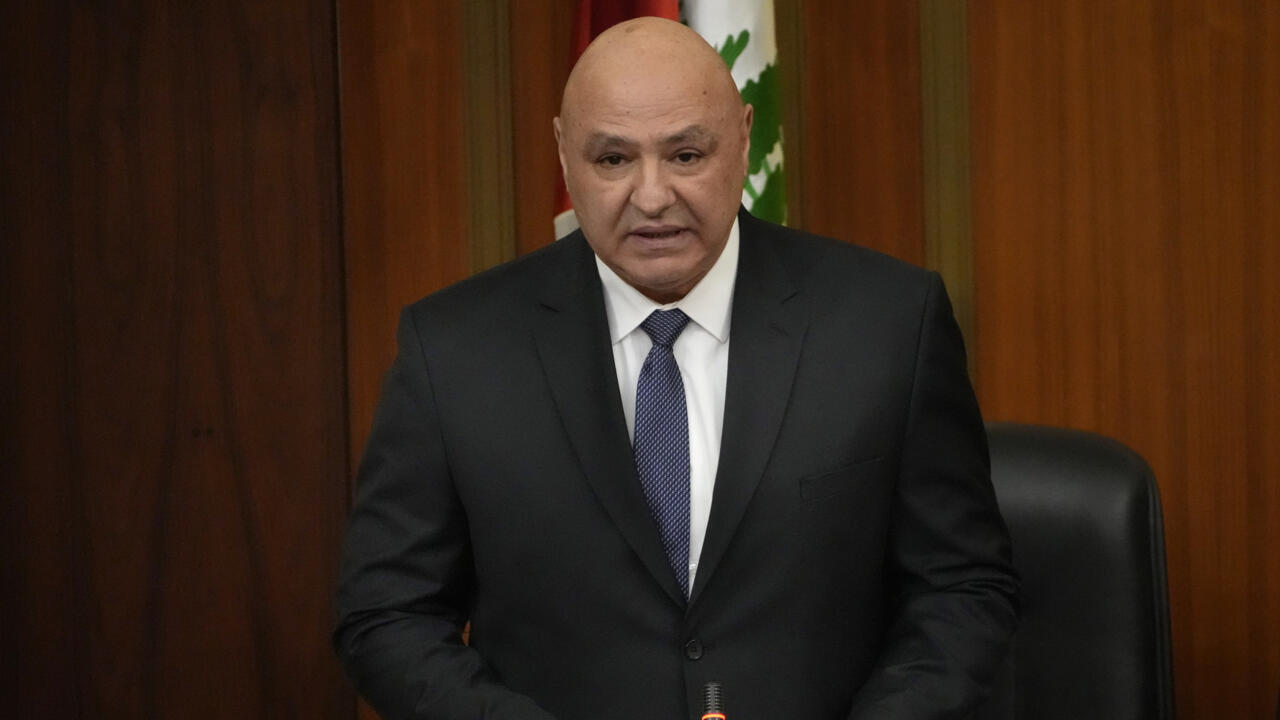
Beirut: Lebanon’s has moved to underline its independent position in ongoing regional developments, amid attempts to link the country to the broader conflict involving Iran, the United States and Israel.
President Joseph Aoun, while announcing the appointment of former US ambassador Simon Karam as Lebanon’s representative in talks with Israel, made it clear that Karam would be the sole representative for Lebanon and that there would be no substitute.
The move comes in response to what the Lebanese officials see as efforts by Iran to tie Lebanon’s situation to the wider regional conflict. Iran had indicated that there would be no ceasefire involving the US, Israel and Iran unless it also included a ceasefire in Lebanon.
Some groups, including Hezbollah and its supporters, had expressed support for linking the situations, citing concerns that the Lebanese government has limited leverage in negotiations with Israel. Lebanon is not formally a party to the conflict, and its army is considered weak.
However, others, including Prime Minister Nawaf Salam, have opposed this approach. They view Iran’s stance as an attempt to influence Lebanon’s internal affairs and see it as undermining the country’s sovereignty.
Officials backing the government’s position say the move is aimed at reaffirming Lebanon’s sovereignty and ensuring that decisions about peace and ceasefire within the country are not dictated externally.
They also see it as a safeguard, so that any breakdown in talks between the US, Israel and Iran does not automatically lead to renewed conflict in Lebanon.