Delhi Police lodges first FIR under new criminal law
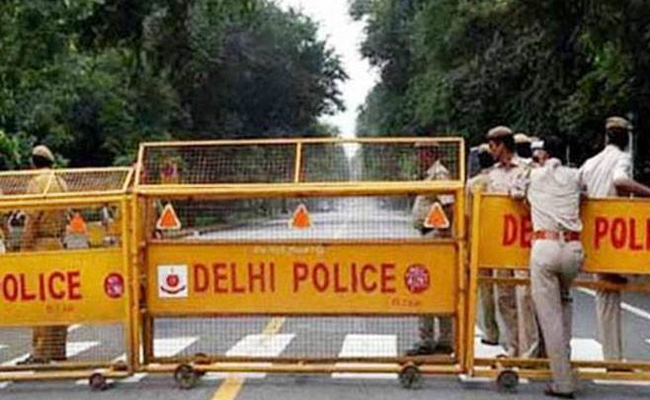
New Delhi (PTI): The Delhi Police registered its first FIR under provisions of the Bharatiya Nyaya Sanhita against a street vendor in the Kamala Market area on Monday, officials said.
Three new criminal laws came into effect on Monday, bringing far-reaching changes in India's criminal justice system.
The Bharatiya Nyaya Sanhita (BNS), Bharatiya Nagarik Suraksha Sanhita (BNSS) and the Bharatiya Sakshya Adhiniyam (BSA) replaced the colonial-era Indian Penal Code, Code of Criminal Procedure and the Indian Evidence Act, respectively.
Commissioner Sanjay Arora also confirmed that the Delhi Police had started registering FIRs under the three new laws.
The FIR was registered under Section 285 of the BNS which states, "Whoever, by doing any act, or by omitting to take order with any property in his possession or under his charge, causes danger, obstruction or injury to any person in any public way or public line of navigation, shall be punished with fine which may extend to Rs 5,000."
The police said an incident was reported at 12:15 am against a street vendor, who allegedly obstructed a public way to sell goods at a foot overbridge near the New Delhi station.
After instructions to move went unheeded, a patrol officer registered a case at 1:30 am.
The officer used the e-Pramaan app to record the seizures made, the FIR stated.
The app, handled by the Delhi Police's Crime Branch, will directly feed the content to police records for further investigation, an officer said.
The Delhi Police has imparted training to its 30,000 personnel -- from the ranks of assistant sub-inspectors and inspectors to assistant commissioners and deputy commissioners -- who are responsible for registering FIRs and conducting investigations.
The Delhi Police was among the first forces in the country to start training personnel on the new criminal laws, the officials said.
Meanwhile, police chief Arora told reporters during the Delhi Police's Commissionerate Day celebrations at Kingsway Camp that the force was fortunate the new laws came into force on this day.
"We are fortunate as today is our Commissionerate Day and, on the same day, these laws are being implemented," Arora said.
The first FIR under the new laws was registered early on Monday, he added.
Let the Truth be known. If you read VB and like VB, please be a VB Supporter and Help us deliver the Truth to one and all.
Mumbai-Pune Expressway connecting link now fully operational
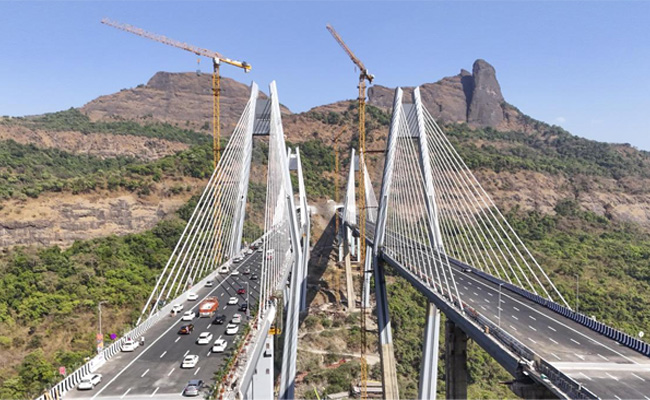
Mumbai (PTI): The Mumbai-bound carriageway of the Mumbai-Pune Expressway connecting link was opened to vehicular traffic on Saturday noon after a delay caused by the dismantling of inauguration infrastructure and cleaning work, a day after the Pune section became operational.
The 13.3 km-long "missing link", which bypasses a section of the Bhor Ghat stretch of the expressway and cuts travel time between Mumbai and Pune by 25 to 30 minutes, was inaugurated a day earlier by Chief Minister Devendra Fadnavis in the presence of Deputy CMs Eknath Shinde and Sunetra Pawar.
The Pune-bound carriageway of the corridor was opened to traffic immediately; however, the Mumbai-bound section remained closed to traffic for several hours after the inauguration.
An official of the Maharashtra State Road Development Corporation told PTI on Saturday that the opening of the Mumbai-bound carriageway was delayed mainly due to the dismantling of the inauguration infrastructure and cleaning work.
The removal of the stage and other decorations was completed in the morning. The work to load and transport the material slightly delayed the opening of the carriageway.
Vehicular movement on the carriageway began after all the remaining material was cleared and road cleaning was completed, the official added.
The expressway control room said that despite significant vehicular movement, the access-controlled highway has not witnessed any major traffic snarls since Friday evening, after the Pune-bound carriageway of the missing link was opened to traffic.
The Missing Link project connects Khopoli (in Raigad) on the Mumbai side to Kusgaon near Lonavala in Pune district and is expected to make the expressway fully access-controlled, easing congestion in the ghat section.
Developed by the MSRDC and dubbed an "engineering marvel", the project includes two tunnels, two viaducts and a cable-stayed bridge over Tiger Valley. It bypasses the steep, accident-prone ghat section, where frequent traffic snarls are reported during weekends and on public holidays.