Delhi Police nabs 'super thief' who inspired Bollywood movie
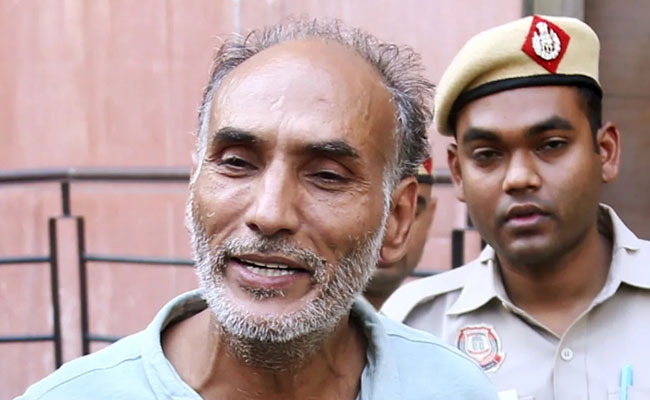
New Delhi (PTI): Delhi Police has arrested Devender Singh alias Bunty, a notorious thief who was allegedly involved in around 500 cases of theft across the country and inspired a Bollywood flick, officials said on Friday.
Nicknamed "super thief", 53-year-old Singh was nabbed from Uttar Pradesh in connection with two recently executed thefts in the national capital, they said.
Singh started committing thefts since the age of 14 years. He was previously involved in more than 250 cases of theft in Delhi alone, they said.
Singh gained fame after he participated in the popular reality show 'Big Boss' in 2010 but was evicted after he misbehave with host Salman Khan. He also inspired Bollywood movie 'Oye Lucky! Lucky Oye!', police said.
The arrest was made after a case was registered based on the complaint of a GK-II resident regarding theft of three expensive mobile phones, purse, two laptops, branded shoes, wrist watch and Baleno car on the intervening night of April 12-13, police said.
On the same day, a second theft was reported by another resident of GK-II, they added.
Deputy Commissioner of Police (South) Chandhan Choudhary said CCTV camera footage of the area and the place of incident revealed that a middle aged suspect wearing a cap was involved in both the incidents.
"The team started looked at the CCTV footage of the suspect and followed the route of the stolen car which revealed that it was going towards Noida via Alaknanda in CR Park," the official said.
The registration number of the car was also ascertained through the footage, police said.
"During the course of investigation, police teams of CR Park followed the footage and tracked the car till Kalindi Kunj. Meanwhile, the team checked the locations of stolen mobile phones and found one of them switched on following which its location was traced near Agra. The team instantly moved towards the location which was about 150 KM away from them," she said.
The fastag of the stolen mobile phone was kept on surveillance. Fastag deductions at different toll booths were monitored, police said.
The team spotted the stolen car on the highway near Etawah in UP. The team later managed to intercept the car at a toll booth in the UP's Kanpur Dehat but the accused tried to escape. However, the glass window of the car was broken and the accused was apprehended, she added.
Stolen items, including three mobile phones, two laptops, five LED TVs with set top boxes, iron, printer and other ID Cards and purse of the complainants were also recovered from the the car, police said.
The accused was arrested and the case property was seized, the DCP said.
Let the Truth be known. If you read VB and like VB, please be a VB Supporter and Help us deliver the Truth to one and all.
India, New Zealand ink free trade agreement
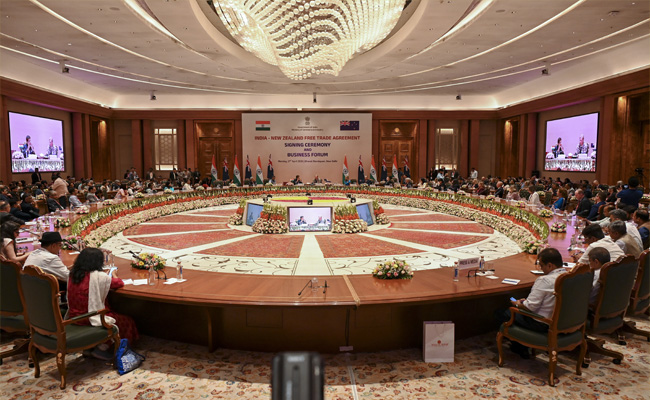
New Delhi (PTI): India and New Zealand on Monday inked a free trade agreement, aimed at boosting two-way commerce and investments.
The pact was signed by Commerce and Industry Minister Piyush Goyal and visiting New Zealand's Trade and Investment Minister Todd McClay.
The FTA provides duty-free access for 100 per cent of India's exports to New Zealand, covering all tariff lines or produce categories, and is expected to significantly boost MSMEs and employment by enhancing competitiveness in labour-intensive sectors such as textiles, apparel, leather, footwear, gems and jewellery, engineering goods, and processed foods.
Earlier, New Zealand maintained peak tariffs of up to 10 per cent on key Indian exports, including ceramics, carpets, automobiles, and auto components.
With zero-duty market access from entry into force as New Zealand's other trade partners, Indian products will be fully competitive in that country, enjoying a level playing field.
ALSO READ: Cal HC urges EC to dispose of TMC complaint over police observer's meeting with BJP nominee
Significantly, India also secured duty-free inputs for its manufacturing sector, including wooden logs, coking coal, and waste and scraps of metals, lowering production costs and enhancing the global competitiveness of the Indian industry.
On the other hand, India has offered tariff liberalisation on 70.03 per cent of tariff lines covering 95 per cent of bilateral trade value, while keeping 29.97 per cent of tariff lines excluded to protect India's sensitive sectors.
The products that are kept in exclusion are mainly -- dairy (milk, cream, whey, yoghurt, cheese etc.), animal products (other than sheep meat), agricultural products (onions, chana, peas, corn, almonds), sugar, artificial honey, animal, vegetable or microbial fats and oils, arms and ammunition, gems and jewellery, copper and articles thereof (cathodes, cartridges, rods, bars, coils), aluminium and articles thereof (ingots, billets, wire bars) among others.
On 30 per cent of tariff lines of New Zealand, India will provide duty elimination on goods such as wood, wool, sheep meat, and leather-raw hides.
Similarly, 35.60 per cent of tariff lines are subject to phased elimination over 3, 5, 7, and 10 years, including petroleum oil, malt extract, vegetable oils, selected electrical and mechanical machinery, and peptones.
New Zealand products which enjoy tariff reductions include wine, pharmaceutical drugs, polymers, aluminum, iron and steel articles, and goods that only 0.06 per cent fall under tariff rate quotas, including Manuka honey, apples, kiwi fruit, and albumins, including milk albumin.
The FTA also includes a commitment to facilitate USD 20 billion in investment into India.
A rebalancing clause is incorporated into the Agreement to provide a framework for addressing any shortfall in investment delivery, thereby ensuring robust and tangible economic outcomes.
Total bilateral trade in goods and services reached USD 2.4 billion in 2024.