Delhi records coldest night of the season at 12.7 degrees
_vb_75.jpeg)
New Delhi (PTI): The national capital recorded its coldest night of the season with the mercury dipping to 12.7 degrees Celsius. This was the first time this winter the minimum temperature fell below the 15-degree mark.
The reading was three degrees below normal for this time of the year and marked a sharp drop from 18.4 degrees Celsius recorded a day earlier, according to the India Meteorological Department (IMD).
The city recorded a maximum temperature was 27.4 degrees Celsius, 3.1 notches below normal, the IMD said.
Meanwhile, the Palam monitoring station recorded a maximum of 24.9 degrees Celsius, which was 5.9 notches below the normal for this time of the year.
Officials attributed the sudden chill to cold northwesterly winds blowing into Delhi following fresh snowfall in the western Himalayas, coupled with clear night skies that enhanced radiational cooling.
"Cold northwesterly winds are now in effect after fresh snowfall in the hills, which is subsequently impacting the minimum temperature," said Mahesh Palawat, vice president (meteorology and climate change) at private weather forecaster Skymet.
The previous lowest this year was 15.8 degree celsius recorded on October 26.
Data show that Delhi's minimum temperature usually dips below 10 degree celsius by late November.
The city had recorded minimum temperatures of 9.5 degrees Celsius on October 29 last year, 9.2 degrees Celsius on October 23 in 2023, and 7.3 degrees Celsius on October 29 in 2022, indicating a slightly delayed onset of winter chill this year.
The Met has forecast mainly clear skies for Friday, with the maximum and minimum temperatures likely to hover around 27 to 32 and 12 to 14 degrees Celsius.
Let the Truth be known. If you read VB and like VB, please be a VB Supporter and Help us deliver the Truth to one and all.
Lebanon appoints new representative for talks with Israel, rejects linkage to Iran
Beirut: Lebanon’s has moved to underline its independent position in ongoing regional developments, amid attempts to link the country to the broader conflict involving Iran, the United States and Israel.
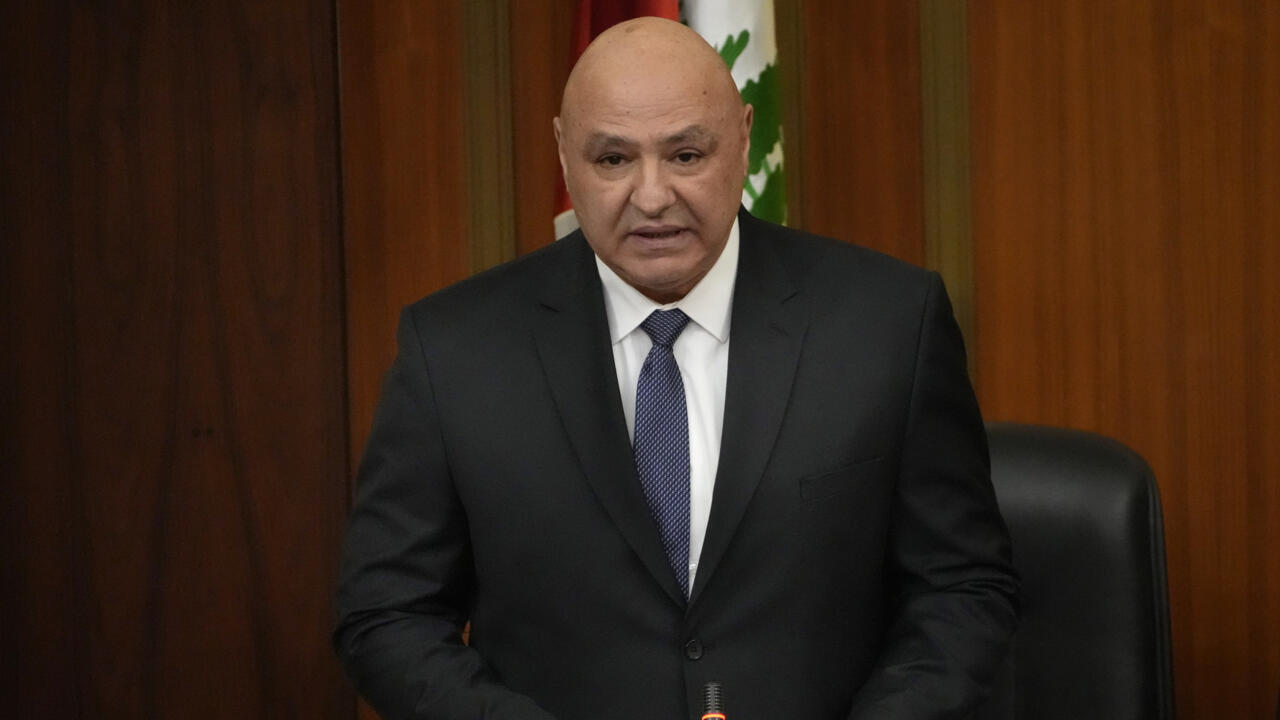
President Joseph Aoun, while announcing the appointment of former US ambassador Simon Karam as Lebanon’s representative in talks with Israel, made it clear that Karam would be the sole representative for Lebanon and that there would be no substitute.
The move comes in response to what the Lebanese officials see as efforts by Iran to tie Lebanon’s situation to the wider regional conflict. Iran had indicated that there would be no ceasefire involving the US, Israel and Iran unless it also included a ceasefire in Lebanon.
Some groups, including Hezbollah and its supporters, had expressed support for linking the situations, citing concerns that the Lebanese government has limited leverage in negotiations with Israel. Lebanon is not formally a party to the conflict, and its army is considered weak.
However, others, including Prime Minister Nawaf Salam, have opposed this approach. They view Iran’s stance as an attempt to influence Lebanon’s internal affairs and see it as undermining the country’s sovereignty.
Officials backing the government’s position say the move is aimed at reaffirming Lebanon’s sovereignty and ensuring that decisions about peace and ceasefire within the country are not dictated externally.
They also see it as a safeguard, so that any breakdown in talks between the US, Israel and Iran does not automatically lead to renewed conflict in Lebanon.