Delhi records worst air quality of season as haze engulfs national capital: authorities

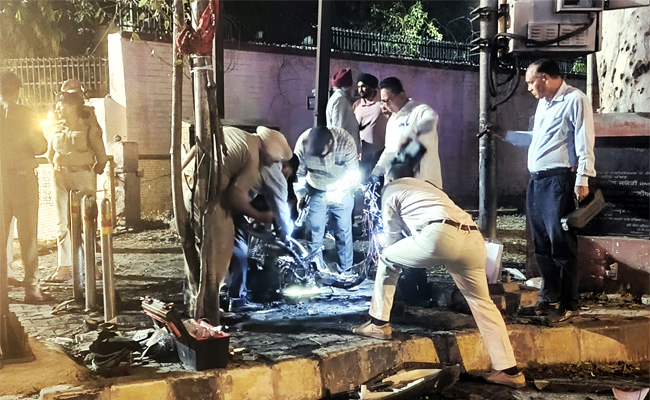
New Delhi, Oct 28 : Delhi recorded its worst air quality of this season on Sunday as a thick haze engulfed the national capital which continued to grapple with deteriorating air quality.
The overall Air Quality Index of the national capital was recorded at 381 which falls in the very poor category, the highest of this season and just points below severe pollution level, according to data by the Central Pollution Control Board.
An AQI between 0 and 50 is considered "good", 51 and 100 "satisfactory", 101 and 200 "moderate", 201 and 300 "poor", 301 and 400 "very poor", and 401 and 500 "severe".
Twelve pollution monitoring stations located in various parts of Delhi recorded severe air quality while 20 stations recorded very poor air quality, according to data by the Central Pollution Control Board.
Authorities attribute the dip in air quality to localised factors like construction dust, vehicular pollution as well as regional factors like pollution due stubble burning from Punjab and Haryana.
A thick haze due to smog engulfed the national capital which recorded the worst air quality of this season, authorities said.
A CPCB-led task force has recommended to Supreme Court appointed Environment Pollution Control Authority implementation of stringent measures from November 1 to 10, predicting further deterioration in the air quality ahead of Diwali.
Some of these recommendations include shut down of coal and biomass factories, intensification of inspection by transport department to check polluting vehicles and control traffic congestion in Delhi NCR during November 1-10.
The task force also issued an advisory to the public, asking them to avoid outdoor strenuous activities and minimise use of private vehicles.
The task force also warned that at beginning of November the situation may get further deteriorated on account of localized emissions during festival and regional contribution due to stubble burning.
The PM2.5 (presence of particles in the air with a diameter of less than 2.5 micrometres) was recorded at 225, the highest of this season. The PM2.5, also called "fine particulates," can be a matter of more serious health concern than PM10.
The PM10 level (presence of particles in the air with a diameter of less than 10 micrometres) in Delhi stood at 418, according to the CPCB data.
SAFAR also issued a heath advisory, urging people with heart or lung disease, older adults and children to avoid prolonged or heavy exertion.
It also recommended people to go for shorter walks instead of jogs, keeping windows closed and wearing masks while stepping outside.
Let the Truth be known. If you read VB and like VB, please be a VB Supporter and Help us deliver the Truth to one and all.
Akeal Hosein bosses powerplay overs with 'skill and mental fortitude'
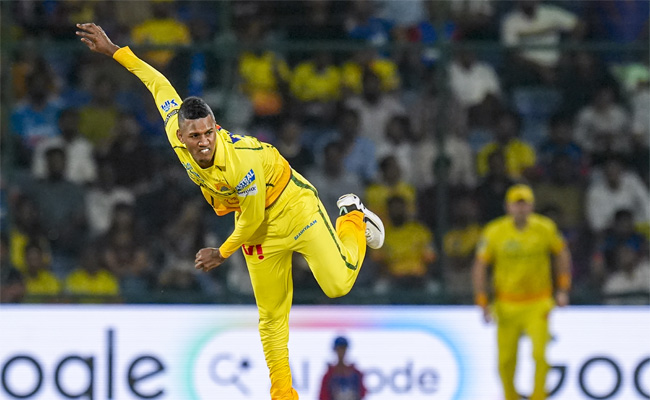
New Delhi (PTI): For a spinner who bowls majority of his overs in the powerplay, Chennai Super Kings' West Indian import Akeal Hosein relies as much on mental fortitude as his skills to excel in the most unforgiving phase of the game.
With just two fielders in the deep in the first six overs, the margin for error is miniscule and the pressure is sky high.
However, Hosein thrives in that tense environment. The left-arm spinner returned with frugal figures of 3-0-15-1 in the powerplay to play a crucial role in his team's eight-wicket win over Delhi Capitals in an IPL match here on Tuesday.
"You need both of them (skill and mental toughness). Especially when you come upon pitches that aren't conducive to spin and it's just about being disciplined as well," he said.
"Having two fielders out in the power play. It's not a job that you can go searching for wickets or you can be too greedy. It's just about sticking to the plan," he explained.
Hosein got the all-important wicket of an in-form K L Rahul, who was foxed by the West Indian as he stepped out to smash him for an inside out six.
Hosein's inclusion in the playing eleven after not being picked in the initial phase of the tournament has allowed CSK to win more games. On Tuesday, the pitch offered him a bit of help and he ended up dominating the batters.
After the win over DC, Hosein was asked about his recipe for success in the powerplay.
"...it's a bit scripted because you only have two guys out so it's just about being disciplined and trying to do the job for the team. At the end of the day if you don't get wickets and you bowl economically in the power play, that's a damn good job you've done for the team," said Hosein.
He has taken seven wickets in five games at an impressive economy rate of 7.25.
Fully aware that the batter is a mere couple of hits away from putting the pressure back on him, Hosein says practising for high-pressure situations helps him stay in the present.
"I think homework is very important. You want to have that head-start when you come up against whichever batter you're going to face. And like I say it's just about making assessments as quickly as possible.
"You might come up on a pitch that is spinning. You might come up against one that isn't spinning. Thankfully I can spin the ball. So it's just about picking which deliveries will give you the most success on a particular day and against a particular batter," said Hosein.
He got rid of Rahul first ball from the other end, something that was decided by captain Ruturaj Gaikwad. Post powerplay, Noor Ahmad took over the mantle from Hosein and maintained the pressure on DC batters.
"Getting the opportunity to bowl first for me is just about again making that assessment as quickly as possible and then passing on that information to Noor or even to the seamers as well if it was a bit of spin or if it's gripping or whatever the case is.
"So conversations with myself and Noor have been fantastic. Really happy for him that he's getting some success," he added.