Delhi sees coldest January morning since 2024; AQI worsens
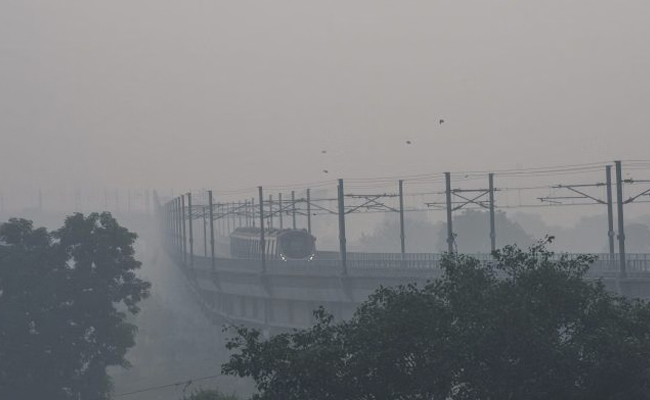
New Delhi (PTI): Since 2024, Delhi recorded its coldest January morning on Friday, with a biting chill gripping the city as temperatures dropped to their lowest levels so far this winter, according to the India Meteorological Department.
The maximum temperature in the national capital settled at 19.7 degrees Celsius, which was 0.7 degrees above normal, indicating near-normal daytime conditions despite the sharp overnight cooling and parts of Delhi witnessing light rainfall.
The minimum temperature plunged to 4.6 degrees Celsius, 2.3 degrees below the seasonal normal, marking the coldest morning of the ongoing winter season.
The last comparable lows were recorded on December 4 and 5 last year, when the mercury dipped to 5.6 degrees Celsius, followed by December 1, when it stood at 5.7 degrees.
According to the weather observations recorded, maximum temperatures across Delhi varied across stations, with Safdarjung recording a high of 19.7 degrees, which was 0.7 degrees above normal.
Ayanagar followed closely with a maximum of 19.0 degrees Celsius, 2.1 degrees above normal, while Lodhi Road recorded 18.8 degrees Celsius.
The Ridge station logged a maximum temperature of 17.9 degrees Celsius, whereas Palam recorded the lowest daytime maximum among the listed stations at 17.2 degrees.
Station-wise data showed Safdarjung recording a minimum temperature of 4.6 degrees Celsius, while Palam logged 5 degrees, Lodhi Road 5.2 degrees, and the Ridge 5.4 degrees.
On the rainfall front, Safdarjung and Lodhi Road recorded trace rainfall during the past 24 hours till 8.30 am, while Ayanagar received 0.8 mm of rainfall. Palam and the Ridge station recorded no rain during the same period.
The IMD said dense fog was observed at several places, and a yellow alert for dense fog has been issued. Relative humidity stood at 100 per cent at 8.30 am, dropping to 73 per cent by 5.30 pm, leading to reduced visibility during the morning hours.
Cold wave conditions are likely to persist over parts of north and northwest India, including Delhi-NCR, in the coming days, though no severe cold wave conditions are threatening yet, the weather office said.
Meanwhile, Delhi's air quality remained in the 'very poor' category, with the 24-hour average Air Quality Index (AQI) at 345. Up to 26 monitoring stations reported very poor air quality, deteriorating from poor levels recorded a day earlier.
As per the Central Pollution Control Board classification, an AQI between 0–50 is considered 'good', 51–100 'satisfactory', 101–200 'moderate', 201–300 'poor', 301–400 'very poor', and 401–500 'severe'.
According to the Decision Support System (DSS), vehicular emissions remained the biggest contributor to Delhi's pollution load at 16.9 per cent, followed by Delhi and peripheral industries at 13.1 per cent. Other local sources included waste burning (1.6 per cent), construction activities (2.1 per cent) and residential emissions (4.3 per cent).
Among neighbouring NCR districts, pollution contribution was led by Sonipat (13 per cent), followed by Baghpat (8.9 per cent), Jhajjar (5.5 per cent), Ghaziabad (5.4 per cent), Panipat (4.8 per cent) and Gautam Buddh Nagar (1.7 per cent).
According to the Air Quality Early Warning System, the air quality is likely to remain in the 'very poor' category on January 10, while it is expected to improve slightly to the 'poor' category from January 11 to January 12, provided meteorological conditions remain favourable.
Let the Truth be known. If you read VB and like VB, please be a VB Supporter and Help us deliver the Truth to one and all.
4 workers die after being buried under coal slurry in Jharkhand's Dhanbad

Dhanbad (Jharkhand) (PTI): At least four workers died after being buried under coal slurry in Jharkhand's Dhanbad district on Saturday, a police official said.
The incident took place at Moonidih coal washery in the command area of Bharat Coking Coal Limited (BCCL).
"Bodies of all four workers were dug out of debris during a rescue operation," Putki police station in-charge Waqar Hussain told PTI.
The incident took place when coal slurry was being loaded into trucks by workers, during which a large chunk of slurry fell and trapped several workers underneath, officials said.
The deceased have been identified as Manik Bauri, Dinesh Bauri, Deepak Bauri, and Hemlal Gope.
Meanwhile, the family members of the deceased and local villagers placed the bodies in front of the washery gate and began a protest.
They demanded compensation, jobs for dependents and action against those responsible for the incident.
Police and administration officials are trying to pacify the protesters, an official said.