Delhi's 3-day 'severe' AQI streak ends, air quality improves to 'very poor'
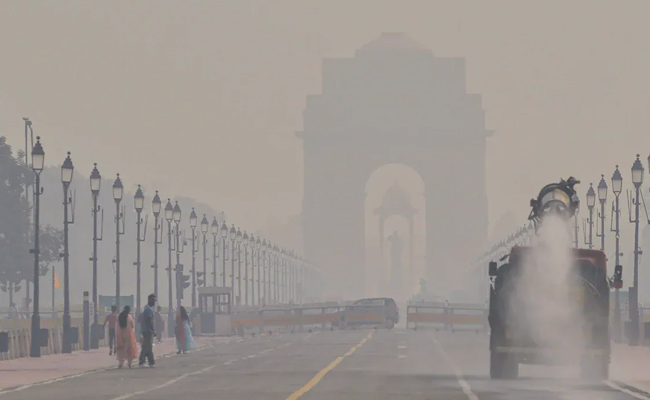
New Delhi (PTI): Delhi's three-day run of 'severe' air pollution ended on Tuesday morning, with the city's average Air Quality Index (AQI) showing a marginal improvement and settling in the 'very poor' category at 395.
Despite the improvement, pollution levels remained worrying across monitoring stations.
Out of the total stations reporting, 23 were still in the 'severe' category, 14 in 'very poor', and 1 in 'poor', according to data from the CPCB Sameer app.
Wazirpur recorded the worst air quality with an AQI of 445, followed closely by Anand Vihar at 444 and Jahangirpuri at 443.
According to the Central Pollution Control Board (CPCB) classification, an AQI between 0 and 50 is considered 'good'; 51 to 100 is 'satisfactory'; 101 to 200 is 'moderate'; 201 to 300 is 'poor'; 301 to 400 is 'very poor'; and 401 to 500 is 'severe'.
The city had experienced three consecutive days of 'severe' air pollution. On Saturday, Sunday, and Monday, the AQI exceeded the 400 mark, prompting the Commission for Air Quality Management (CAQM) to implement Stage 4 restrictions.
Meanwhile, the Air Quality Warning System has forecast that Delhi's air quality is likely to remain in the 'very poor' category on Tuesday and continue at similar levels over the next two days.
Weather conditions provided little relief, with the minimum temperature in Delhi recorded at 7.2 degrees Celsius.
Station-specific data indicated minimum temperatures of 8.8 degrees Celsius at Palam, 9.0 degrees Celsius at Ridge, 8.0 degrees Celsius at Ayanagar, and 7.6 degrees Celsius at Lodhi Road, while Safdarjung noted the city's lowest minimum at 7.2 degrees Celsius.
The maximum temperature is expected to reach 24 degrees Celsius, accompanied by moderate fog.
Let the Truth be known. If you read VB and like VB, please be a VB Supporter and Help us deliver the Truth to one and all.
Mumbai-Pune Expressway connecting link now fully operational
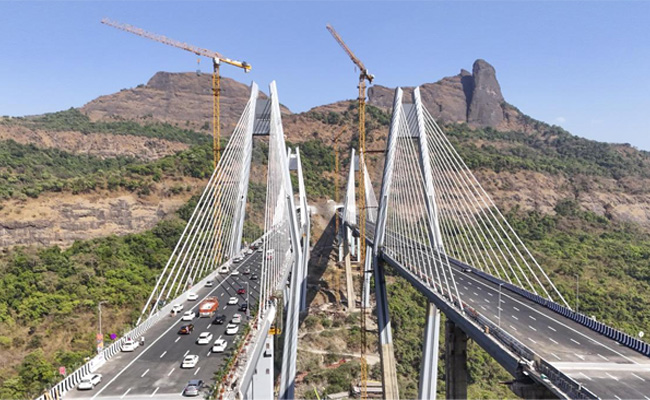
Mumbai (PTI): The Mumbai-bound carriageway of the Mumbai-Pune Expressway connecting link was opened to vehicular traffic on Saturday noon after a delay caused by the dismantling of inauguration infrastructure and cleaning work, a day after the Pune section became operational.
The 13.3 km-long "missing link", which bypasses a section of the Bhor Ghat stretch of the expressway and cuts travel time between Mumbai and Pune by 25 to 30 minutes, was inaugurated a day earlier by Chief Minister Devendra Fadnavis in the presence of Deputy CMs Eknath Shinde and Sunetra Pawar.
The Pune-bound carriageway of the corridor was opened to traffic immediately; however, the Mumbai-bound section remained closed to traffic for several hours after the inauguration.
An official of the Maharashtra State Road Development Corporation told PTI on Saturday that the opening of the Mumbai-bound carriageway was delayed mainly due to the dismantling of the inauguration infrastructure and cleaning work.
The removal of the stage and other decorations was completed in the morning. The work to load and transport the material slightly delayed the opening of the carriageway.
Vehicular movement on the carriageway began after all the remaining material was cleared and road cleaning was completed, the official added.
The expressway control room said that despite significant vehicular movement, the access-controlled highway has not witnessed any major traffic snarls since Friday evening, after the Pune-bound carriageway of the missing link was opened to traffic.
The Missing Link project connects Khopoli (in Raigad) on the Mumbai side to Kusgaon near Lonavala in Pune district and is expected to make the expressway fully access-controlled, easing congestion in the ghat section.
Developed by the MSRDC and dubbed an "engineering marvel", the project includes two tunnels, two viaducts and a cable-stayed bridge over Tiger Valley. It bypasses the steep, accident-prone ghat section, where frequent traffic snarls are reported during weekends and on public holidays.