Delhi's air quality 'very poor' in Delhi
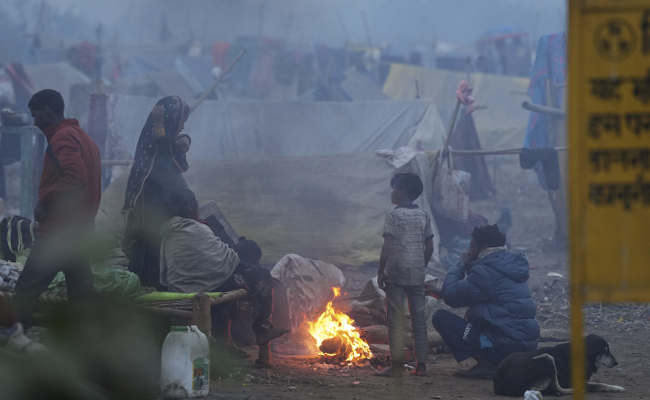
New Delhi (PTI): Thick grey haze shrouded Delhi on Monday morning, with the air quality remaining in the 'very poor' category with a reading of 366, according to the Central Pollution Control Board (CPCB).
The Air Quality Index (AQI) at seven air quality monitoring stations was 'severe', with Narela logging the highest reading at 418.
ALSO READ: Rupee rises 22 paise to 89.45 against US dollar in early trade
According to the CPCB, an AQI between 0 and 50 is considered 'good', 51 to 100 'satisfactory', 101 to 200 'moderate', 201 to 300 'poor', 301 to 400 'very poor', and 401 to 500 'severe'.
Delhi's air quality is likely to remain 'very poor' for the next three days. It is expected to oscillate between 'very poor' and 'severe' categories during the subsequent six days, according to the Air Quality Early Warning System (AQEWS).
The India Meteorological Department (IMD) said the current average wind speed, which is less than 10 kmph, is unfavourable for the dispersion of pollutants.
Delhi recorded a minimum temperature of 9.3 degrees Celsius, it said.
Let the Truth be known. If you read VB and like VB, please be a VB Supporter and Help us deliver the Truth to one and all.
3 Indians injured after fire breaks out in UAE's Fujairah due to drone attack
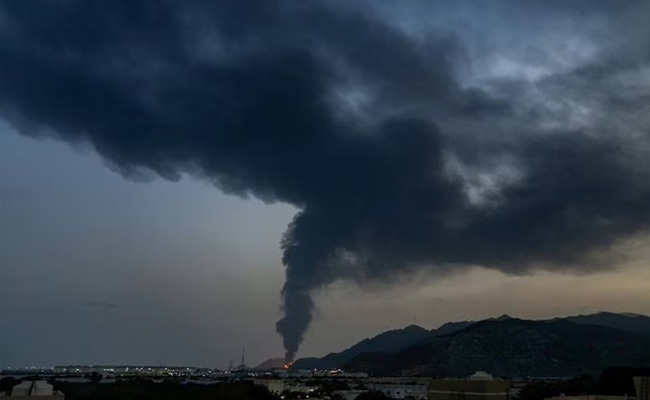
Dubai (PTI): Three Indian nationals were injured on Monday after a fire broke out on the Fujairah Petroleum Industries Zone (FOIZ) in the UAE following a drone strike originating from Iran, according to local media reports.
The relevant authorities in the eastern emirate of Fujairah confirmed that a fire has broken out in the FOIZ, resulting from a drone attack coming from Iran, the state-run WAM news agency reported.
Fujairah Civil Defence teams immediately responded to the incident and are continuing efforts to bring the fire under control, it added.
Three Indian nationals sustained moderate injuries after the fire broke out on the FOIZ, the Khaleej Times reported, quoting authorities in Fujairah.
The injured were taken to the hospital for treatment, it added.
In a post on X, the UAE's Ministry of Defence said that Iran launched four missiles toward various areas across the country. "Three were successfully engaged over the country's territorial waters, while one fell into the sea," it said.
The ministry urged the public to comply with all public safety procedures when warning messages are issued to the public.
Authorities have urged the public not to circulate rumours and to rely only on official sources for information, Gulf News reported.