Delhi's first artificial rain still on hold for want of 'clouds'

New Delhi (PTI): Delhi's much-awaited artificial rain experiment — initially postponed in July — continues to be on hold, with no green light yet for the trial that was expected to take place after Diwali.
Delhi Environment Minister Manjinder Singh Sirsa told PTI that there were no suitable clouds for the trial, according to the India Meteorological Department (IMD), and no window is expected until October 25.
"The day we get suitable clouds, we will conduct the trial immediately, as all preparations — from permissions to flight arrangements — are already in place," he said.
Last week, it was indicated that the trial could take place any day after Diwali.
The Delhi government's cloud seeding project — a major commitment by the BJP-led administration — has been postponed multiple times due to various reasons.
Initially scheduled for July, it was delayed because of the monsoon, changing weather patterns, disturbances, and now, the lack of suitable cloud cover.
No exact date has yet been fixed for the experiment.
An aircraft fitted with cloud-seeding equipment for the artificial rain experiment is stationed in Meerut, under the supervision of a team from IIT Kanpur.
Last month, the Delhi government signed a Memorandum of Understanding (MoU) with IIT Kanpur for five cloud seeding trials, which are expected to be conducted in northwest Delhi.
The project, approved by 23 departments, including the Directorate General of Civil Aviation (DGCA), aims to explore whether artificial rain can be a viable solution to tackle pollution in winter.
Funds have already been transferred to IIT Kanpur, which will deploy its own aircraft for the operation.
According to a DGCA order, the activity will be carried out under visual flight rules, without remuneration, and only after obtaining clearances from state and local authorities.
The cloud seeding operations are authorised between October 1 and November 30 and will follow strict safety, security, and air traffic control guidelines, it said.
Permission has been granted under Rule 26(2) of the Aircraft Rules, 1937, allowing IIT Kanpur's Department of Aerospace Engineering to conduct the activity using a Cessna 206-H aircraft (VT-IIT).
The Indian Institute of Tropical Meteorology (IITM), Pune, and the India Meteorological Department (IMD) are part of the project.
Let the Truth be known. If you read VB and like VB, please be a VB Supporter and Help us deliver the Truth to one and all.
Trump says he ‘hasn’t even thought about’ continuing Iran ceasefire
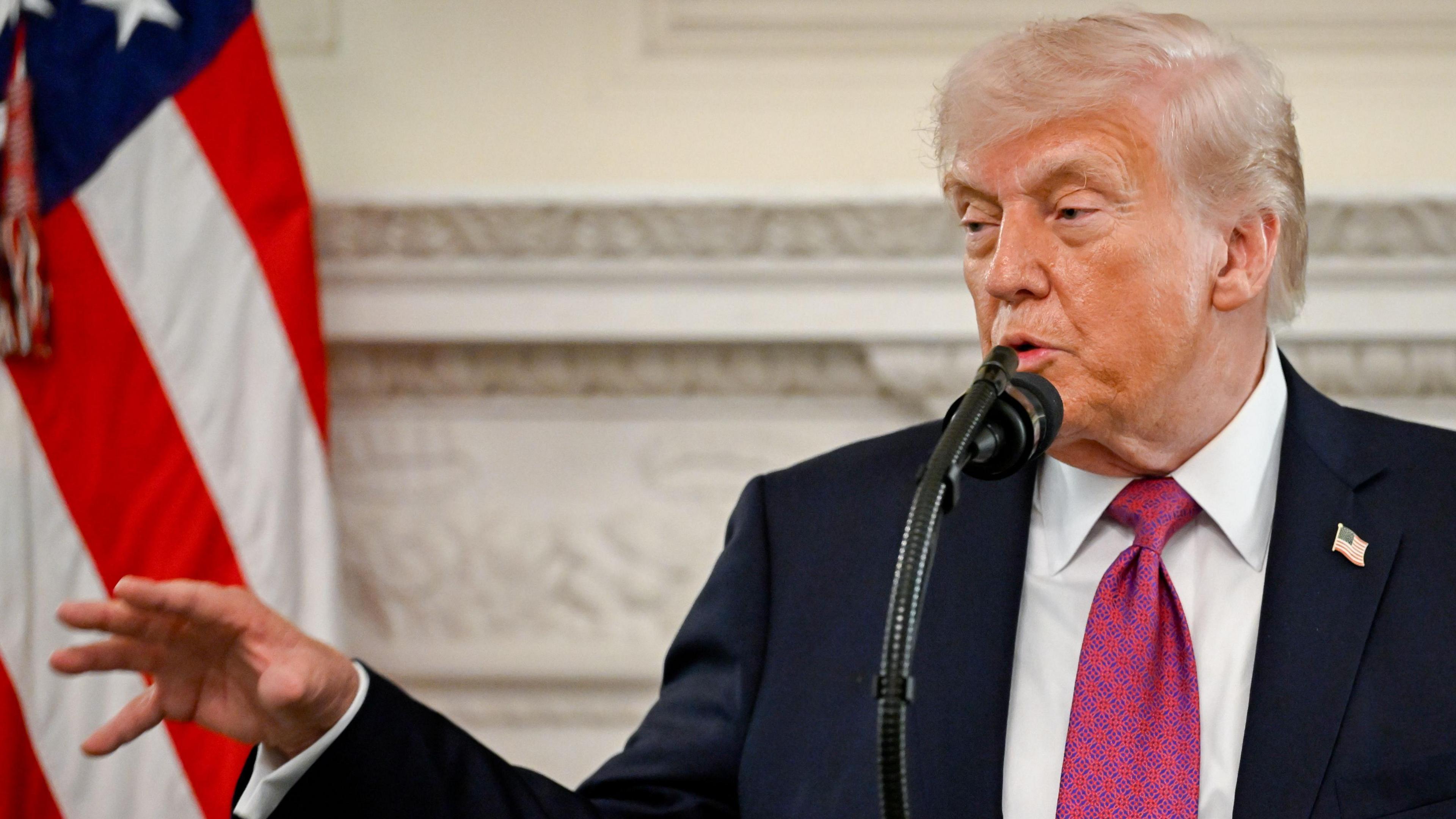
Washington: US President Donald Trump has said he has not yet considered whether he would continue the ceasefire involving Iran, while also claiming the United States holds the advantage in negotiations.
Speaking to reporters, Trump said he was prepared to make a deal with “whoever is running the show” in Iran.
“They are fighting with each other, there’s tremendous infighting. They’re probably fighting for leadership in many cases. I think they’re fighting not to be leader because we knocked out two levels of leaders,” he said.
Trump added, “When they want they can call me. We have all the cards, we’ve won everything.”
Referring to ongoing negotiations, he said, “They gave us a paper that should’ve been better. And, interestingly, immediately when I cancelled it [envoy trip to Pakistan], within 10 minutes we got a new paper that was much better.”
“We talked about they will not have a nuclear weapon, very simple … They offered a lot, but not enough,” he added.
When asked whether he would continue the ceasefire, Trump replied, “I haven’t even thought about it.”
The remarks come as uncertainty remains over the future of the temporary truce and broader negotiations between Washington and Tehran.