Demonetisation a Massive, Draconian, Monetary Shock: Ex-chief Economic Advisor Arvind Subramanian
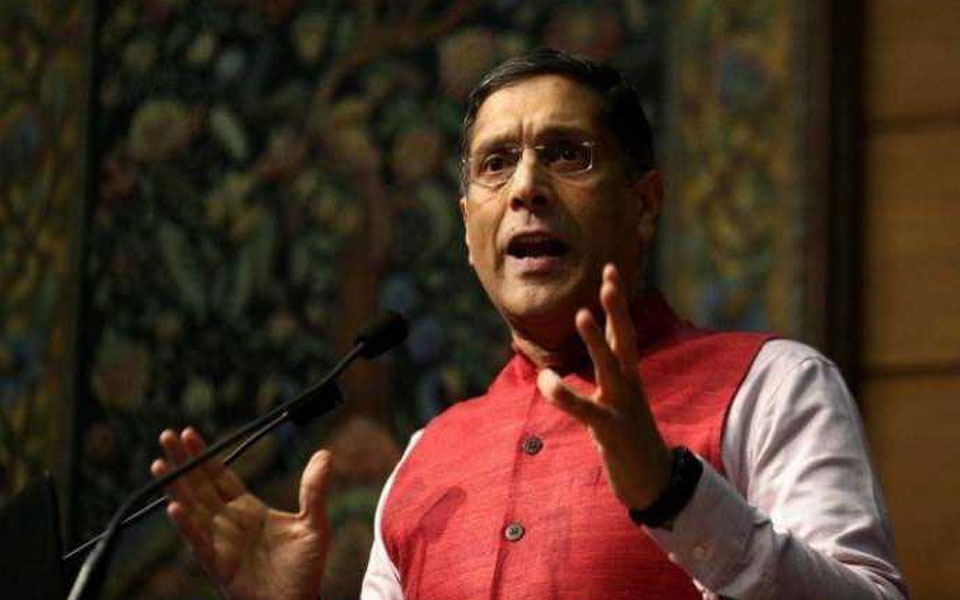
New Delhi, Nov 29: Demonetisation was a massive, draconian, monetary shock that accelerated economic slide to 6.8 per cent in the seven quarters after it against the 8 per cent recorded prior to the note ban, says former Chief Economic Advisor Arvind Subramanian.
Breaking his silence on the November 8, 2016 decision of Prime Minister Narendra Modi, he says that he does not have a strongly-backed empirical view apart from the fact that the welfare costs, especially on the informal sector, were substantial.
Though Subramanian, who quit the post earlier this year after a four-year tenure, has devoted a chapter in the upcoming book "Of Counsel: The Challenges of the Modi-Jaitley Economy", published by Penguin, has continued to keep a studied silence on whether he was consulted in the decision-making process of demonetisation. The detractors of the government had said that the Prime Minister had not consulted the CEA on the crucial decision.
"Demonetisation was a massive, draconian, monetary shock: In one fell swoop, 86 per cent of the currency in circulation was withdrawn. The real GDP growth was affected by the demonetisation. Growth had been slowing even before, but after demonetisation, the slide accelerated."
"In the six quarters before demonetisation, growth averaged 8 per cent and in the seven quarters after, it averaged about 6.8 per cent (with a four quarter window, the relevant numbers are 8.1 per cent before and 6.2 per cent after)," Subramanian says in the chapter "The Two Puzzles of Demonetisation - Political and Economic".
The former CEA says he does not think anyone disputes that demonetisation slowed growth. Rather, the debate has been about the size of the effect - whether it was 2 per cent points, or much less. "After all, many other factors affected growth in this period, especially higher real interest rates, GST implementation and oil prices."
"But when a shock like demonetisation occurs, that primarily affects the informal sector, relying on formal indicators to measure overall activity will overstate GDP. This hypothesis goes only a small way towards explaining the puzzle since any squeeze in informal sector incomes would depress demand in the formal sector, and this effect should have been sizable.
Searching for other explanations, Subramanian says one possibility was that people found ways around the note ban with the possibility that the production was sustained by extending informal credit.
Finally, to a certain extent, people may have shifted from using cash to paying by electronic means such as debit cards and electronic wallets.
"Or, there may be other, completely different explanations that have eluded my understanding of demonetisation, one of the unlikeliest economic experiments in modern Indian history," he says.
From the political aspect, the former CEA says that demonetisation was an unprecedented move that no country in recent history had made in normal times. The typical pattern had been either gradual demonetisation in normal times or sudden demonetisation in extreme circumstances of war, hyperinflation, currency crises or political turmoil (Venezuela in 2016).
According to him, the Indian initiative was, to put it mildly, unique. Referring to the BJP's victory in Uttar Pradesh assembly elections, shortly after demonetisation, he says it was widely seen as a verdict on the note ban.
One answer to the demonetisation puzzle has been that the poor were willing to overlook their own hardships, knowing that the rich and their ill-begotten wealth were experiencing even greater hardship: 'I lost a goat, but they lost their cows', he says. In this view, the costs to the poor were unavoidable collateral damage that had to be incurred for attaining a larger goal.
Subramanian says this is not entirely convincing. After all, the collateral damage was, in fact, avoidable.
"Understanding the political economy of demonetisation may require us, therefore, to confront one overlooked possibility - that adversely impacting the many, far from being a bug, could perhaps have been a feature of the policy action.
"Not necessarily by design or in real time, but in retrospect, it appears that impacting the many adversely may have been intrinsic to the success of the policy," he says.
Courtesy: www.news18.com
Let the Truth be known. If you read VB and like VB, please be a VB Supporter and Help us deliver the Truth to one and all.
India-bound LPG tanker clears Hormuz
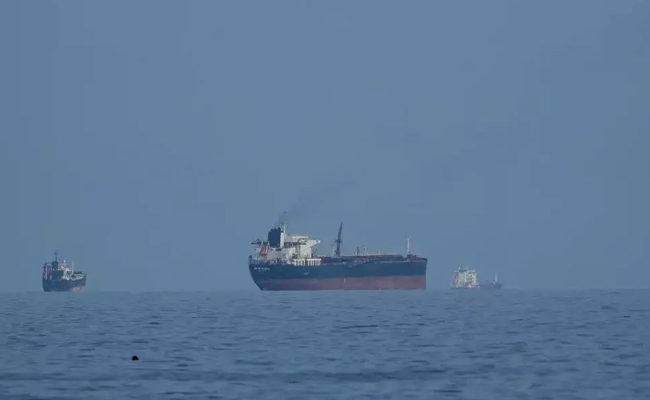
New Delhi (PTI): A tanker carrying liquefied petroleum gas (LPG) for India has sailed out of the Strait of Hormuz and is now headed towards the country, an official statement said on Sunday.
The Marshall Islands-flagged LPG carrier MT Sarv Shakti, loaded with 46,313 tonnes of LPG and staffed by 20 crew, including 18 Indians, cleared the key shipping chokepoint on May 2 and is expected to reach Visakhapatnam on May 13, it said.
The cargo -- enough to meet half a days requirement of the country -- will partly tide over supply constraints being faced since the start of the West Asia conflict more than two months back.
Ship-tracking data showed its position in Oman Gulf on Sunday evening.
The very large gas carrier has previously made runs between the Persian Gulf and Indian ports, has been chartered by state-owned Indian Oil Corporation (IOC).
Sarv Shakti is the first India-linked tanker to cross the war zone since a weeks-old US blockade of ships tied to Iran began, pushing transits through Hormuz back down to almost zero.
There are as many as 14 Indian flagged or India-owned vessels still stranded on the west side of the Strait of Hormuz.
The statement said no incident involving Indian-flagged vessels has been reported in the past 24 hours. The Ministry of Ports, Shipping and Waterways is working closely with the Ministry of External Affairs, Indian missions and maritime stakeholders to ensure crew welfare and uninterrupted operations.
The Directorate General of Shipping (DG Shipping) control room has handled 8,373 calls and more than 17,965 emails since activation, including 38 calls and 127 emails in the last 24 hours.
India has also facilitated the repatriation of more than 2,953 seafarers so far, including 31 in the past day from across the Gulf region.
Port operations across the country remain normal with no congestion reported, the statement added.