Dense fog keeps visibility low in Delhi, air quality 'very poor'
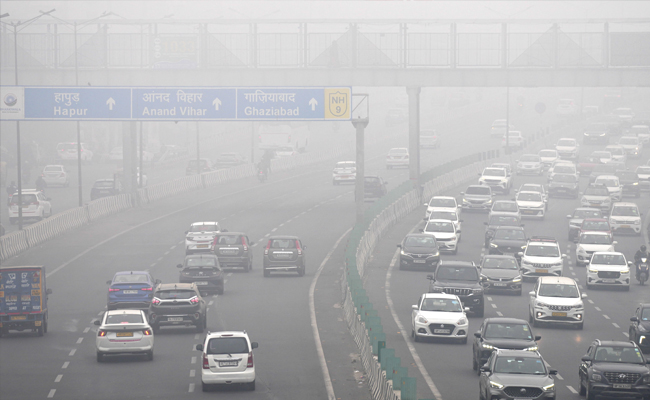
New Delhi (PTI): Early morning visibility was low in parts of the national capital on Friday due to a thick layer of smog and haze, with mercury levels settling at 9 degree Celsius.
Delhi's air remained in the 'very poor' category, with the 24-hour average Air Quality Index (AQI) settling at 382, edging closer to the 'severe' category.
According to the Central Pollution Control Board's SAMEER app, out of 40 air quality monitoring stations across the city, 14 recorded severe air quality while 26 were in the very poor category. Vivek Vihar recorded the worst air quality with an AQI of 434, the data showed.
ALSO READ: Absence of teachers frustrates purpose of Right to Education Act: Allahabad HC
As per the Central Pollution Control Board's classification, an AQI between zero and 50 is considered good, 51 to 100 satisfactory, 101 to 200 moderate, 201 to 300 poor, 301 to 400 very poor and 401 to 500 severe.
The Air Quality Early Warning System for Delhi has forecast that air quality is likely to remain in the 'very poor' category till Saturday and deteriorate to 'severe' on Sunday.
Several parts of the national capital were seen enveloped in dense smog during the early morning hours, leading to reduced visibility.
According to the India Meteorological Department, the minimum temperature settled at 9 degrees Celsius, while relative humidity stood at 100 per cent.
The maximum temperature is expected to hover around 21 degrees Celsius, with dense fog likely to persist through the day.
Meanwhile, the ban on the entry of non-Delhi private vehicles below BS-VI emission standards and enforcement of the 'No PUC, No Fuel' rule came into force in the national capital on Thursday as authorities stepped up measures to tackle worsening air pollution.
Fuel pumps are not dispensing fuel to vehicles without valid Pollution Under Control (PUC) certificates, with enforcement being carried out using automatic number plate reader cameras, voice alerts at fuel stations and police support.
Let the Truth be known. If you read VB and like VB, please be a VB Supporter and Help us deliver the Truth to one and all.
Maharashtra sets up state vaccination task force to strengthen immunisation programme
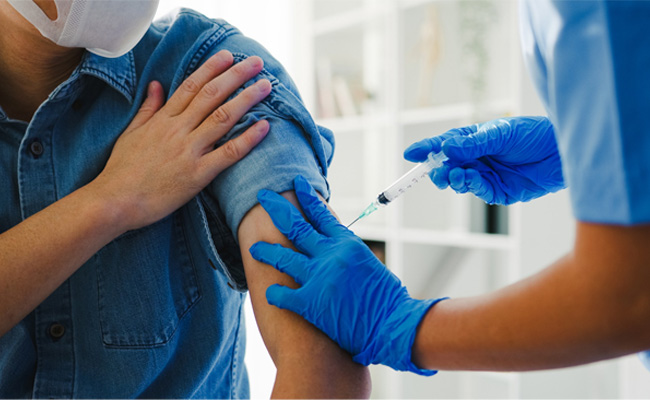
Mumbai (PTI): The Maharashtra government has set up a State Vaccination Task Force to strengthen the regular immunisation programme and review the progress of related campaigns, a health department official said on Monday.
The State Vaccination Task Force will comprise at least 29 members and will be headed by the administrative head of the health department, he informed.
The government has also constituted separate district-level and municipal vaccination task forces to improve implementation and address challenges at the grassroots level, he said.
Municipal task forces, chaired by respective civic commissioners, have been constituted in view of the vast urban population in Maharashtra and the role of civic bodies in implementing different health programmes.
The district-level task forces will function under the chairmanship of collectors.
"Complete immunisation of children at the appropriate age is an extremely simple, cost-effective and highly effective measure to reduce child mortality and the prevalence of diseases among kids. Immunisation is a powerful tool for reducing illness in children," maintained the official.
To ensure full vaccination of all children, the state government implements various campaigns from time to time as per the central government guidelines, he pointed out.
"Active participation and cooperation of other relevant government departments are essential (in making these campaigns successful)," according to the official.
The state-level body will review the regular immunisation programme, associated campaigns and vaccine-preventable diseases in detail. It will also conduct focused assessments of high-risk districts and municipal corporations, including vacancies at district, municipal and sub-district levels, availability of cold chain equipment, resource gaps and training requirements, he noted.
The state task force will review allocation and utilisation of funds for immunisation and ensure timely action by officers concerned based on reports from district and municipal task forces and state-level monitoring mechanisms, the official said.
It will also ensure active coordination and participation of other government departments in immunisation drives, while district and municipal task forces will carry out similar functions at their respective levels, the official added.