Detention centres set up in compliance with law, in cognizance of SC: Sources
New Delhi, Dec 26: Detention centres were set up in different parts of the country in full compliance with law and with the Supreme Court's cognizance, sources said on Thursday.
Detention centres or holding centres or camps are confinement centres where foreign nationals are confined pending nationality verification and issuance of travel documents by the governments concerned and their deportation to their native countries.
Such detention centres were in existence in various states for the last few decades and the setting up of such centres was not at all connected with the National Register of Citizens (NRC), the sources said.
The Foreigners Act, 1946 empowers the Centre to issue orders imposing restrictions on the movements of a foreigner and requiring the person to reside at a particular place.
Further, under the Passport (Entry into India) Act, 1920, the Centre can direct removal of any person from India, who had entered the country without a valid passport or other travel documents.
These powers of the Centre have been entrusted with the state governments under Article 258(1) of the Constitution and the Union Territory administrations have also been directed under Article 239 to execute these powers.
Instructions regarding restricting the movements of such foreign nationals, who are awaiting deportation in one of the detention centres or camps, have been issued by the Ministry of Home Affairs (MHA) to the states and UTs since July, 1998 to ensure their physical availability at all times for expeditious deportation as soon as their travel documents are ready.
These instructions were reiterated on November 23, 2009, March 7, 2012, April 29, 2014, September 10, 2014 and September 7, 2018, the sources said.
The instructions issued on March 7, 2012 were in pursuance of a Supreme Court order of February 28, 2012.
The apex court had then observed that the foreign nationals, who had completed their sentence, should immediately be released from jail and kept at an appropriate place with restricted movements pending their deportation or repatriation and that the places where they were to be kept - detention centres or by whatever name such places were called-- must have basic facilities of electricity, water and hygiene.
The top court, in its order on September 12, 2018, took note of the instructions issued by the MHA on September 10, 2014, advising all state governments to set up detention centres or holding centres or camps for restricting the movements of illegal migrants or foreign nationals awaiting deportation after completion of sentence due to non-confirmation of nationality.
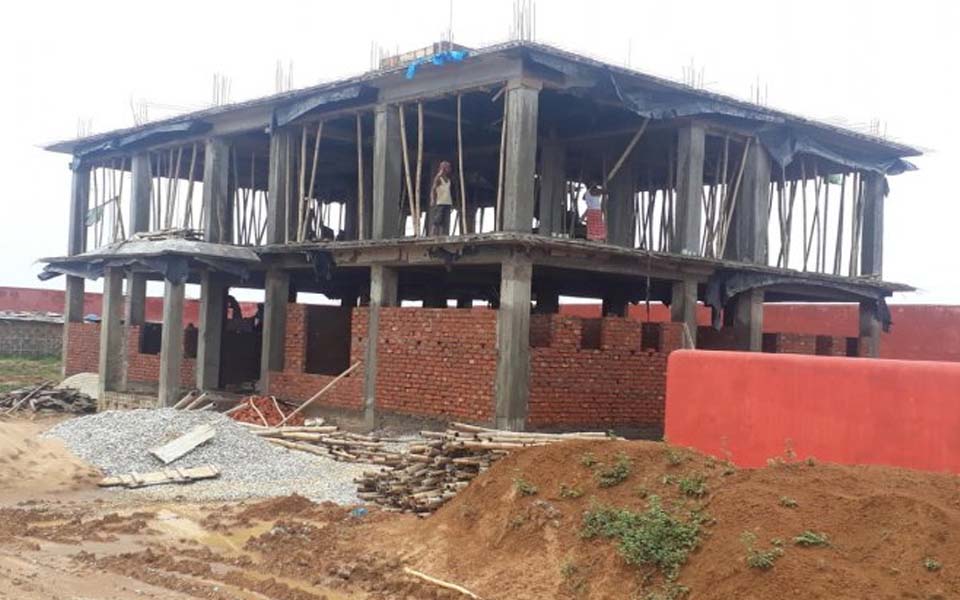
It had observed that not a single state had set up detention centres. The court also took note of the progress in the construction of the detention centre at Matia, Goalpara in Assam sanctioned by the Centre and expected the state of Assam to ensure that it was carried out at the earliest.
In the subsequent hearings on September 20, October 31 and November 2, 2018, the Supreme Court reviewed the progress of the construction of this detention centre. In pursuance of the top court's orders on September 20, 2018, a model detention centre manual was prepared and circulated by the MHA to all states and UTs on January 9, 2019.
The detention centres were needed to ensure the physical availability of such foreign nationals at all times for expeditious deportation as soon as the travel documents were ready, the sources said, adding that those confined at such centres were not subjected to the strict prison regimes applicable to undertrials and convicted prisoners.
The Assam government has been earmarking portions of jails as detention centres over the last few decades, depending on requirements.
Detention centres or holding centres or camps for foreign nationals are in existence in -- Assam (in the district jails of Goalpara, Kokrajhar, Tezpur, Jorhat, Dibrugarh and Silchar), NCT of Delhi (Sewa Sadan -- Lampur), Mahila Sadan -- for women) and Shahzada Bagh (for Bangladeshis), Punjab (in the central jail, Amritsar), Rajasthan (on the jail premises in Alwar), West Bengal (correctional home), Gujarat (Bhuj) and Tamil Nadu.
In terms of the Registration of Foreigners Rules, 1992 and the Foreigners Order, 1948, the Centre has appointed superintendents of police in the districts as foreigners registration officers (FROs) and the civil authority for dealing with matters related to foreigners.
Further, it has also appointed foreigners regional registration officers (FRROs) in 12 places -- Delhi, Mumbai, Chennai, Kolkata, Amritsar, Bengaluru, Hyderabad, Kochi, Thiruvananthapuram, Kozhikode, Lucknow and Ahmedabad, who act as the civil authority in such places. The FRROs function under the Bureau of Immigration.
In terms of the Foreigners Order, 1948, the civil authority can direct any foreigner in writing to comply with the conditions regarding his place of residence and movements, the sources said.
Arrested foreigners, against whom court cases have been filed, are required to be deported to their native countries on completion of the sentence awarded to them by courts.
Further, the foreigners staying illegally in the country without valid travel documents are also required to be deported.
While the foreigners who have valid passports can be deported immediately, in many cases, they may not have valid passports and in such cases, it may be necessary to get their nationality verified from the foreign mission concerned in India through the Ministry of External Affairs.
Such persons can be deported only after confirmation of their nationality and issuance of travel documents by the foreign mission concerned. This normally took a considerable time, the sources said.
Pending deportation, movements of such foreign nationals were restricted in terms of the provisions of the Foreigners Act, 1946 and the Foreigners Order, 1948 in a detention centre, they added.
Let the Truth be known. If you read VB and like VB, please be a VB Supporter and Help us deliver the Truth to one and all.
Trekking without nature guide won't be allowed; Karnataka forest minister releases SOP

Bengaluru (PTI): Karnataka Forest Minister Eshwar Khandre on Friday said that trekking will no longer be permitted on any approved trekking routes under the forest department, without a certified nature guide equipped with GPS-enabled walkie-talkies.
Speaking after releasing the Standard Operating Procedure (SOP) formulated for the safety of trekkers, he said that there will be one local nature guide for every 10 trekkers. A maximum of 150 trekkers will be allowed per batch on any trekking route.
According to him, online registration for trekking is mandatory. Even if a single individual registers for a particular day, a guide will still be provided, and trekking without a guide will not be allowed.
He said the SOP was introduced following recent incidents, including a woman from Kerala who went missing for three days in the forests during a trek at Tadiandamol hill in Kodagu, and a minor girl who went missing and was later found dead near Manikyadhara in Chikkamagaluru, which is outside forest jurisdiction.
In a statement, the Khandre's office said that nature guides will be mandatorily equipped with GPS-enabled walkie-talkies on all trekking routes. "Additionally, a mobile app containing trekking route maps will be installed on trekkers' phones. This will help locate trekkers if they lose their way", it said.
As per the SOP, before the trek begins, trekkers will be briefed about the distance, duration, and local conditions.
"Instructions on how to respond if wildlife is encountered will also be provided. Loud devices, sharp metal objects, weapons, and campfires are strictly prohibited on trekking routes," it said.
The SOP further stated that separate toilets for men and women and drinking water facilities will be provided at base camps.
Directional arrow markings will guide trekkers along the route, and rest points will be created along the way, it said.
Citing the SOP, the statement said that nature guides must ensure that no trekker moves ahead of them or is left behind. Headcounts must be conducted at base camps and rest points.
"Guides must communicate with the base camp via walkie-talkie every 30 minutes. If there is no communication within an hour of the trek starting, base camp staff will contact the guide to confirm safety," it said.
The SOP states that minors must carry a consent letter from their parents or guardians, and senior citizens must provide a fitness certificate confirming their physical capability to undertake trekking. To be able to respond to unexpected health issues, trekkers and guides must carry a first aid kit.
However, flash photography, single-use plastics, and carry bags are prohibited and trekkers must bring back their waste and dispose of it only at base camps, as per SOP.
It further said that all trekking routes under the forest department will be integrated into the official website (https://aranyavihaara.karnataka.gov.in/) to enable advance booking of tickets.