DGCA asks SpiceJet to stop ticket sale offer as govt-imposed fare limits are in place
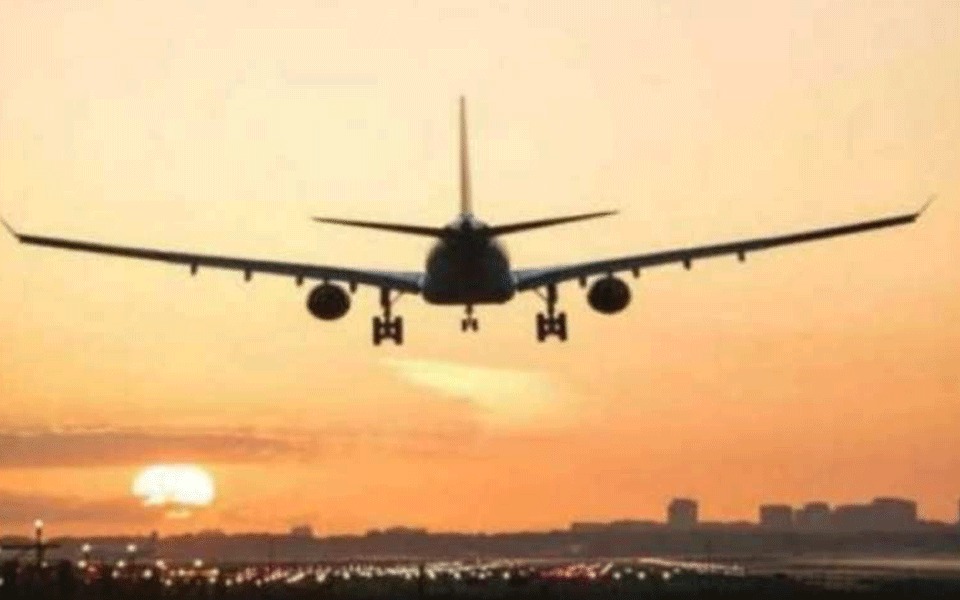
New Delhi: Aviation regulator DGCA has asked SpiceJet to stop its five-day discounted sale of tickets that started on Monday as the government-imposed fare limits are in place since domestic flights resumed operation on May 25, senior officials said.
SpiceJet in a press release Monday morning announced it has started a five-day "1+1 offer sale" where it was offering one-way base fares starting as low as Rs 899, excluding taxes, on its domestic network.
The release said the customers booking a ticket during the sale will get a complimentary voucher with a maximum value of Rs 2,000 per booking, which can be used for future bookings.
Pointing to the government-imposed fare limits, the Directorate General of Civil Aviation (DGCA) asked SpiceJet to stop the sale, senior officials of the regulator said Monday afternoon.
When asked about it, a SpiceJet spokesperson said, "We have already complied with the DGCA directive."
The Civil Aviation Ministry had on May 21 placed upper and lower limits on domestic airfares through seven bands, classified on the basis of flight duration, till August 24. Later, it was extended till November 24.
Scheduled domestic passenger services resumed on May 25 after nearly two months of suspension to combat the coronavirus outbreak. Scheduled international passenger flights continue to remain suspended in India since March 23.
Along with the limits on airfares, the government had asked the airlines to operate not more than 33 per cent of their pre-COVID domestic flights. On June 26, the cap was increased to 45 per cent.
After Civil Aviation Minister Hardeep Singh Puri announced on May 21 that there would be limits on airfares till August 24, the DGCA had issued an order with more details.
The regulator had said there would be seven bands of ticket pricing with lower and upper fare limits based on flight duration.
The first such band consists of flights that are of less than 40 minutes duration. The lower and the upper fare limits for the first band is Rs 2,000 and Rs 6,000, respectively.
The subsequent bands are for flights with durations of 40-60 minutes, 60-90 minutes, 90-120 minutes, 120-150 minutes, 150-180 minutes and 180-210 minutes.
The lower and upper limits for these bands are: Rs 2,500-Rs 7,500; Rs 3,000-Rs 9,000; Rs 3,500-Rs 10,000; Rs 4,500-Rs 13,000; Rs 5,500-Rs 15,700 and Rs 6,500-Rs 18,600, respectively, the DGCA said.
The regulator had made it clear that each airline would sell at least 40 per cent of its tickets on a flight at prices less than the midpoint between the lower limit and upper limit.
The aviation sector has been significantly impacted due to the travel restrictions imposed in India and other countries in view of the coronavirus pandemic.
All airlines in India have taken cost-cutting measures such as pay cuts, leave without pay and firings of employees in order to conserve cash. Occupancy rate in Indian domestic flights has been around just 50-60 per cent since May 25.
Let the Truth be known. If you read VB and like VB, please be a VB Supporter and Help us deliver the Truth to one and all.
Karnataka School Edu Dept prohibits children from being made to dance to obscene songs
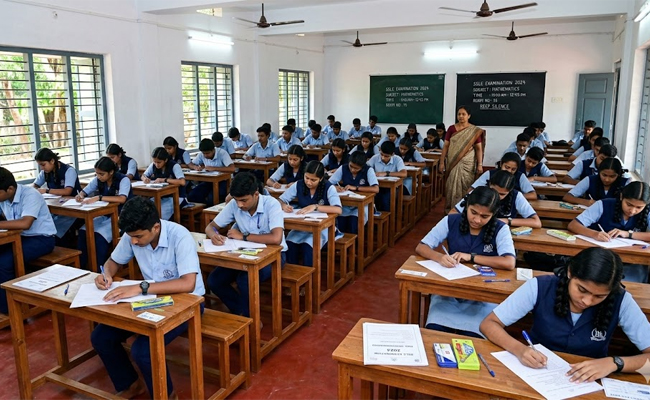
Bengaluru (PTI): The Karnataka School Education Department has issued a circular strictly prohibiting children from being made to dance to obscene songs in educational and cultural programmes.
It stated that such dances would negatively impact students' mental health and moral values. It will create indiscipline and harm the sanctity of education.
"All the Deputy Directors (Administration) of the state's School Education Department have been asked to take strict measures to prevent children or students from dancing to obscene songs in all government, aided and unaided schools in the state," the office of the commissioner of the School Education Department said in a recent circular.
"If it is found that children are being made to dance to obscene songs, appropriate action will be taken against the headmaster or management of such school," it added.
The department also listed certain measures in this regard, which include: strictly prohibiting children from being made to dance to obscene songs during educational and cultural programmes; selecting songs that are inspiring, positive, instilling national pride in children and reflecting the greatness, dignity, values, culture, and morality of the state.
Stating that the school headmaster and management are responsible for selecting songs and dances for cultural programmes, it said, they should also ensure that students wear decent clothes in dance or cultural programmes.