Dhankhar's successor: EC begins preparations to hold vice presidential poll
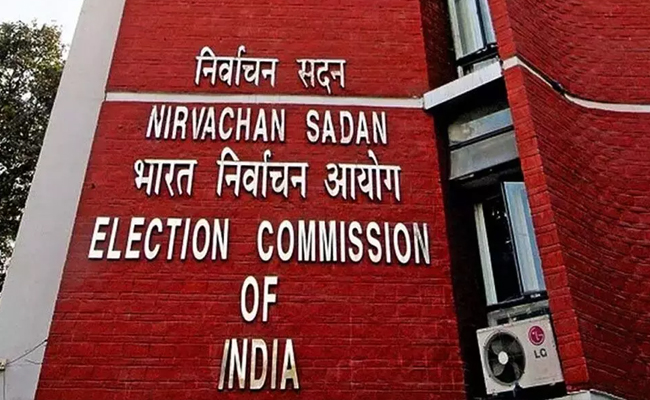
New Delhi (PTI): The Election Commission on Wednesday said it has begun the process of holding the vice presidential election, two days after Jagdeep Dhankhar's surprise resignation from the post.
The poll authority said it has started constituting the electoral college comprising MPs of both Houses of Parliament. Both elected and nominated members are eligible to vote in the vice presidential election.
It is also finalising the returning officer and assistant returning officers.
"On completion of the preparatory activities, the announcement of the election schedule to the office of the Vice President of India will follow as soon as possible," the EC said.
Dhankhar stepped down as vice president on Monday, citing health reasons. His term was to end on August 10, 2027.
The Union home ministry on Tuesday formally notified the resignation of Dhankhar from the office of the vice president.
According to Clause 2 of Article 68 of the Constitution, an election to fill a vacancy in the office of the vice president occurring due to his death, resignation or removal, or otherwise, will be held "as soon as possible" after it goes vacant.
The person elected to fill the vacancy will be entitled to hold office "for the full term of five years from the date on which he enters upon his office".
From the day the notification is issued, "calling the electoral college to vote", and till the day of the poll, a period of 30 days is stipulated.
A person cannot be elected as the vice president unless he is a citizen of India, has completed 35 years of age and is qualified for election as a member of the Rajya Sabha.
A person is also not eligible if he holds any office of profit under the government of India or a state government or any subordinate local authority.
The ruling NDA has a comfortable edge in the vice presidential elections.
The vice president is elected by the members of Lok Sabha and Rajya Sabha, where nominated members of the Upper House are also eligible to cast their vote.
The 543-member Lok Sabha has one vacant seat -- Basirhat in West Bengal -- while there are five vacancies in the 245-member Rajya Sabha.
Of the five vacancies in the Rajya Sabha, four are from Jammu and Kashmir, and one from Punjab. The seat from Punjab was vacated after AAP leader Sanjeev Arora quit following his election to the state assembly in a bypoll last month.
The effective strength of both the Houses together is 786 and the winning candidate will require 394 votes, considering that all eligible voters exercise their franchise.
In the Lok Sabha, the BJP-led NDA enjoys the support of 293 of the 542 members. The ruling alliance has the support of 129 members in the Rajya Sabha, assuming that the nominated members vote in support of the NDA nominee, which has an effective strength of 240.
The ruling alliance has the support of 422 members.
Article 66 (1) of the Constitution provides that the vice presidential election shall be held in accordance with the system of Proportional Representation by means of the single transferable vote and the voting at such election shall be by secret ballot.
In this system, the elector has to mark preferences against the names of the candidates.
The vice president is the second highest constitutional office in the country. He serves for a five-year term, but can continue to be in office, irrespective of the expiry of the term, until the successor assumes office.
Let the Truth be known. If you read VB and like VB, please be a VB Supporter and Help us deliver the Truth to one and all.
AIITA welcomes Karnataka’s ban on obscene songs in school events
Bhatkal: The Karnataka unit of the All India Ideal Teachers Association (AIITA) has welcomed the Karnataka government’s decision to strictly ban school children from dancing to obscene songs during educational and cultural programmes in government, aided, and private schools across the state.
AIITA Karnataka State President M. R. Manvi congratulated the government for taking what he termed an important step to preserve the sanctity of education.
“Such decisions to safeguard the dignity of school children and uphold the values of education are the need of the hour. This rule should not be limited to government schools alone but must be strictly implemented in all private educational institutions as well,” he said.
He further urged the government to address other concerns within school programmes.
“The government should not only prohibit obscene dances in the name of school anniversaries, but also ensure that plays and dialogues that incite religious hatred are avoided. Schools should be centres of harmony, not platforms for spreading hatred,” he added.
According to a recent circular issued by the Department of School Education and Literacy, obscene dances are adversely affecting the mental health and moral values of students.
In this regard, schools have been advised to use songs that promote nationalism, positive thinking, the greatness of Kannada culture, and value-based traditions instead of inappropriate content during programmes.
The circular also emphasises that students should be dressed in decent attire.
AIITA also backed the department’s warning that disciplinary action would be taken against head teachers if such guidelines are violated. The association has further demanded that district Deputy Directors of Public Instruction strictly monitor the implementation of these rules.