Dharmendra Pradhan says Cong-ruled states should cut tax on petrol, diesel
mum on high taxes in BJP-ruled states
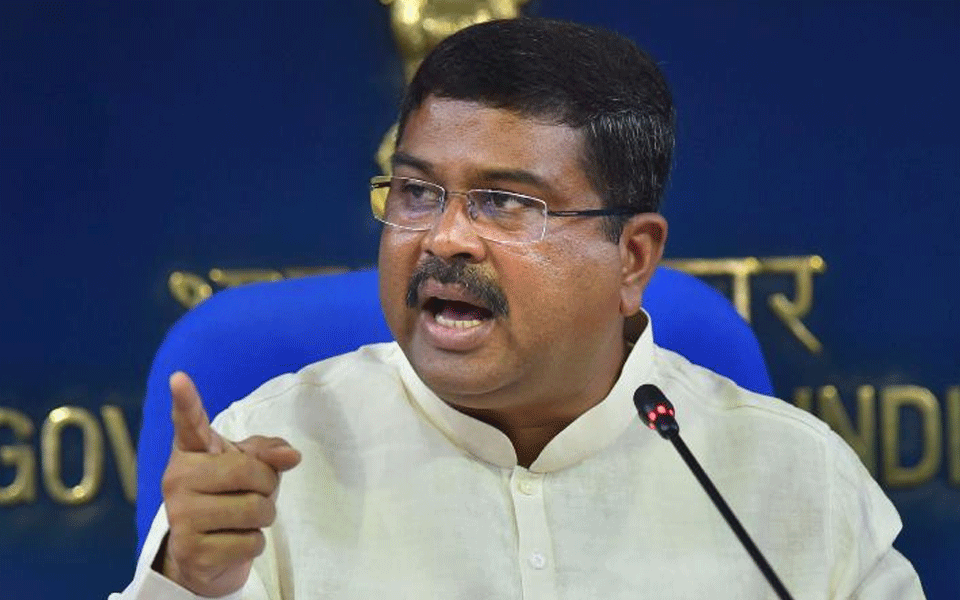
New Delhi (PTI): With petrol and diesel prices climbing to record high, Oil Minister Dharmendra Pradhan on Sunday asked Congress governments in Rajasthan and Maharashtra to cut sales tax if the party was concerned about fuel price burden on common man, but did not say if BJP-ruled states like Madhya Pradesh and Karnataka, where petrol has crossed Rs 100 mark, would do the same.
Petrol and diesel have risen to all-time high across the country after fuel rates rose by Rs 5.72 to Rs 6.25 per litre in less than six weeks. This is due to a combination of rising international oil prices and record high central and state taxes.
Talking to reporters on the sidelines of an event organised to inaugurate oxygen plant set up by Indraprastha Gas Ltd at Maharaja Agrasen Hospital, he said central and state governments need additional money from the taxes on petrol and diesel to meet expenses for fighting pandemic as well as development work.
"I accept that fuel prices are pinching consumers," he said, adding the government is spending Rs 1 lakh crore on providing free food grains to poor this year alone besides spending money on vaccines and healthcare infrastructure.
Asked about Congress leader Rahul Gandhi's repeated attacks on the Modi government for skyrocketing fuel prices, Pradhan said, "Why is fuel expensive in Maharashtra, Rajasthan and Punjab (which are ruled by the party)?"
"If Rahul Gandhi is concerned about the poor being hit by fuel prices, he should ask chief ministers of Congress-ruled states to cut taxes. He should ask (Maharashtra Chief Minister) Uddhav Thackeray to reduce taxes," he said.
He, however, did not say if BJP-ruled states like Madhya Pradesh and Karnataka, which too have seen petrol price cross Rs 100 a litre mark due to local taxes, would follow suit.
Fuel prices differ from state to state depending on the incidence of local taxes such as VAT and freight charges. And because of this, petrol retails at over Rs 100 per litre mark in seven states and union territories -- Rajasthan, Madhya Pradesh, Maharashtra, Andhra Pradesh, Telangana, Karnataka and Ladakh.
Of these states, Congress is in power in Rajasthan and is a coalition partner with Shiv Sena and NCP in Maharashtra. BJP rules Madhya Pradesh and Karnataka and Ladakh too is under central rule. Andhra Pradesh has YSR-Congress in power while TRS rules in Telangana.
Rajasthan levies the highest value-added tax (VAT or sales tax) on petrol and diesel in the country, followed by Madhya Pradesh, Maharashtra, Andhra Pradesh, Telangana and Karnataka.
While international oil prices have crossed USD 72 per barrel in anticipation of demand recovery following the rollout of vaccination programme by various countries.
Last year when rates collapsed to two-decade low, the union government instead of passing on the benefit to consumers raised excise duty to record high. The excise tax on petrol was Rs 9.48 per litre when the Modi government took office in 2014, and that on diesel was Rs 3.56 a litre.
Excise duty on petrol now is Rs 32.90 per litre and makes up for 34 per cent of retail selling price. The duty of Rs 31.80 a litre makes up for 36.5 per cent of retail diesel rates.
Sri Ganganagar district of Rajasthan near the India-Pakistan border was the first place in the country to see petrol hit Rs 100 a litre mark in mid-February and on Saturday it also earned the distinction of diesel crossing that psychological mark.
Petrol in the city is sold at Rs 107.22 a litre - the highest rate in the country, and diesel comes for Rs 100.05. Premium or additive laced petrol in the town sells for Rs 110.50 a litre and same grade diesel at Rs 103.72.
In Delhi, petrol has hit an all-time high of Rs 96.12 a litre, while diesel is now priced at Rs 86.98 per litre.
Mumbai on May 29 became the first metro in the country where petrol was being sold at over Rs 100 a litre. Petrol now costs Rs 102.30 a litre in the city and diesel comes for Rs 94.39.
Petrol and diesel prices have been raised on 23 occasions since May 4, when state-owned oil firms ended an 18-day hiatus in rate revision they observed during assembly elections in states like West Bengal.
In 23 increases, petrol price has risen by Rs 5.72 per litre and diesel by Rs 6.25 a litre.
Let the Truth be known. If you read VB and like VB, please be a VB Supporter and Help us deliver the Truth to one and all.
Sujit Nair raises concerns over speculation of DMK-AIADMK understanding to block TVK
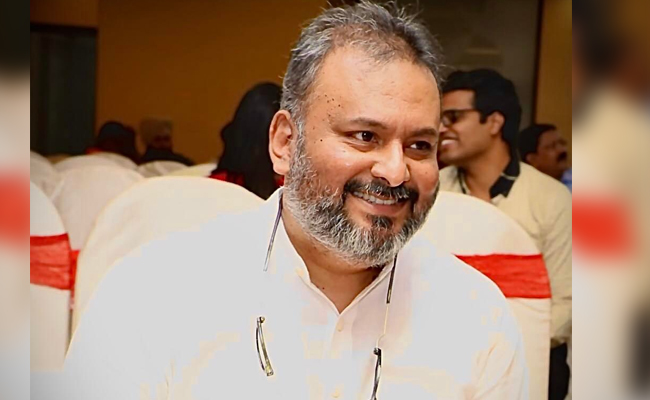
Chennai: Journalist and political commentator Sujit Nair has expressed concern over speculation that the Dravida Munnetra Kazhagam and the All India Anna Dravida Munnetra Kazhagam could explore a post-poll understanding to prevent Vijay-led Tamilaga Vettri Kazhagam from forming the government in Tamil Nadu.
In a social media post, Sujit Nair said the election verdict in Tamil Nadu reflected a clear public demand for political change and argued that the mandate should be respected irrespective of political preferences.
Referring to reports and political discussions surrounding a possible understanding between the DMK and AIADMK, he said he hoped such developments remained only speculative conversations and did not turn into reality.
Nair stated that if such an alliance were to take shape, it would raise serious questions about ideological politics in the country. He said TVK had emerged through a democratic electoral process and that the legitimacy to govern in a parliamentary democracy comes from the people’s verdict.
According to him, attempts to prevent an electoral winner from forming the government through unexpected political arrangements may be constitutionally valid, but many people could view them as politically opportunistic.
He further said that such a move could particularly affect the political image of the DMK, which has historically projected itself around ideology, social justice and opposition politics. Nair said that in ideological terms, the DMK appeared closer to TVK than to the AIADMK, and joining hands with its long-time political rival only to remain in power could weaken its broader political narrative.
He added that the same questions would apply to the AIADMK as well, as the party had spent decades positioning itself against the DMK and such an arrangement could create discomfort among its cadre and supporters.
Drawing a comparison with Maharashtra politics in 2019, Nair said he had expressed similar views when the Shiv Sena formed an alliance with the Indian National Congress and the Nationalist Congress Party after the Assembly elections.
He said post-poll alliances between long-standing political rivals often create a public perception that ideology and electoral mandates become secondary when political power equations come into play.
Nair also said such developments increase public cynicism towards politics and reinforce the belief among voters that ideology is often sidelined after elections.
He maintained that the Tamil Nadu verdict was emphatic and said respecting both the spirit and substance of the mandate was important for the credibility of democratic politics.