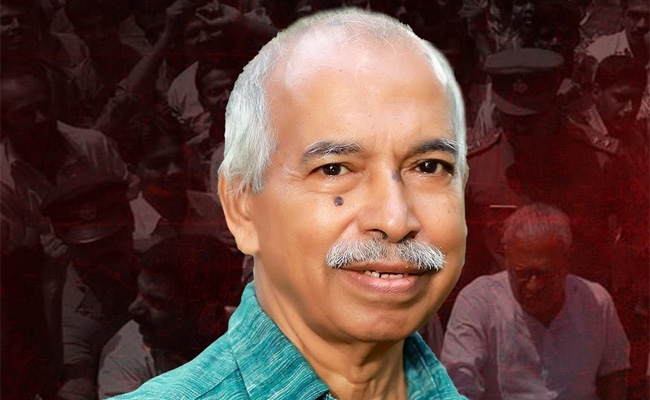
Didn't say anything against secularism, says Meghalaya HC judge on controversial order
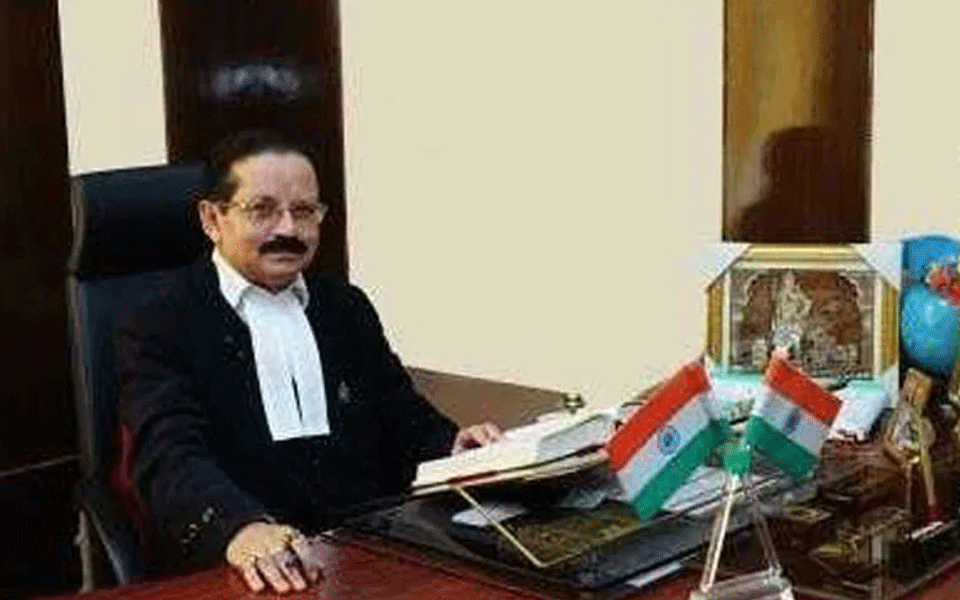
Shillong, Dec 15: Facing flak over his recent controversial order, Meghalaya High Court judge S R Sen on Friday issued a "clarification", saying neither was his judgment politically motivated nor did he say anything against secularism, and asserted that his order had been "misinterpreted".
In the 'clarification from the bench' posted on the high court website, Justice Sen said he does not belong to any political party and does not dream of getting a political berth after retirement. He said he had written the judgement based on truth, history and ground reality "to save the citizens of India, irrespective of caste, creed, religion or language".
The judge's observations in the December 10 judgement that India should have been a Hindu country after independence just as Pakistan became an Islamic country and that nobody should try to make India into an Islamic country had stoked a controversy.
The CPI(M) had urged Chief Justice of India Ranjan Gogoi to remove him from his judicial duties and had alleged that his utterances were against the basic structure of the Constitution.
Justice Sen, in the judgement passed on Monday while disposing of a petition of a man who was denied domicile certificate by Meghalaya, had also observed that he was confident that only this government under Narendra Modi will understand the gravity.
However, Justice Sen said on Friday that when he mentioned the government under Modi, it was inclusive of the ministers and members of both houses of Parliament and his request was to policymakers and lawmakers of the country.
"Secondly, I would clarify here that in my judgement nowhere have I said anything against secularism and my judgement makes references to history and one cannot change the history," he said
He also asserted that "I am not a religious fanatic rather I respect all the religions because to me God is one".
In his order, Justice Sen had urged the Centre to bring a law to allow Hindus, Sikhs, Jains, Buddhist, Parsis, Christians and Khasis, Jaintias and Garos tribals who are presently residing in Bangladesh, Pakistan and Afghanistan to live in this country peacefully and with full dignity, without marking any cut-off year.
The judge in his clarification said such people were coming to India due to religious persecution and they may get a right to live in in India but the process for this had to be determined by the authorities and by due process of law.
"We should remember that whatever we call influx or foreigner, that is due to unwanted partition and without proper referendum and wrong boundary demarcation and mainly on religious persecution," Justice Sen said.
He added all states should embrace such people and no particular state or region should take the burden of influx. He added that it was only his suggestion and "totally depends upon the polity and lawmakers of the country.
At the same time he noted that the Constitution allows every citizen to settle in any part of the country.
"I do not belong to any political party nor have I got any dream to get any political berth after my retirement and neither is my judgment politically motivated or influenced by any party," said Justice Sen who is due to retire in March.
Although the Centre's Citizenship (Amendment) Bill, 2016 also seeks to make Hindus, Sikhs, Buddhists, Jains, Parsis and Christians from the three countries eligible for Indian citizenship after a stay of six years, there was no mention of the bill in the court order.
Noting that secularism is one of the basic structures of the Constitution, Justice Sen said, "It (India) should not further be divided on the basis of religion, caste, creed, community or language."
He had in his judgement said the National Register of Citizens exercise in Assam is "defective" as many foreigners "became Indians" due to the exercise and "original Indians are left out".
"Nobody should try to make India another Islamic country otherwise it will be a doomsday...," Justice Sen had said.
The judge was, however, quick to add in his order that he was not against "my Muslim brothers and sisters" who are residing in India for generations and abiding Indian laws.
"They should also be allowed to live peacefully".
AIMIM leader and MP Asaduddin Owaisi had reacted sharply to the court order. "This is a wrong judgment. We do not accept it. You cannot give such a judgement... India is and will remain a plural, secular country. What kind of judgement is this...will the government take note."
Union Minister Giriraj Singh, however, had welcomed the judge's order saying his observations are in line with public sentiments.
"What he has said is also the voice of crores of people of India," the BJP leader had said.
Let the Truth be known. If you read VB and like VB, please be a VB Supporter and Help us deliver the Truth to one and all.
Mumbai-Pune Expressway connecting link now fully operational
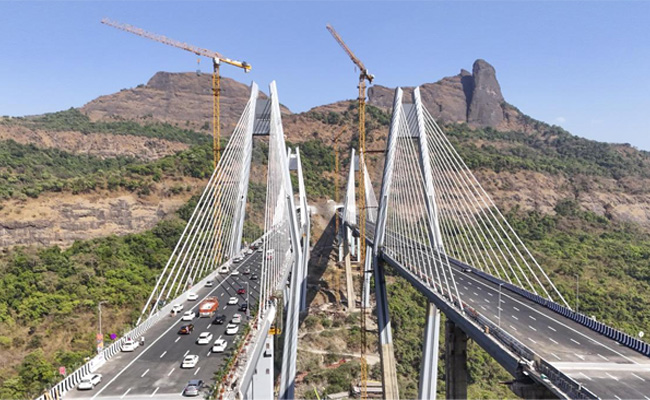
Mumbai (PTI): The Mumbai-bound carriageway of the Mumbai-Pune Expressway connecting link was opened to vehicular traffic on Saturday noon after a delay caused by the dismantling of inauguration infrastructure and cleaning work, a day after the Pune section became operational.
The 13.3 km-long "missing link", which bypasses a section of the Bhor Ghat stretch of the expressway and cuts travel time between Mumbai and Pune by 25 to 30 minutes, was inaugurated a day earlier by Chief Minister Devendra Fadnavis in the presence of Deputy CMs Eknath Shinde and Sunetra Pawar.
The Pune-bound carriageway of the corridor was opened to traffic immediately; however, the Mumbai-bound section remained closed to traffic for several hours after the inauguration.
An official of the Maharashtra State Road Development Corporation told PTI on Saturday that the opening of the Mumbai-bound carriageway was delayed mainly due to the dismantling of the inauguration infrastructure and cleaning work.
The removal of the stage and other decorations was completed in the morning. The work to load and transport the material slightly delayed the opening of the carriageway.
Vehicular movement on the carriageway began after all the remaining material was cleared and road cleaning was completed, the official added.
The expressway control room said that despite significant vehicular movement, the access-controlled highway has not witnessed any major traffic snarls since Friday evening, after the Pune-bound carriageway of the missing link was opened to traffic.
The Missing Link project connects Khopoli (in Raigad) on the Mumbai side to Kusgaon near Lonavala in Pune district and is expected to make the expressway fully access-controlled, easing congestion in the ghat section.
Developed by the MSRDC and dubbed an "engineering marvel", the project includes two tunnels, two viaducts and a cable-stayed bridge over Tiger Valley. It bypasses the steep, accident-prone ghat section, where frequent traffic snarls are reported during weekends and on public holidays.