Diesel prices at record level; petrol nears all-time high
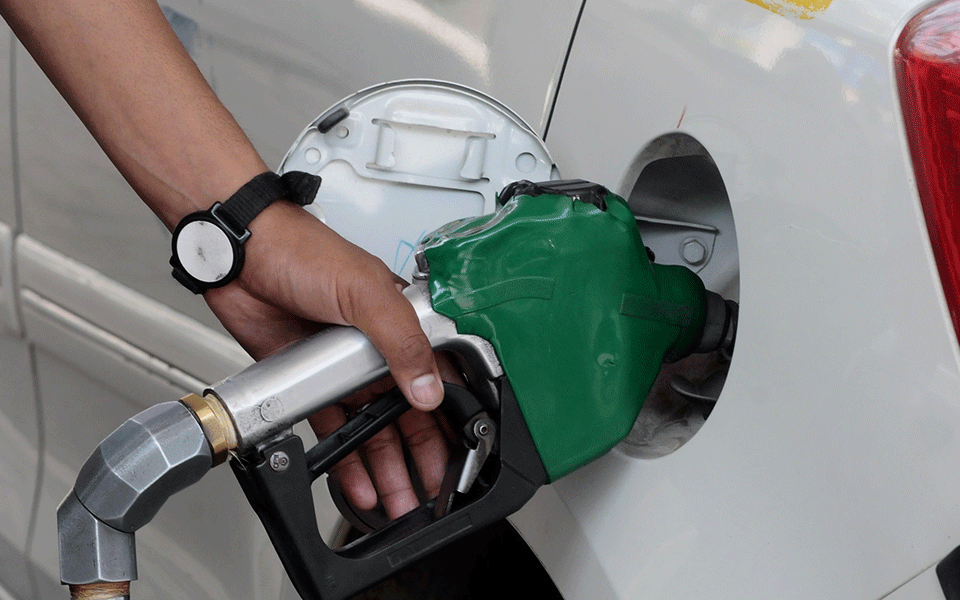
New Delhi, Aug 27 : Diesel prices touched record high levels across metro cities on Monday, barring Mumbai, and prices of petrol too inched nearer their all-time peak across major cities.
In the national capital, diesel was priced at Rs 69.46 per litre, against the previous high of Rs 69.32
recorded on Sunday, according to data from the Indian Oil Corporation.
In Kolkata and Chennai, the key transportation fuel was priced at Rs 72.31 and Rs 73.38 per litre respectively, up from 72.16 and Rs 73.23 on Sunday, which were themselves record highs.
Cost of diesel in Mumbai, was at Rs 73.74 on Monday, just five paise short of its all-time of Rs 73.79 per litre, recorded on May 29. On Sunday, it was priced at 73.59 in the financial capital of the country.
The rise in prices of diesel gains significance as it is mostly used in transportation of food and agricultural products and an increase in its price may lead to higher inflation.
The surge in fuel prices is largely attributed to the recent rise in crude oil cost and the high excise duty levied on transportation fuel in the country.
In line with increase in diesel prices, petrol prices too are on the rise and are nearing their all-time high levels. In Delhi, Kolkata, Mumbai and Chennai, the fuel was priced Rs 77.91, Rs 80.84, Rs 85.31 and Rs 80.94 per litre, respectively, on Monday, against the previous levels of Rs 85.20, Rs 80.80, Rs 86.24 and Rs 81.43 per litre.
The all-time high petrol prices in Delhi, Kolkata, Mumbai and Chennai are Rs 78.43, Rs 81.06, Rs 86.24 and Rs 81.43 per litre, touched in May 29.
Let the Truth be known. If you read VB and like VB, please be a VB Supporter and Help us deliver the Truth to one and all.
Maharashtra sets up state vaccination task force to strengthen immunisation programme

Mumbai (PTI): The Maharashtra government has set up a State Vaccination Task Force to strengthen the regular immunisation programme and review the progress of related campaigns, a health department official said on Monday.
The State Vaccination Task Force will comprise at least 29 members and will be headed by the administrative head of the health department, he informed.
The government has also constituted separate district-level and municipal vaccination task forces to improve implementation and address challenges at the grassroots level, he said.
Municipal task forces, chaired by respective civic commissioners, have been constituted in view of the vast urban population in Maharashtra and the role of civic bodies in implementing different health programmes.
The district-level task forces will function under the chairmanship of collectors.
"Complete immunisation of children at the appropriate age is an extremely simple, cost-effective and highly effective measure to reduce child mortality and the prevalence of diseases among kids. Immunisation is a powerful tool for reducing illness in children," maintained the official.
To ensure full vaccination of all children, the state government implements various campaigns from time to time as per the central government guidelines, he pointed out.
"Active participation and cooperation of other relevant government departments are essential (in making these campaigns successful)," according to the official.
The state-level body will review the regular immunisation programme, associated campaigns and vaccine-preventable diseases in detail. It will also conduct focused assessments of high-risk districts and municipal corporations, including vacancies at district, municipal and sub-district levels, availability of cold chain equipment, resource gaps and training requirements, he noted.
The state task force will review allocation and utilisation of funds for immunisation and ensure timely action by officers concerned based on reports from district and municipal task forces and state-level monitoring mechanisms, the official said.
It will also ensure active coordination and participation of other government departments in immunisation drives, while district and municipal task forces will carry out similar functions at their respective levels, the official added.