Difficult to deal with huge arrear of cases if Bar members don't cooperate with trial courts: SC
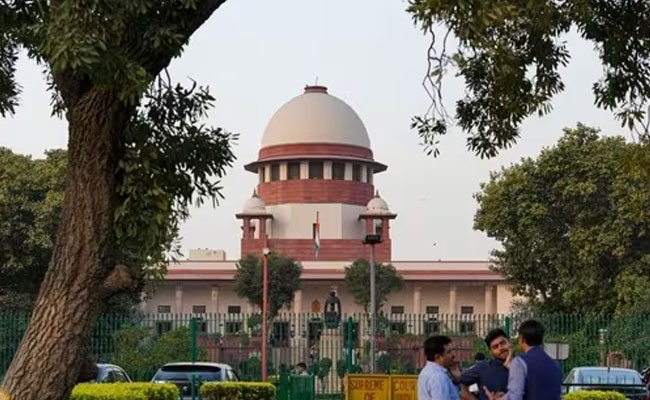
New Delhi (PTI): The Supreme Court has said that fairness is a "hallmark of great advocacy" and if the members of the Bar do not cooperate with the trial courts, it would be very difficult for the courts to deal with huge arrears of cases.
The apex court made the observations while hearing a petition arising out of an order of the Bombay High Court. It noted that as per data available on the National Judicial Data Grid, there is a huge pendency of suits in the trial courts in Maharashtra.
"If the members of the Bar do not cooperate with the trial courts, it will be very difficult for our courts to deal with the huge arrears," a bench of Justices Abhay S Oka and Rajesh Bindal said in its verdict delivered on September 14.
The top court said while a trial is being conducted, the members of the Bar are expected to act as officers of the court and conduct themselves in a reasonable and fair manner.
"The members of the Bar must remember that fairness is a hallmark of great advocacy. If the advocates start objecting to every question asked in the cross- examination, the trial cannot go on smoothly. The trial gets delayed," it said.
The observations by the top court came after it noted that as per the trial court's recording in the matter, one of the advocates had taken objections on every question during the cross-examination of a witness.
The bench delivered its judgement on an appeal challenging the June 2021 order of the high court which had stayed the execution and operation of a judgement and decree passed by a district court on a suit filed by a firm engaged in selling country liquor.
Claiming that it has a copyright of the artistic label displayed on the bottles of the country liquor sold by it, the firm had claimed permanent injunction restraining another company from infringing copyright in its artistic label.
In its suit, the firm had also prayed for a decree of injunction restraining the other side from manufacturing, selling, offering for sale, advertising or otherwise dealing in country liquor having its trademark label or any deceptively similar trademark label.
The apex court noted the district court had restrained anyone from manufacturing, selling, offering for sale, advertising or otherwise dealing in country liquor bearing the trademark or any other trademark label deceptively similar to the plaintiff's trademark label.
The other company had moved the high court which stayed the execution and operation of the decree till the final disposal of the appeal.
The apex court, which dismissed the plea observing that the high court was justified in granting order of stay pending final disposal of the appeal, noted it cannot refrain from recording "certain disturbing features" about the conduct of a member of the Bar while the trial was being conducted in the case.
It referred to the trial court's recording during the cross-examination of a witness by one of the firms.
The bench noted the trial judge had recorded that the lawyer was taking objections for each and every question.
"In the facts of the case, looking at the persistent objections raised by the advocate, the court was required to record a substantial part of the cross- examination in question and answer form which consumed a lot of time of the court," the top court said.
While dismissing the plea, the bench clarified that while deciding the pending appeal, the high court would not be influenced by the observations made by the apex court.
Let the Truth be known. If you read VB and like VB, please be a VB Supporter and Help us deliver the Truth to one and all.
AIITA welcomes Karnataka’s ban on obscene songs in school events
Bhatkal: The Karnataka unit of the All India Ideal Teachers Association (AIITA) has welcomed the Karnataka government’s decision to strictly ban school children from dancing to obscene songs during educational and cultural programmes in government, aided, and private schools across the state.
AIITA Karnataka State President M. R. Manvi congratulated the government for taking what he termed an important step to preserve the sanctity of education.
“Such decisions to safeguard the dignity of school children and uphold the values of education are the need of the hour. This rule should not be limited to government schools alone but must be strictly implemented in all private educational institutions as well,” he said.
He further urged the government to address other concerns within school programmes.
“The government should not only prohibit obscene dances in the name of school anniversaries, but also ensure that plays and dialogues that incite religious hatred are avoided. Schools should be centres of harmony, not platforms for spreading hatred,” he added.
According to a recent circular issued by the Department of School Education and Literacy, obscene dances are adversely affecting the mental health and moral values of students.
In this regard, schools have been advised to use songs that promote nationalism, positive thinking, the greatness of Kannada culture, and value-based traditions instead of inappropriate content during programmes.
The circular also emphasises that students should be dressed in decent attire.
AIITA also backed the department’s warning that disciplinary action would be taken against head teachers if such guidelines are violated. The association has further demanded that district Deputy Directors of Public Instruction strictly monitor the implementation of these rules.