Disburse pension to elderly on time; provide PPE, face masks to people in old age homes: SC
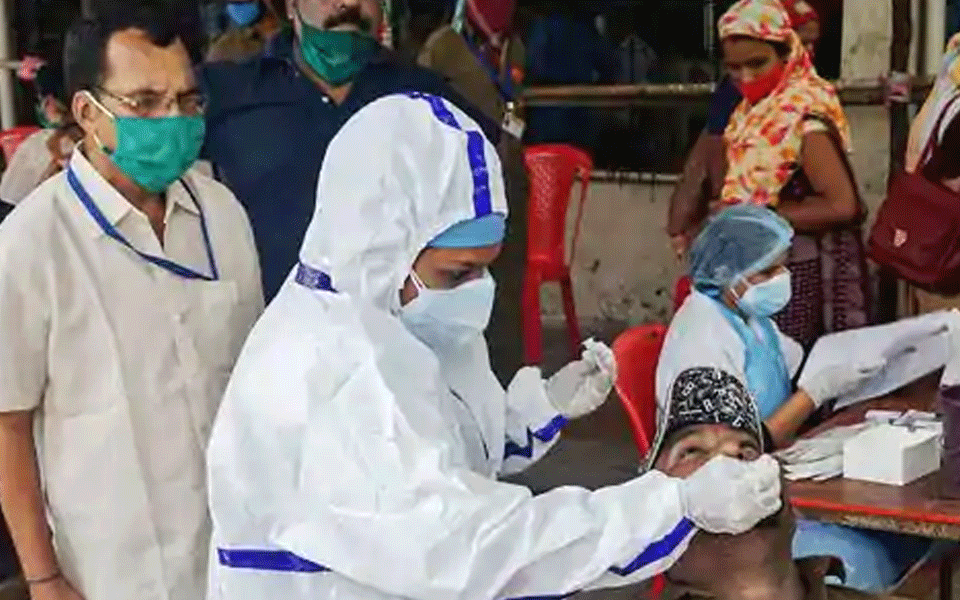
New Delhi: The Supreme Court Tuesday said pension to elderly persons should be disbursed on time and those living in old age homes across the country be provided with personal protective equipment (PPE), sanitisers and face masks during the persisting COVID-19 pandemic.The elderly are suffering and steps should be taken by the administration to attend to them whenever any request is made, the top court said.
The authorities should ensure timely disbursal of pension to them and the elderly in old age homes be provided PPE kits, the top court said.A bench headed by Justice Ashok Bhushan said this while hearing a plea filed by former Union minister and senior advocate Ashwani Kumar who said that at the time of the pandemic, it is necessary that pension to elderly reaches them on time.
Kumar told the top court that crores of elderly people are living alone and appropriate direction should be issued that pension reaches to those, who are already identified and eligible for it, on time.
Senior advocate V Mohana, appearing for the Centre, told the bench that states are already making efforts in this regard and this is not an adversarial issue.When Mohana sought one week to file a reply to the plea, Kumar opposed it and said urgent actions are needed in this matter.
The petitioner also raised the issue of the need to provide face masks, sanitisers and PPE to the elder people to protect them from the deadly virus.The bench also dealt with another application which has sought direction for treatment of elderly for coronavirus without any discrimination.
The bench, which asked the states to file their responses on the plea, said that directives passed by the apex court in December 2018 in the matter be implemented keeping in view the pandemic situation prevailing in the country.It said the copies of the applications would be supplied to the states.
In its December 2018 verdict, the apex court had said that statutory rights of over 10 crore elderly persons in India must be recognised and implemented.It had directed the Centre to obtain information from all states and Union Territories about the number of old age homes in each district and had also suggested a relook at the pension for the elderly so as to make it more realistic.
Emphasising on the social justice aspect, the apex court had said that the state is obligated to ensure that right to live with dignity, shelter and health of citizens, including the elderly, are not only protected but also enforced.
It had also directed the Centre to obtain information from all the states about the medical facilities and geriatric care available to senior citizens in each district.
It had said that based on the information gathered by the Centre, a plan of action should be prepared for giving publicity to provisions of the Maintenance and Welfare of Parents and Senior Citizens Act, 2007 to make elderly aware about their constitutional and statutory rights.
The apex court had pronounced the verdict on the pleas by Kumar and one Sanjeeb Panigrahi who both had raised the issues concerning the elderly.
The court had noted in its 2018 order that the Centre had in 2007 fixed monthly pension of Rs 200 for persons between the age of 60-79 years and Rs 500 for those aged above 80.
Let the Truth be known. If you read VB and like VB, please be a VB Supporter and Help us deliver the Truth to one and all.
Karnataka School Edu Dept prohibits children from being made to dance to obscene songs
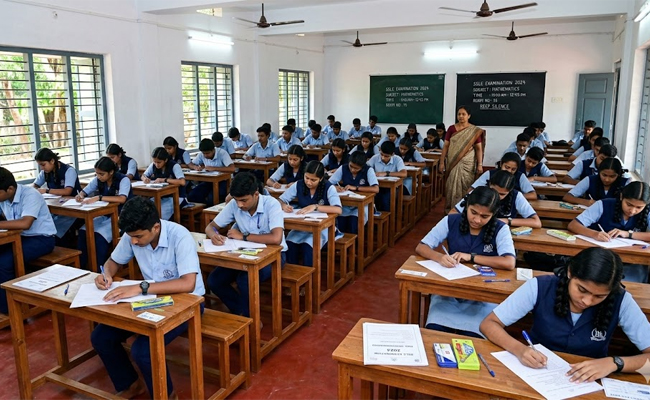
Bengaluru (PTI): The Karnataka School Education Department has issued a circular strictly prohibiting children from being made to dance to obscene songs in educational and cultural programmes.
It stated that such dances would negatively impact students' mental health and moral values. It will create indiscipline and harm the sanctity of education.
"All the Deputy Directors (Administration) of the state's School Education Department have been asked to take strict measures to prevent children or students from dancing to obscene songs in all government, aided and unaided schools in the state," the office of the commissioner of the School Education Department said in a recent circular.
"If it is found that children are being made to dance to obscene songs, appropriate action will be taken against the headmaster or management of such school," it added.
The department also listed certain measures in this regard, which include: strictly prohibiting children from being made to dance to obscene songs during educational and cultural programmes; selecting songs that are inspiring, positive, instilling national pride in children and reflecting the greatness, dignity, values, culture, and morality of the state.
Stating that the school headmaster and management are responsible for selecting songs and dances for cultural programmes, it said, they should also ensure that students wear decent clothes in dance or cultural programmes.