Divorce can't be granted citing cruelty based on WhatsApp chat without rebuttal chance to spouse: HC
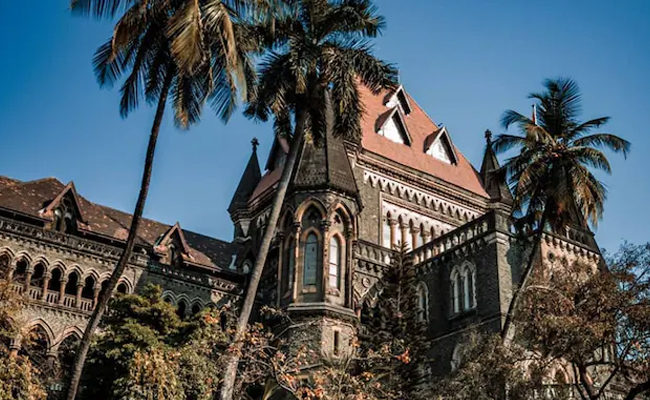
Mumbai (PTI): Divorce cannot be granted on grounds of alleged cruelty merely based on WhatsApp chats without giving the spouse a chance to rebut, the Bombay High Court has said.
A bench of Justices Bharati Dangre and Manjusha Deshpande last week quashed an order passed by the Nashik district family court allowing an application filed by a man seeking divorce from his wife on grounds of cruelty.
The woman moved the HC, challenging the family court order claiming that the same was passed ex-parte and without giving her an opportunity to oppose or put forth her arguments.
ALSO READ: US lawmakers seek clarity over financial burden, human cost, endgame in Iran conflict
The family court, in its May 2025 order, relied on a WhatsApp chat submitted by the man in which the woman demanded that they shift from Nashik to Pune to live separately, and also in which she allegedly made derogatory comments against her mother-in-law and sister-in-law.
The family court noted that the wife had used pressure tactics, emotional blackmail and intemperate language in the WhatsApp chat and held that cruelty was meted against the husband and hence he was entitled to divorce.
The high court, in its order, noted that the family court failed to give an opportunity to the wife to rebut the evidence (WhatsApp chats) submitted by the husband.
"Merely relying on the WhatsApp chat, the divorce decree cannot be granted, since it is not proved by leading evidence," the HC said.
Hence, the order granting decree of divorce needs to be set aside and the matter needs to be remanded to the family court so that the wife is granted an opportunity to be heard and submit evidence, it said.
The court said that while the family court decides the matter afresh, the estranged couple can explore the possibility of settlement through mediation.
Let the Truth be known. If you read VB and like VB, please be a VB Supporter and Help us deliver the Truth to one and all.
It's govt's responsibility to support youth who dare to dream: Omar Abdullah
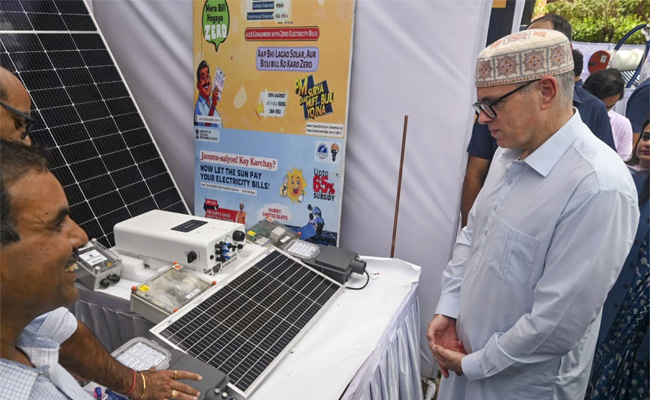
Jammu (PTI): Jammu and Kashmir Chief Minister Omar Abdullah on Monday said the government may not be able to provide jobs to everyone, but it can create an ecosystem for youngsters to become entrepreneurs and innovators.
It is the responsibility of the government to support youth who dare to dream, he said.
After inaugurating the 11th National Conference and Exhibition on Emerging and Innovative Trends in Engineering Technology (NCEEITET) at the Government College of Engineering and Technology (GCET) in Jammu, Abdullah said, “We may not be able to provide jobs to everyone, but we can certainly create an environment where our youngsters become entrepreneurs and innovators.”
The two-day conference is being organised by the GCET in collaboration with the Indian Institute of Technology-Kharagpur and the World University Consortium (WUC).
Addressing the gathering, Abdullah assured that all necessary steps would be taken to strengthen infrastructure and support systems at the GCET, ensuring that it continues to evolve as a premier institution.
The chief minister also inaugurated a new building for the School of Architecture in the college, built at Rs 19.71 crore.
Stressing the need to balance modernity with the region’s cultural and historical identity, Abdullah said, “Not every building needs to be made of glass and steel. Our structures must reflect our heritage and preserve our cultural ethos.”
Highlighting the role of emerging technologies such as artificial intelligence and machine learning, Abdullah said they could significantly improve tourism management, visitor experience and service delivery in Jammu and Kashmir.
However, he cautioned that technological advancement should complement human effort rather than replace jobs, especially in a region where unemployment remains a concern.
The chief minister said that attracting tourists to Jammu and Kashmir was not difficult, but ensuring repeat visits required consistently enriching experiences and better infrastructure across tourism segments, including pilgrimage, border and leisure tourism.
To address the infrastructure gaps in the college, Abdullah announced that funds would be provided this year for the construction of an auditorium.
He also assured support for setting up an incubation centre in GCET.
During the event, Abdullah also released the e-proceedings of the conference, comprising 28 shortlisted research papers.