Doctors counter govt statement that they work for 40 hrs a week

New Delhi, Jan 6 : Doctors have countered a government statement that they work for a maximum of 40 hours a week, claiming that their work hours often add up to as much as 100 hours a week.
Minister of State for Health Ashwini Kumar Choubey recently informed the Lok Sabha that the working hours for doctors and other medical practitioners employed at three Centre-run hospitals -- Ram Manohar Lohia, Safdarjung and Lady Hardinge Medical College -- and the associated hospitals in Delhi normally did not exceed 40 hours a week.
Responding to a question, the minister, however, added that the duty timing and working hours of doctors and medical professionals were governed by the exigencies of their work and depended on whether they were on emergency duty.
Choubey's claim has drawn the ire of doctors, especially the resident doctors, who claimed that they put in more than double the hours, contrary to what Parliament has been informed.
The minister, in his reply, also stated that "there has been no reported case of negligence of duty or deterioration of quality of healthcare services on account of the extended working hours in these central government hospitals".
"As regards the standards of treatment, adequate residents/doctors are available in these Central government hospitals to provide optimum patient care. Further, whenever there is an increase in the workload, necessitating an increase in the number of doctors, new posts are created to ensure that the required manpower is available to deliver the desired level of clinical care and to ensure that there is no medical negligence," Choubey told the Lok Sabha on December 21.
A senior resident doctor at the AIIMS said the work hours for doctors at the Centre-run hospitals often added up to 100-120 hours a week due to a heavy rush of patients and a shortage of doctors.
"Also, the duty timings differ, based on the department in which one is working, as the doctors in Emergency, Obstetrics and Gynaecology, Medicine and Surgery departments have long work timings compared to the other departments," he said.
Another senior resident doctor at the hospital said lack of sleep and a lot of work led to stress among doctors, making them prone to depression.
"Our job is like a policeman and there are no fixed hours. We are always ready to do extra work during an emergency. But this has become a norm now and even patients face problems because of this.
"For example, in the Obstetrics and Gynaecology department, if the duty of a resident doctor starts at 9 pm, he leaves only at 6 pm the next evening," he said.
According to another resident doctor at the Safdarjung hospital, this kind of a work environment also leads to instances of medical negligence.
"There is no proper infrastructure. There is a paucity of doctors and staff at the hospitals, due to which the resident doctors are overburdened.
"We try to take care of the health of the patients, but nobody is concerned about our mental and physical well-being. The government should look into the issue and regulate the working hours so as to ensure that the doctors provide quality care to the patients," he said.
Let the Truth be known. If you read VB and like VB, please be a VB Supporter and Help us deliver the Truth to one and all.
Bhojshala complex registered as 'mosque' in old revenue records: Muslim side to MP HC
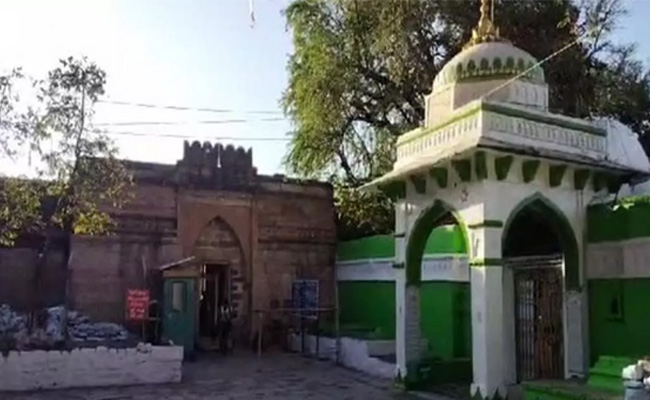
Indore (PTI): The disputed Bhojshala Temple-Kamal Maula Mosque complex has historically been registered as a 'mosque' in revenue records and available sources don't clearly mention any Saraswati temple established by then-king Raja Bhoj, the Muslim side has told the Madhya Pradesh High Court.
The Hindu community considers Bhojshala a temple dedicated to Goddess Saraswati, while the Muslim side calls the 11th-century monument Kamal Maula Mosque. The disputed complex located in Dhar district is protected by the Archaeological Survey of India (ASI).
During the hearing before the HC's Indore bench of Justices Vijay Kumar Shukla and Justice Alok Awasthi on Wednesday, Qazi Moinuddin questioned two PILs filed as intervenors in the Bhojshala case by an organisation named Hindu Front for Justice, one Kuldeep Tiwari and another individual.
Moinuddin claims to be a descendant of Sufi saint Maulana Kamaluddin Chishti and the 'Sajjadanashin' (spiritual head, guru, or successor of a Sufi shrine, khanqah, or religious site).
The PILs state that Bhojshala is actually a Saraswati temple and only Hindus should be granted the right to worship at the disputed complex.
Moinuddin's lawyer, Noor Ahmed Sheikh, claimed in the court that his client's ancestors, who are descendants of Maulana Kamaluddin Chishti, have historically held titles to the complex, and the site was also recorded as a "mosque" in government revenue records.
He contended that those associated with the management of the Kamal Maula Mosque, located within the complex, have been in "continuous and peaceful occupation" of the site for a long time.
Citing Muslim law, Sheikh argued that in the case of religious property, particularly a mosque or its related properties, officials such as the Sajjadanashin and Mutawalli (person entrusted with management, maintenance, and administration of a Waqf), and their descendants, not only have the right to intervene, but also have the right to manage and use such a structure.
Citing provisions of the Ancient Monuments Preservation Act 1904, the Muslim side's lawyer said the term "in-charge of the property" is used in this law, which makes it clear that the person or party who has been in charge of a property for a long time has rights over it.
During the hearing, Touseef Warsi, the lawyer representing the Maulana Kamaluddin Welfare Society of Dhar, claimed that Hindu parties in both PILs had made "misleading representations" regarding historical facts before the high court.
He further claimed that available historical sources do not clearly mention the existence of a Saraswati temple established by Raja Bhoj, the legendary king of the Parmar dynasty who ruled Dhar from 1010 to 1055.
The ASI, a central government agency, has adopted three different positions in the lawsuits filed regarding the Bhojshala dispute, changing its answers from time to time, and this situation raises serious questions about judicial scrutiny of the complex, Warsi submitted.
He raised objections regarding the ASI's process of scientific survey of the Bhojshala complex, carried out on the HC order in 2024, and the method of videography and requested the court to examine these objections.
The hearing in the Bhojshala case will continue on Thursday.
The HC has been regularly hearing four petitions and one writ appeal since April 6, contesting the religious nature of the monument.