Doctors to be penalised for not prescribing generic drugs, says new NMC regulation

New Delhi, Aug 12: All doctors must prescribe generic drugs, failing which they will be penalised and even their license to practice may also be suspended for a period, according to the new regulations issued by the National Medical Commission.
The National Medical Commission (NMC) in its 'Regulations relating to Professional Conduct of Registered Medical Practitioners" also asked doctors to avoid prescribing branded generic drugs.
Even though doctors are currently required to prescribe generic drugs only, there are no penal provisions mentioned in the regulations issued in 2002 by the Indian Medical Council.
The NMC regulations notified on August 2, stated that India's out-of-pocket spending on medications accounts for a major proportion of public spending on healthcare.
"Generic medicines are 30 to 80 per cent cheaper than branded drugs. Hence, prescribing generic medicines may overtly bring down healthcare costs and improve access to quality care," it said.
Under the generic medicine and prescription guidelines of the regulations, the NMC defined generic medicines as a "drug product that is comparable to brand/reference listed product in dosage form, strength, route of administration, quality and performance characteristics, and intended use".
On the other hand, a branded generic drug is one which has come off patent and is manufactured by drug companies and sold under different companies' brand names.
These drugs may be less costly than the branded patent version but costlier than the bulk-manufactured generic version of the drug. There is less regulatory control over the prices of branded generic drugs.
"Every RMP (registered medical practitioner) should prescribe drugs using generic names written legibly and prescribe drugs rationally, avoiding unnecessary medications and irrational fixed-dose combination tablets," the regulation stated.
In case of violations, a doctor may be given a warning to be more careful about the regulations or instructed to attend a workshop or academic programme on ethics, personal and social relations and/or professional training.
On repeated violations, the doctor's license to practice may be suspended for a particular period, the regulations said.
The NMC said prescriptions should be legible and preferably written in all caps to avoid misinterpretation. As far as possible, prescriptions should be typed and printed to avoid errors, it said.
A template has also been provided by the NMC that may be used for writing prescriptions rationally.
Medical practitioners should prescribe only those generic medicines available in the market and accessible to patients. They should also advocate for hospitals and local pharmacies to stock generic drugs, the NMC regulation stated.
They should encourage patients to purchase drugs from Jan Aushadhi Kendras and other generic pharmacy outlets, educate medical students and the public about the equivalence of generic medicine with their branded counterparts and should actively participate in programs related to promotion and access to generic medicines, it added.
Let the Truth be known. If you read VB and like VB, please be a VB Supporter and Help us deliver the Truth to one and all.
4 held for sexually assaulting woman, girl on moving bus after social media alert in UP's Agra
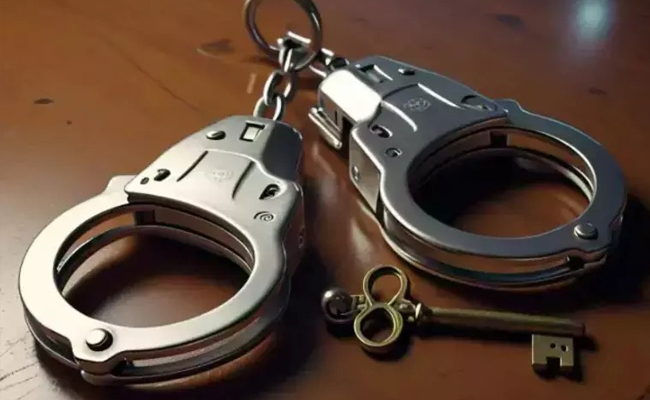
Agra (UP) (PTI): Four people were arrested, after a prompt response by police following a social media alert, for allegedly sexually assaulting a woman and a girl inside a moving bus here, officials said on Tuesday.
According to an official police statement, at 12:27 am on April 27, information was received on the social media platform X about an incident of sexual assault on a bus travelling from Kanpur to Ahmedabad, which was approaching Namner crossing in Agra.
Acting under the direction of Police Commissioner Deepak Kumar, the Agra Police social media team immediately alerted the Rakabganj police station within minutes and coordinated with the victims to confirm the incident and obtain the exact location, it stated.
Police teams launched intensive checking at Namner crossing and intercepted the bus as it reached the spot. The four accused involved in the incident were apprehended on the spot, and legal action was initiated against them, the statement said.
The police said the swift response and coordination between the social media team and field units ensured timely action, bringing relief to the victims and other passengers, who expressed gratitude towards the police, it added.