Don't be guided by majoritarian views: Chief Justice Dipak Misra

Cuttack, July 29 : Chief Justice of India Dipak Misra on Sunday advised the law students not to be guided by the majoritarian views and remain true to their conviction.
"You should never be guided by the majoritarian views. Be true to your own conviction and conscience and always endeavour to be responsibly true to factual aspects by piercing the veil of perceptions being floated around you," he said, as he delivered the presidential address at the fifth annual convocation of National Law University (NLU), Odisha.
He suggested them to always be lucid, articulate and concrete in their line of reasoning and arguments, penetrating and striking at the focal point of discourse or dispute just like the bull's eye of the dartboard.
"You will become the connecting force between the justice delivery mechanism and the people at large. So, in a way, you are actually going to the amessengers of justice' and atorch bearers' of the legal world," said the CJI.
Michael Kirby, a former judge on the High Court of Australia, said: "Indeed, it is central to our lives as lawyers - and especially if we become judges - to be honest, candid and respectful of human rights for all, including for our own humanity. Integrity lies at the very heart of lawyers life. Honesty, respect, kindness to one another, are vital accompaniments on our life-long journeys as lawyers."
Justice Kirby was also conferred with the Degree of Doctor of Laws (LLD) (Honoris Causa) by the university.
Vineet Saran, Chief Justice of Orissa High Court and Chancellor of the university, sitting judges of High Court, senior advocates, judicial officers were among the other dignitaries present.
A total of 167 graduates were awarded degrees, including 49 LLM candidates, and 118 from undergraduate courses - 57 and 59 candidates respectively from the BA LLB and BBA LLB streams.
Let the Truth be known. If you read VB and like VB, please be a VB Supporter and Help us deliver the Truth to one and all.
SC to hear on May 4 PIL seeking stringent guidelines for issuing Aadhaar to adolescents, adults
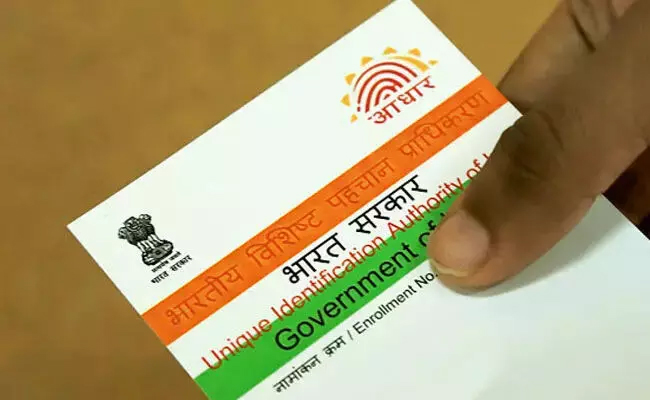
New Delhi (PTI): The Supreme Court is scheduled to hear on Monday a plea seeking a direction to the Unique Identification Authority of India to issue new Aadhaar cards only to citizens up to the age of six years, and frame stringent guidelines for its issuance to adolescents and adults to stop infiltrators from masquerading as Indian citizens.
As per the apex court's causelist of May 4, the plea would come up for hearing before a bench of Chief Justice Surya Kant and Justice Joymalya Bagchi.
The Public Interest Litigation (PIL) filed by lawyer Ashwini Upadhyay has also sought a direction to the authorities to install display boards at common service centres stating that the 12-digit unique identification number is only a "proof of identity" and not a proof of citizenship, address or date of birth.
Besides all the states and Union Territories, the plea has made the UIDAI -- which is the authority that issues Aadhaar -- and the Union ministries of home, law and justice, and electronics and information technology as parties.
The plea, filed through advocate Ashwani Dubey, said Aadhaar, originally intended as a proof of identity, has increasingly become a "foundational document" enabling individuals to obtain other identification documents, such as ration cards, domicile certificates and voter identity cards.
"The UIDAI has issued 144 crore Aadhaar and 99 percent Indians have been enrolled. Therefore, the petitioner is filing this writ petition as a PIL under Article 32, seeking a direction to UIDAI to issue new Aadhaar to children only and frame new stringent guidelines for adolescents and adults, so as to stop infiltrators from getting it and masquerading as Indian citizens," the plea said.
It said the need to file the plea arose when the petitioner came to know the manner in which infiltrators are able to procure Aadhaar through a verification process that is weak and can be easily manipulated.
"Foreigners apply for Aadhaar under the 'foreign' category. But infiltrators apply for Aadhaar under the 'Indian citizen' category and get it easily made. Thereafter, they obtain a ration card, birth and domicile certificate, driving licence, et cetera, essentially becoming indistinguishable from Indian citizens…," it said.
Besides seeking other directions, the plea has raised legal questions, including whether the Aadhaar Act 2016 has become "temporally unreasonable" for failing to keep up with the legislative intent of distinguishing foreigners from Indian citizens.
It said the alleged misuse of Aadhaar undermines targeted welfare delivery and leads to diversion of public resources.