Don't cut trees till July 19, says NGT
New Delhi, July 2 : The National Green Tribunal (NGT) on Monday stayed the felling of trees in Delhi till July 19. A bench headed by Justice Jawad Rahim also issued notices and sough details from the NBCC, which is redeveloping infrastructure in south Delhi, the Rural Development Ministry, Delhi Jal Board and the Environment Ministry.
"Keeping the high court's order in mind, (maintain) status quo on the felling of trees," the green court said.
On June 25, the Delhi High Court barred NBCC, a central government construction company, from cutting trees till July 4.
Observing that "felling of trees severely impacts and destroys environment", the NGT said "NBCC should give us clear cut answer about felling of trees and the details of the project" and sought details till July 19, the next date of hearing.
The order came on a petition filed by Delhi-based organisation Green Circle. It is estimated that 16,500 trees will be axed for the project, of which over 2,000 have already been felled.
NBCC has objected to the figure of 16,500 trees in the NGT, saying that "the numbers are myths, not right".
According to NBCC, approximately 13,000 trees will have to be axed in Delhi's southern region -- also one of the greenest areas -- in the plan to redevelop three residential colonies to construct 25,000 new flats and a parking space for about 70,000 vehicles.
Let the Truth be known. If you read VB and like VB, please be a VB Supporter and Help us deliver the Truth to one and all.
Bridge portion collapses on Jammu outskirts; 3-4 labourers feared trapped, 1 rescued
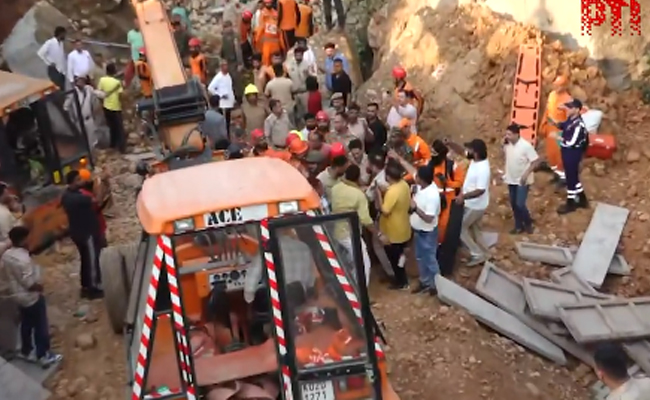
Jammu (PTI): A portion of a small bridge collapsed in the Bantalab area on the outskirts of Jammu city on Friday, trapping at least three to four labourers under the debris, while one injured worker was rescued, official sources said.
Authorities have closed the road link following the collapse of the portion of the bridge.
The incident occurred when labourers were carrying out repair work on a retaining wall near the bridge that was damaged in last year's flash floods, the sources said.
According to the sources, a section of the bridge suddenly gave way, burying workers engaged at the site under the rubble.
Police, Army and State Disaster Response Force (SDRF) teams launched rescue operations to extricate those buried under the debris. They pulled out one injured labourer and shifted him to a hospital, the sources said.
Family members of the labourers present at the site said around six workers engaged at the site at the time of the incident came under the debris when the structure collapsed. The family members said while two of the labourers managed to escape, four got trapped.
The sources said those trapped included the husband of a woman labourer, a mason, an unmarried labourer and a relative of the contractor.
There was no official confirmation on the exact number of persons trapped under the debris till the filing of this report.
The rescue operations are ongoing.