Don't destroy, weaken the system but transform it: CJI
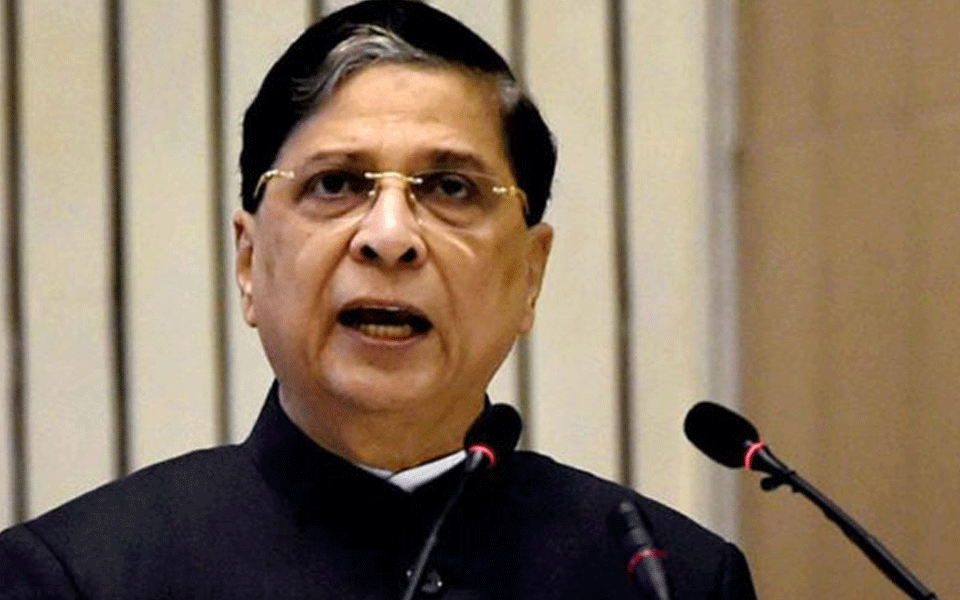
New Delhi, Aug 15 : Chief Justice of India Dipak Misra on Wednesday said it was easy to criticise, attack and destroy a system but instead an endeavour should be made to transform and reform it by transcending personal ambitions or grievances.
"To criticise, attack and destroy a system is quite easy (but) very difficult and challenging to transform it into a performing one. For this one has to transcend one's personal ambitions or grievances", the Chief Justice said.
"There may be some elements who try to weaken the institution," but "I and you (lawyer community) together will refuse to succumb," Misra said in an apparent reference to discordant voices coming from within the top judiciary and outside.
He called for the "constructive steps to be taken with a positive mindset of reforms, no matter how small they are and a concrete reform must be undertaken with rationality, maturity, responsibility and compassion. It has to be productive, instead of being counter-productive."
Mishra said this while speaking at the Independence Day function organised in the Supreme Court by the Supreme Court Bar Association.
Referring to the mention of "polity of identity" in Law Minister Ravi Shankar Prasad's speech at the event, Chief Justice Misra said: "I must say I am happy the Law Minister of India has expressed concern about the identity of the citizens. I only like to add that this identity has to be founded on the identity of humanness which is fundamentally, constitutionally legitimate."
"How far we expand this idea only the future will tell. And why I say so all of you are absolutely aware."
Misra also disagreed with Prasad that people, wherever they go in India, should visit the freedom fighters in recognition of their contribution to the freedom struggle and praise them.
"I do not deny that each citizen during that period, in his own or her own way fought for the freedom of country. The Law Minister says that when we go to some place in India we must visit them and praise them. I disagree. People who fought for the country did not fight for their praise. They did not even bother about you. They fought because they fought for the country", Chief Justice Misra told the gathering comprising of sitting and former judges of the apex court, senior lawyers including Fali Nariman and Soli Sorabjee and others.
To fight for one's own country, own civilisation and all the rights, the Chief Justice said is possibly a tribute to them.
Prasad called for striking a healthy balance between the three organs of the state saying that the governance of the country must be left to the elected representatives as governance and accountability go together.
The Law Minister while recalling the trauma of partition, said that despite large-scale destruction and dislocations, India chose not to be theocratic with the State having no religion or faith.
This he described as a "general larger blueprint of India".
Referring to the different phases of development over the last seven decades, the Law Minister said initially it was a "polity of want, then came polity of identity and now we have polity of aspiration and hope".
Speaking on the occasion, Attorney General K.K. Venugopal pointed to the overcrowding of the court rooms and corridors. He called for joint efforts by the top court, the Law Ministry and the Supreme Court Bar Association to address the problem.
Making a distinction on how differently independence means to the state and the people, Supreme Court Bar Association President Vikas Singh said "Independence is a state of mind and not a conferment of a status."
He said what was important was how people can serve their country.
Let the Truth be known. If you read VB and like VB, please be a VB Supporter and Help us deliver the Truth to one and all.
Congress using hijab issue to pacify minority anger, alleges Karnataka LoP R Ashoka
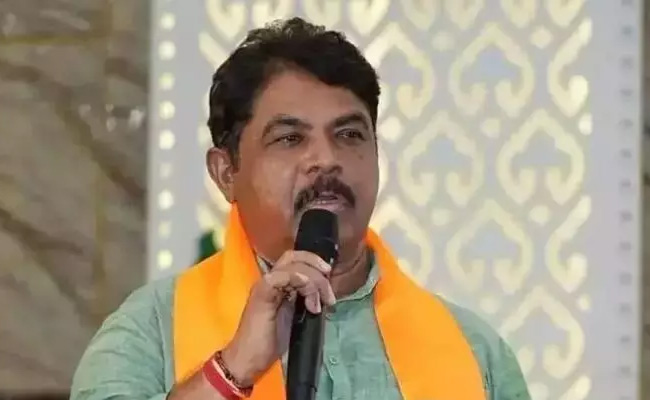
Bengaluru: Leader of Opposition in the Assembly R. Ashoka has accused the Congress government of using the hijab issue to placate what he described as discontent among minority voters after the Davanagere by-election.
In a post on X on Wednesday, Ashoka alleged that the state government, instead of addressing issues such as price rise, corruption, farmers’ distress and law and order, was attempting to retain its minority vote base by reviving the hijab issue.
Referring to the 2022 dress code introduced by the BJP government, which prohibited hijab in schools and colleges, Ashoka said the Karnataka High Court had upheld the policy and emphasised the importance of discipline in educational institutions.
He questioned the Congress government’s move to revisit the issue and asked whether setting aside the court-backed policy to benefit one community could be described as secularism.
Ashoka further alleged that while the government was willing to permit hijab, it continued to prohibit saffron shawls.
He accused the government of dividing students on religious lines rather than treating schools and colleges as spaces of equality.
Drawing a comparison with Mamata Banerjee’s government in West Bengal, Ashoka claimed that excessive appeasement politics had harmed the state and warned that the Congress in Karnataka could face a similar political response.
He said voters in Karnataka would teach the Congress a lesson for what he termed “vote-bank politics” and for compromising constitutional and judicial principles.