"Don't Lecture": Mohammad Kaif Slams Imran Khan's Minority Comment
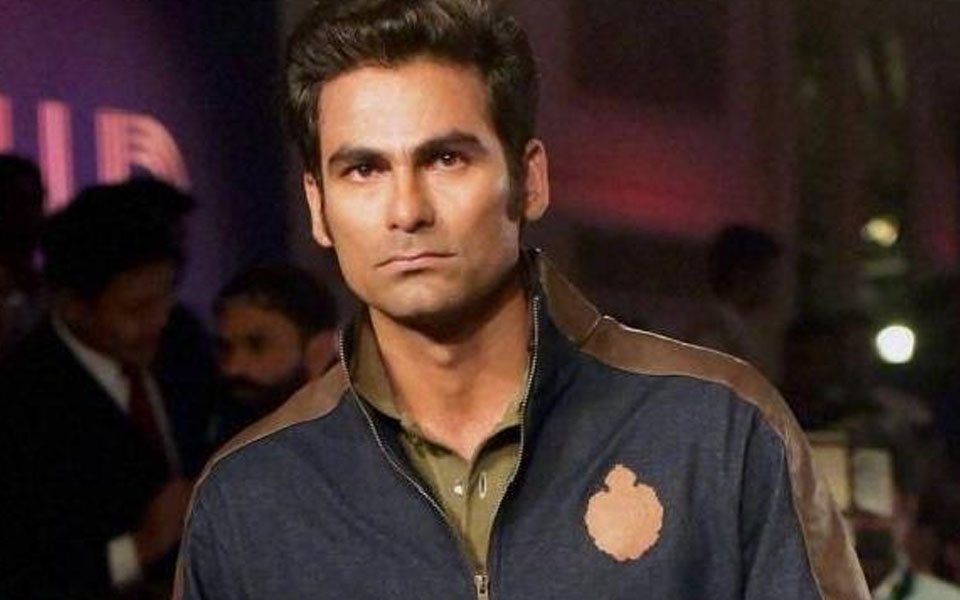
NEW DELHI: Pakistan Prime Minister Imran Khan's comment that he would teach the Narendra Modi government how to treat minorities has received a sharp rebuke from former India cricketer Mohammad Kaif, who said Pakistan was the last country to lecture any country on the matter. Mr Kaif pointed out that since the time of the formation of Pakistan, the number of minorities living in the country has drastically reduced.
"There were around 20% minorities at the time of Partition in Pakistan, less than 2% remain now. On the other hand, minority population has grown significantly in India since Independence. Pakistan is the last country that should be lecturing any country on how to treat minorities," Mohammad Kaif tweeted.
Imran Khan was addressing an event to highlight the 100-day achievements of a provincial government in Lahore when he said his government was taking steps to ensure that religious minorities in Pakistan get their due rights. Referring to Indian actor Naseeruddin Shah's comment that the death of a cow was being given importance over killing of a policeman, Imran Khan said, "We will show the Modi government how to treat minorities... Even in India, people are saying that minorities are not being treated as equal citizens".
Imran Khan was panned in India for his comment. The BJP said on Sunday that Pakistan was 'terroristan' and it need not teach India anything.
On December 3, a senior police officer and a student were shot dead in mob violence in Uttar Pradesh's Bulandshahr after cow carcasses were found.
Reacting on the incident, Mr Shah last week made the comment, adding that the "poison has already spread" and it will be now difficult to contain it.
"It will be very difficult to capture this djinn back into the bottle again. There is complete impunity for those who take law into their own hands...I feel anxious for my children because tomorrow if a mob surrounds them and asks, 'Are you a Hindu or a Muslim?' they will have no answer. It worries me that I don't see the situation improving anytime soon," Mr Shah said.
courtesy: ndtv.com
Let the Truth be known. If you read VB and like VB, please be a VB Supporter and Help us deliver the Truth to one and all.
Nursing college student from Kerala dies by suicide at hostel, parents allege foul play
Bengaluru (PTI): A 19-year-old student from Kerala, who was studying at a private nursing college here, allegedly died by suicide in his hostel room, police said on Friday.
The deceased was identified as Adhityan P A, a second-year student at a nursing college in Bommasandra, they said.
On April 29, he was found hanging from a ceiling fan in his hostel room, police said, adding that he left behind a suicide note stating that no one was responsible for his death.
Preliminary investigation suggested that he may have been suffering from depression, and there may have been other issues which are being probed, a senior police officer said.
According to police, in his complaint, the deceased's father, Pradeep S, claimed that a college representative informed him upon his arrival in Bengaluru that his son had died under suspicious circumstances and that it was a case of suicide in the college hostel.
"However, I firmly believe that my son would not have taken such a step. He was of good character and mentally strong. Therefore, I strongly suspect foul play in his death," he claimed.
He also highlighted an incident that occurred approximately 20 days ago, when his son informed him that some of his hostel roommates were involved in drug use and were caught by hostel authorities.
"They were warned along with my son, although he was innocent and not involved in the incident. This situation may be relevant to the present case," he stated.
The complainant has urged the police to conduct a thorough and impartial investigation into the matter and take appropriate legal action.
A case of unnatural death has been registered at Hebbagudi Police Station here. Further investigation is underway, and all allegations are being examined, police said.