Don't rely on Gauri Lankesh case, probe killings of Dabholkar, Pansare independently: HC to CBI, CID
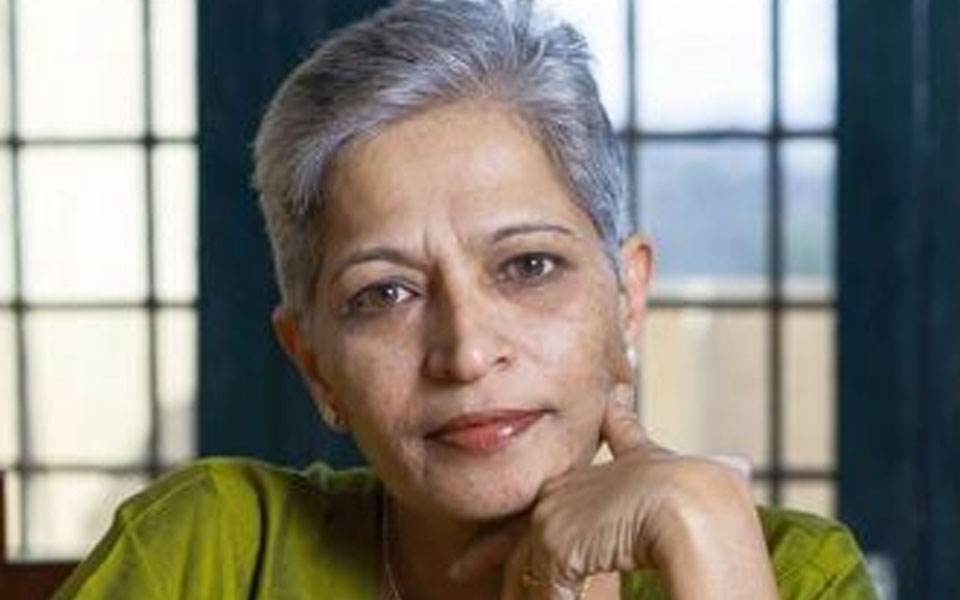
Mumbai, Jan 17: The Bombay High Court Thursday told the CBI and the Maharashtra CID not to completely rely on the revelations made in the Gauri Lankesh case and conduct an independent probe into the killings of rationalist Narendra Dabholkar and Left leader Govind Pansare.
A bench of Justices S C Dharmadhikari and M S Karnik asked both the probe agencies to make a "sincere effort" towards tracing the absconding accused in Pansare and Dabholkar cases.
The directions came after the Special Investigation Team (SIT) constituted by the state CID submitted its progress report before the bench.
The bench noted that the SIT had said, among other things, that it was questioning those arrested by the authorities in Karnataka in the murder case of journalist Gauri Lankesh, to help trace the absconding accused in Pansare case.
The bench noted that on the previous hearings too, both the CBI and the SIT had submitted that they were questioning the accused in Lankesh case to get information on the killings of Dabholkar and Pansare respectively.
"You are questioning the accused in another case in Karnataka...but the report (SIT's progress report) doesn't reveal what the actual measures you are taking to arrest the absconding accused," the bench said.
"You cannot rely completely on the revelations made by the accused in another case. How long will this go on? You have to conduct an independent probe, gather some independent material, especially since these crimes in Maharashtra (killings of Pansare and Dabholkar) took place before the crime in Karnataka," the bench said.
The CBI, however, argued through its counsel Additional Solicitor General Anil Singh, that its officers were doing their best to trace the absconding accused.
"It is not as if our officers are not doing anything. They are taking all possible steps and only very capable officers have been chosen to take part in these two operations (CBI's and the CID's)," Singh submitted.
The bench also said that it seemed as if the probe machinery in Karnataka was making much headway, but the agencies in Maharashtra had failed to do so, especially due to bureaucratic hassles and lack of coordination with each other.
"The unfortunate part is that in one state the machinery gets full assistance, while in our state, either the machinery is not working or not getting cooperation," the bench said.
ASG Singh, however, submitted that the probe authorities in Maharashtra worked "better than anyone else."
"Some arrests have been made in both the cases (Pansare and Dabholkar) and we will file a charge sheet soon in the Dabholkar case," Singh said.
The bench has now directed both the CBI and the CID to submit their respective further progress reports by February 6.
Dabholkar was shot dead on August 20, 2013 in Pune while on his morning walk. Pansare was shot at on February 16, 2015 in Kolhapur and succumbed to his injuries a few days later on February 20.
The CBI and the state CID are probing the killings of Dabholkar and Pansare, respectively. The high court has been hearing a plea filed by the family members of Dabholkar and Pansare seeking a court-monitored probe in both the cases.
As per the probe agencies, some accused persons, including one Sharad Kalaskar, arrested in Lankesh case have revealed that they also had links to the killings of Dabholkar and Pansare.
Let the Truth be known. If you read VB and like VB, please be a VB Supporter and Help us deliver the Truth to one and all.
Rickelton's ton in vain as SRH beat MI by 6 wickets
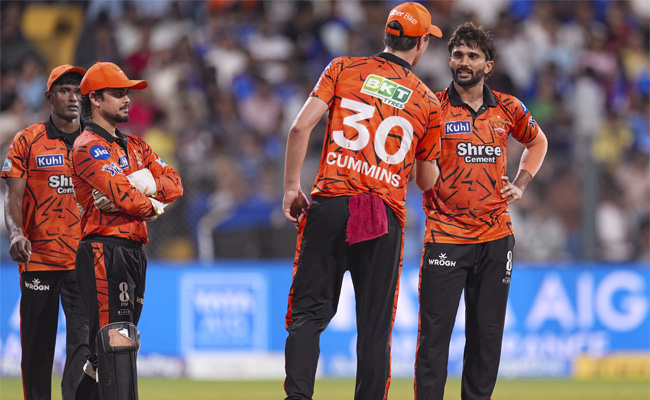
Mumbai (PTI): Ryan Rickelton's whirlwind unbeaten ton was overshadowed by Heinrich Klaasen's unbeaten 65 as Sunrisers Hyderabad defeated Mumbai Indians by six wickets in an IPL match here on Wednesday.
Chasing an imposing 244-run target, Travis Head (76 off 30) and Abhishek Sharma (45 off 24) shared 129 runs for the opening wicket to set the platform for SRH.
Klaasen (65 not out off 30 balls) then displayed his all-round hitting abilities to guide SRH home with the help of Nitish Kumar Reddy (21) and Salil Arora (30 not out off 10) in 18.4 overs.
Earlier, Rickelton's knock powered MI to 243 for five.
MI rode on a 93-run stand between Rickelton (123 not out off 55 balls) and Will Jacks (46 off 22) in 7.1 overs for the opening stand to power the side.
MI skipper Hardik Pandya scored a valuable 31 off 15 balls before being dismissed.
Praful Hinge (2/54), Eshan Malinga (1/29), Sakib Hasan (1/39) and Nitish Kumar Reddy (1/31) were the wicket-takers for SRH.
Brief Scores:
Mumbai Indian: 243 for 5 in 20 overs (Ryan Rickelton 123 not out; Praful Hinge 2/54).
Sunrisers Hyderabad: 249 for 4 in 18.4 overs (Travis Head 76, Heinrich Klaasen 65 not out; AM Ghazanfar 2/51).