Don't want Congress to completely disappear, Oppn needed, says Union Minister Hardeep Singh Puri
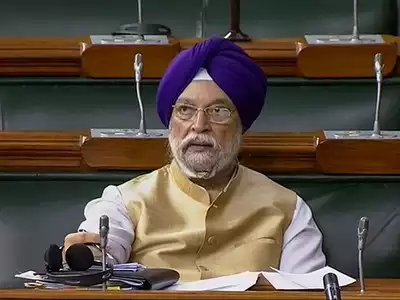
Panaji, May 6: Union Minister Hardeep Singh Puri on Friday said the BJP did not want the complete disappearance of the Congress as there is need for an opposition.
Speaking at Goa Fest 2022, the Union Minister for Petroleum and Natural Gas also said the Narendra Modi government is "not completely a right-wing government".
"We do not want the Congress party to completely disappear. We need an opposition. If we have an opposition, it is for the opposition to decide whether it should be led by Rahul Gandhi, Mamata Banerjee or Arvind Kejriwal or Sharad Pawar," Puri said.
Queried about people from various parties joining the BJP, the minister said this was what democracy was all about, adding that "if I'm the member of one party, I had the right to go another".
"You would make a pertinent point if you say just take feedback before inducting anyone in the party," he said, adding that the BJP is the largest party with 300 plus members in the Lok Sabha and "if people are unhappy with their party, they will gravitate towards the BJP".
Speaking about the Modi dispensation, he said it is "not completely a right wing government" and went on to add that "right, left, pro this, anti that" were all just slogans.
"Is ours a typically right wing government? In many respect it is not. From Sarvodaya to Antodaya, the philosophy which is encapsulated in taking sustainable developmental goals to the farthest first, that is the crux of BJP's philosophy," Puri said.
He claimed this approach, in many ways, had taken the ground away from the kind of message the socialists had.
"More important is to look at your corporate structure, The GST (collection) last month was Rs 1.61 lakh crore. If you look at corporate tax, the rates in Indira Gandhi's times were 90 per cent. Now you have lowest corporate tax rate," he pointed out.
If one looks at all the policies, it is not that the government is exclusively focused on economically weaker sections or the middle class but also on the corporate sector.
When asked if winning the 2024 Lok Sabha polls was a "done deal" for the BJP, he said nothing in politics was a done deal.
"You should never be complacent. Knowing that the party is in good shape and we are winning elections after elections, I would say the opposition needs to get its act together, if they want to post a credible challenge in 2024. BJP also has to work hard, which we are doing," the minister added.
Taking a swipe at the Aam Aadmi Party over the Punjab police's arrest of BJP leader Tejinder Singh Bagga and the subsequent chain of events involving police from Haryana and Delhi, Puri said "we are witnessing a spectacle where a political start up from Delhi, which is a GST rich state and with surpluses, has moved to Punjab, which is under great financial stress".
Goa Fest 2022 has been organised by Advertising Agencies' Association of India and the Advertising Club.
Let the Truth be known. If you read VB and like VB, please be a VB Supporter and Help us deliver the Truth to one and all.
Congress using hijab issue to pacify minority anger, alleges Karnataka LoP R Ashoka
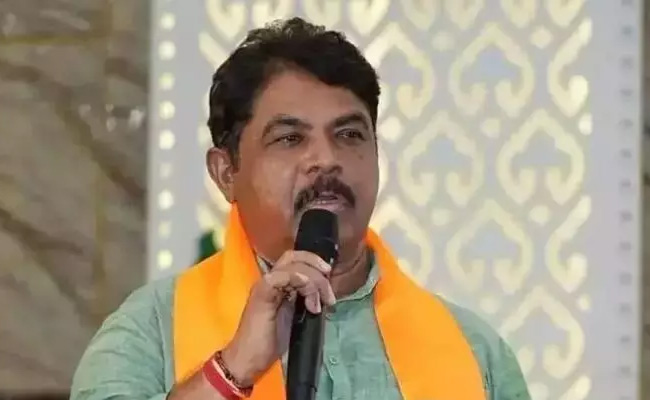
Bengaluru: Leader of Opposition in the Assembly R. Ashoka has accused the Congress government of using the hijab issue to placate what he described as discontent among minority voters after the Davanagere by-election.
In a post on X on Wednesday, Ashoka alleged that the state government, instead of addressing issues such as price rise, corruption, farmers’ distress and law and order, was attempting to retain its minority vote base by reviving the hijab issue.
Referring to the 2022 dress code introduced by the BJP government, which prohibited hijab in schools and colleges, Ashoka said the Karnataka High Court had upheld the policy and emphasised the importance of discipline in educational institutions.
He questioned the Congress government’s move to revisit the issue and asked whether setting aside the court-backed policy to benefit one community could be described as secularism.
Ashoka further alleged that while the government was willing to permit hijab, it continued to prohibit saffron shawls.
He accused the government of dividing students on religious lines rather than treating schools and colleges as spaces of equality.
Drawing a comparison with Mamata Banerjee’s government in West Bengal, Ashoka claimed that excessive appeasement politics had harmed the state and warned that the Congress in Karnataka could face a similar political response.
He said voters in Karnataka would teach the Congress a lesson for what he termed “vote-bank politics” and for compromising constitutional and judicial principles.