Don't you have any other IAS officer: SC to Centre over proposal to extend tenure of Delhi CS
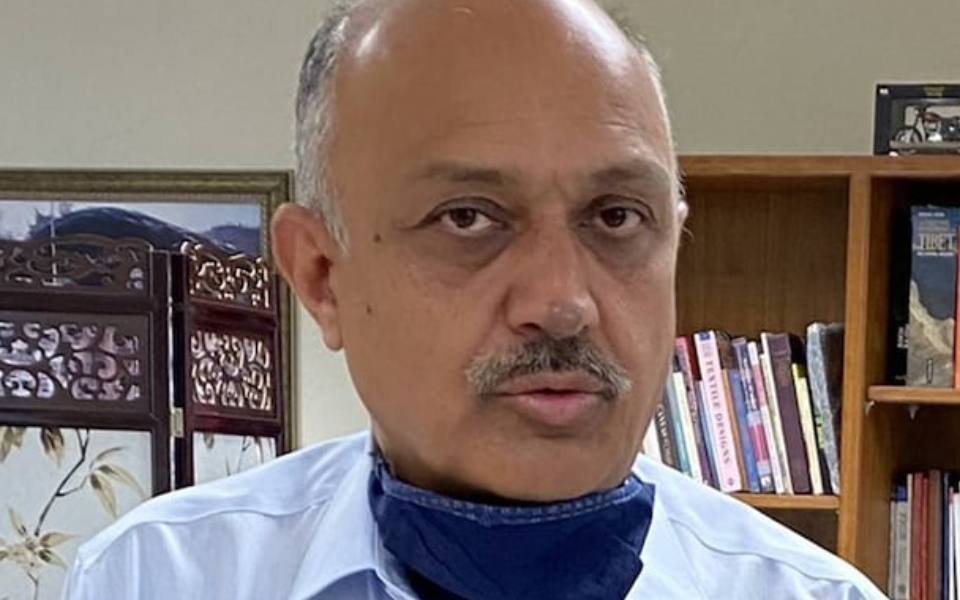
New Delhi, Nov 28: As the Centre on Tuesday submitted that it wanted to extend the tenure of the Delhi chief secretary who is due to retire on November 30, the Supreme Court sought to know under which power it can do so and quipped if it was "stuck with only one person" and didn't have any other IAS officer for the post.
The apex court asked the Central government to inform it on Wednesday about the grounds on which it wanted to extend the tenure of Chief Secretary Naresh Kumar by six more months.
During a hearing on a Delhi government's plea, a bench headed by Chief Justice D Y Chandrachud suggested that Kumar should be allowed to superannuate and a fresh appointment should be made.
At the same time, it also noted that the Centre held the power under the Government of National Capital Territory of Delhi (Amendment) Act to make the appointment and there was no stay on it.
"This man is superannuating. Let this man superannuate. You make a fresh appointment," the bench said.
The court was informed by Solicitor General Tushar Mehta, appearing for the Centre, that the government intends to extend the tenure of the existing person, who has been working for more than one-and-a-half year, for a limited period.
As he said even the term of a superannuated person can be extended if the government so wishes, the CJI said, "Are you stuck with only one person?".
"You want to make the appointment, make it. Don't you have any IAS officer who can be made chief secretary of Delhi? Are you so stuck on one IAS officer?," the bench also comprising justices J B Pardiwala and Manoj Misra said.
The law officer responded, "I am not stuck with only one person" but there were some administrative reasons.
The top court asked the Centre to show the power under which it can extend the tenure of the chief secretary.
"Show us the power to extend. And show us what is the ground on which you want to extend. Otherwise, you can appoint whoever you want to, take instructions.
"We are not holding you in any direction. You select any IAS officer of your choice who will come here and hold the position of chief secretary," said the bench, adding it will take up the matter on Wednesday.
The appointment of the chief secretary is the latest bone of contention between Chief Minister Arvind Kejriwal-led Delhi government and Lieutenant Governor (LG) V K Saxena who have been involved in a series of run-ins over various issues.
The bench was hearing a plea of the Delhi government against any move by the Centre to appoint, without any consultation with it, the new chief secretary or extend the tenure of the current top civil servant Naresh Kumar.
The Delhi government has questioned how the Centre could proceed with the appointment of the chief secretary without any consultation with it while the new law is under challenge.
Senior advocate Abhishek Singhvi, representing the Delhi government, on Tuesday argued there was an absolute breach of communication, trust and faith between this chief secretary and the administration.
He said he was not asking to appoint a person of his choice but the Centre can choose from the senior most five IAS officers or let the LG and CM sit together and decide.
"My lordships don't live in a vacuum. I am not blaming him or blaming myself. Every day your lordships see in newspapers, for everything and anything, Chief secretary is a linchpin and that is your lordships' word," Singhvi submitted.
On being asked by the bench as to for how long the Centre proposed to extend the tenure of the current chief secretary, Mehta said the decision appeared to be for six months, subject to the court's order.
"Now the ordinance permits us to make an appointment because of the very peculiar nature of Delhi.
"The chief secretary will have to learn to deal with the chief minister and the elected wing will have to deal with the chief secretary the way a senior bureaucrat is required to be dealt with. You can't deal with him as a class IV employee. If this happens, such issues will not arise," he said.
Singhvi said a person is superannuating and in the whole of India the government has no IAS office to choose and it was extending his tenure which "speaks for itself".
To this, the CJI said the Government of National Capital Territory of Delhi (Amendment) Act has come into force and it gives power to the Centre to appoint the chief secretary and the apex court has not stayed the law.
"Therefore, under the Act, as they stand today, they have the power to appoint the chief secretary," the CJI said, adding that "We have expressly declined to stay the law".
The Act which was notified in August gives the Centre control over bureaucracy in the national capital and an authority was created under it for the transfer and posting of Group-A officers.
When Singhvi submitted that there was nothing specific in the new Act that deals with the Chief Secretary, Mehta said the new Act defines the word chief secretary as chief secretary of NCT of Delhi to be appointed by the central government and it is an exclusive domain of the central government under the new law.
The bench said it had earlier asked the Centre to give a panel of 3 or 5 names to the Delhi government and they will select one name but now it was saying that the Central government can appoint anybody it wishes to.
As Mehta said it can be the same person under the law, the CJI asked him to apprise the court under which power this can be done.
"There are officers who are being given extensions under the statutory powers of the government," the solicitor general said.
"This renders the government of NCT of Delhi a mere observer in the appointment of the most crucial member of the permanent executive, the Chief Secretary," the Delhi government said in its plea.
For effective and smooth governance, it is the state government, which enjoys the mandate of the local people, that appoints the Chief Secretary, it said.
Let the Truth be known. If you read VB and like VB, please be a VB Supporter and Help us deliver the Truth to one and all.
Karnataka School Edu Dept prohibits children from being made to dance to obscene songs
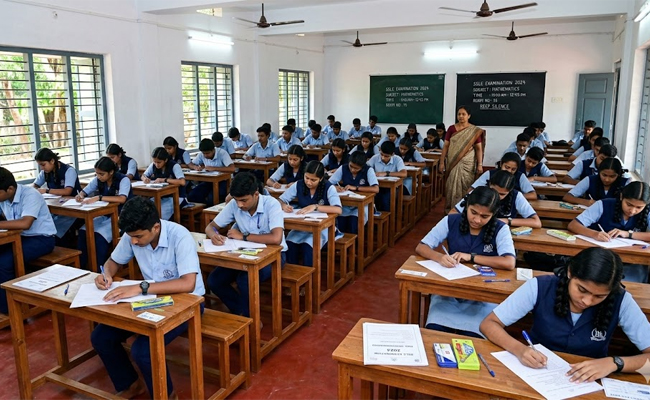
Bengaluru (PTI): The Karnataka School Education Department has issued a circular strictly prohibiting children from being made to dance to obscene songs in educational and cultural programmes.
It stated that such dances would negatively impact students' mental health and moral values. It will create indiscipline and harm the sanctity of education.
"All the Deputy Directors (Administration) of the state's School Education Department have been asked to take strict measures to prevent children or students from dancing to obscene songs in all government, aided and unaided schools in the state," the office of the commissioner of the School Education Department said in a recent circular.
"If it is found that children are being made to dance to obscene songs, appropriate action will be taken against the headmaster or management of such school," it added.
The department also listed certain measures in this regard, which include: strictly prohibiting children from being made to dance to obscene songs during educational and cultural programmes; selecting songs that are inspiring, positive, instilling national pride in children and reflecting the greatness, dignity, values, culture, and morality of the state.
Stating that the school headmaster and management are responsible for selecting songs and dances for cultural programmes, it said, they should also ensure that students wear decent clothes in dance or cultural programmes.