Downward revision of GDP growth estimates set gloomy backdrop to Union Budget: Congress
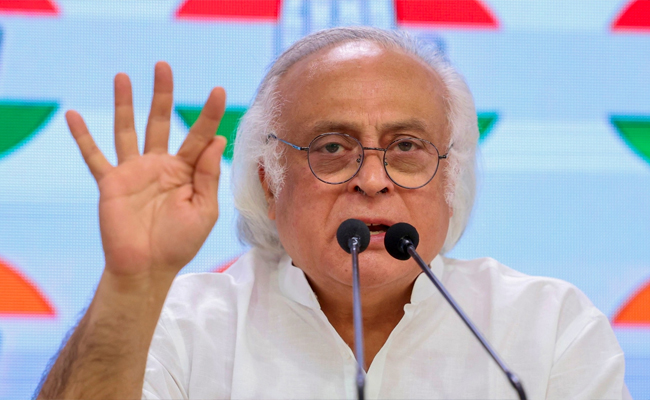
New Delhi (PTI): The downward revision of GDP growth estimates for the current fiscal calls for radical action to dispel the cloud of growth slowdown and investment chill in the country, the Congress said on Wednesday.
AICC general secretary in-charge communications Jairam Ramesh said it also set a gloomy backdrop to the Union Budget.
He suggested that income support for India's poor, higher MGNREGA wages and increased minimum support prices (MSPs) were the need of the hour, and demanded a drastic simplification of the "comically complex" GST regime and Income Tax relief for the middle class.
In a statement, Ramesh said the advance estimates released by the Union government for GDP growth in the 2024-25 financial year projected a mere 6.4 per cent growth.
"This is a four-year low, and a sharp deceleration compared to the 8.2 per cent growth recorded in FY24 (2023-24). It is even lower than the recent RBI estimate of 6.6 per cent growth which itself marked a reduction from the earlier projection of 7.2 per cent. In a few short weeks, the bottom has fallen out of the Indian economy, with the all-important manufacturing sector simply refusing to expand as it should," he said.
The Congress leader said the government could no longer deny the reality of India's growth slowdown and its various dimensions.
He alleged India's consumption story had gone into reverse swing in the past 10 years and emerged as the biggest pain point for the economy.
"In the data from Q2 of this year, Private Final Consumption Expenditure (PFCE) growth slowed to 6 per cent from 7.4 per cent in the previous quarter. Car sales have plunged to a four-year low. Several CEOs from India Inc have themselves raised the alarm over the 'shrinking' middle class. Stagnant consumption is not just dragging GDP growth rates directly, it is also the reason why the private sector is disinclined to invest in capacity addition," he said.
Ramesh also pointed to sluggish private investment, saying the government's projection for growth in Gross Fixed Capital Formation (public and private) was that it would slow to 6.4 per cent this year, down from 9 per cent last year.
Even this figure covers up the true extent of the private sector's reluctance to invest in India, he noted.
"As the government's own Economic Survey (2024) acknowledged, 'private sector GFCF (gross fixed capital formation) in machinery and equipment and intellectual property products has grown cumulatively by only 35 per cent in the four years to FY23 (2022-23)... This is not a healthy mix'. It has only become worse since, with new project announcements by the private sector falling by 21 per cent between FY23 and FY24 (2023-24). The private sector's reluctance to invest in the addition of new productive capacity means that our medium-term growth will continue to suffer," the Congress leader said.
Ramesh said the Union Budget for 2024-25 made grand promises about the increase in capex investment, with an allocation of Rs 11.11 lakh crore.
Till November, only Rs 5.13 lakh crore had been spent, Ramesh said and claimed it was 12 per cent lower than last year.
"Most estimates suggest that the government will fail to meet the target before the end of the financial year. The government's own incompetence in spending its funds is partly responsible for the wider economic gloom," he claimed.
Pointing to "shrinking household savings", he said data from the Union government itself showed that between 2020-2021 and 2022-2023, net financial savings of households fell by Rs 9 lakh crore.
Meanwhile, he said, household financial liabilities were 6.4 per cent of GDP -- the highest in decades. "The abject policy failures of the COVID-19 pandemic continue to haunt India's families."
"This is the gloomy backdrop to the upcoming Union Budget for FY25-26 (2025-26). As the Indian National Congress has consistently advocated, radical action is necessary to dispel these clouds of growth slowdown and investment chill," Ramesh said.
"Income support for India's poor, higher MGNREGA wages, and increased MSPs are the need of the hour, as is a drastic simplification of the comically complex GST regime and income tax relief for the middle classes," he suggested.
The government will present the Union Budget on February 1.
Let the Truth be known. If you read VB and like VB, please be a VB Supporter and Help us deliver the Truth to one and all.
Bengaluru jail introduces biometric tracking system for prisoners
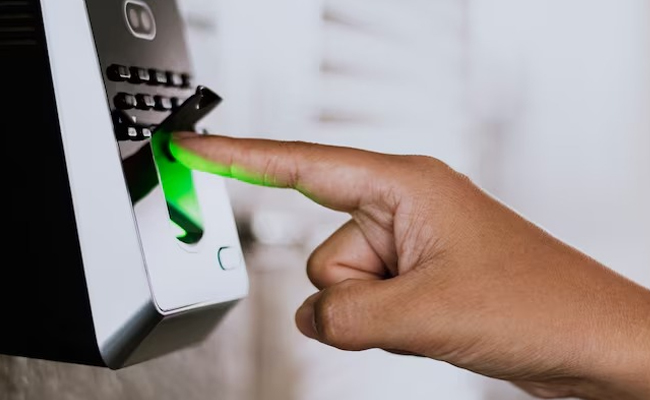
Bengaluru: In a bid to curb misconduct and illegal activities inside Parappana Agrahara Central Prison, prison authorities have introduced a new ‘Prisoners Tracking Movement System’ under which inmates will have to undergo biometric verification while entering every barrack.
According to jail officials, biometric systems have been installed across all major sections of the prison, including barracks, visitor rooms, hospital, canteen, kitchen, library, playground, handicraft units and bakery sections. Staff members have also been deployed at these locations.
Officials said inmates visiting the visitors’ room must now obtain a digital token after biometric verification. Details such as the prisoner’s name, identification number and entry time will be updated in the prison software system. This will help authorities maintain a complete digital record of inmates visiting and returning from meeting rooms.
Similar systems have also been introduced at entry points of the hospital, library and other barracks accessed for work-related purposes. Officials said the system will help identify prisoners involved in suspicious or illegal activities with other inmates and enable authorities to track how much time a prisoner spends at different locations inside the prison.
Authorities stated that AI-powered cameras were already being used inside the prison to monitor inmates as well as prison staff. Along with this, digital tracking of prisoner phone calls and a digital token system for visitor meetings have now been added to strengthen surveillance over inmate movement. Officials said the project has been implemented at a cost of around Rs 2.25 crore.
The prison department has also introduced a canteen usage tracking system to monitor prisoners’ spending patterns. Instead of direct cash payments, inmates can purchase bakery items and snacks using wallets or coupons issued within the prison system.
Officials said the digital system will record details including the buyer’s name, items purchased, quantity, date, time and remaining wallet balance. This will allow prison authorities to maintain complete expenditure records of inmates.