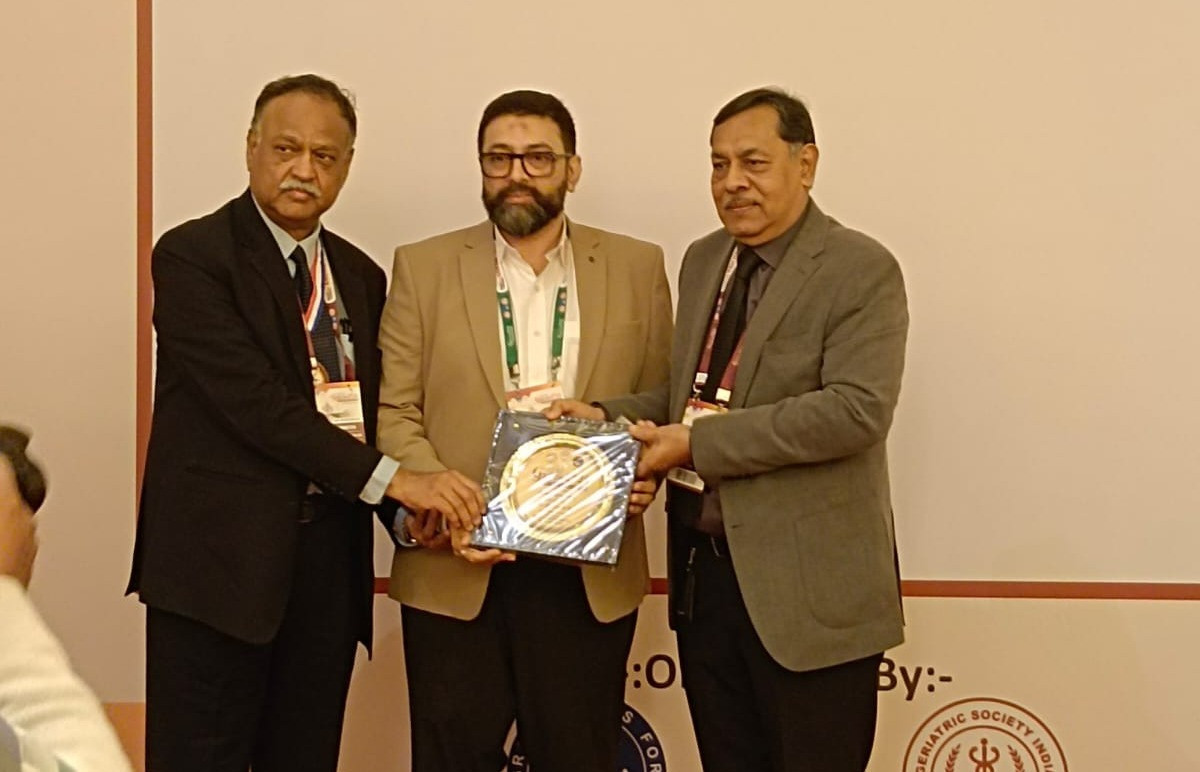
Dr Haroon Hussain honored for his academic contributions in field of geriatric
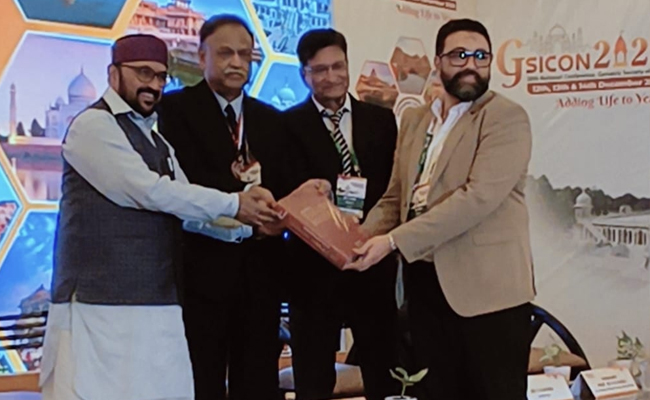
Agra: Dr Haroon Hussain, leading physician at KMC Hospital Mangaluru, and academician, highlighted the growing importance of geriatric medicine in India as the country steadily moves towards an ageing population. He was speaking as a faculty member at GSICON 2025, the national annual conference of the Geriatric Society of India, held in Agra from December 12 to 14.
The conference brought together geriatricians, physicians and researchers from across the country to deliberate on emerging challenges and innovations in elderly healthcare. During his address, Dr Haroon stressed that geriatric medicine goes beyond treating individual diseases and instead adopts a holistic approach focused on preserving functional independence, improving quality of life and preventing disability among older adults.
Speaking on the role of communication in medical practice, Dr Haroon placed special emphasis on the sensitive task of breaking bad news, particularly in the care of elderly patients. He noted that while advances in diagnostics and treatment have transformed modern medicine, empathetic and respectful communication remains central to patient trust and healing. For older adults, who often face multiple illnesses along with emotional and social vulnerabilities, clear and compassionate communication can significantly improve treatment adherence and overall health outcomes, he said.
Dr Haroon also pointed out that rising life expectancy, changing family structures and the growing burden of chronic non-communicable diseases such as diabetes, hypertension, heart disease and dementia have made structured geriatric care a priority in India. He said organised geriatric services can reduce avoidable hospital admissions, lower healthcare costs and provide crucial support to families and caregivers, while easing pressure on the healthcare system.
He further observed that strengthening geriatric care has broader social implications, including promoting healthy ageing, reinforcing respect for senior citizens and encouraging the development of age-friendly hospitals and communities. Investing in geriatrics, he said, reflects a society’s commitment to recognising the contributions of its elderly population and ensuring dignity in later life.
In recognition of his academic contributions to the field of geriatrics, Dr Haroon was honoured during the inaugural ceremony of the conference. The event was attended by Uttar Pradesh Higher Education Minister Yogendra Upadhyay, Padma Shri awardee Prof. Dr D. K. Hazra, Dr Prashant Gupta, Dr O. P. Sharma and other senior members of the Geriatric Society of India and the GSICON 2025 organising committee. Dr O. P. Sharma, Secretary General of the Geriatric Society of India, was also acknowledged for his role in advancing geriatric medicine across the country.
Concluding his address, Dr Haroon said the future of healthcare lies not only in clinical expertise and technology but equally in compassion, communication and human connection. He noted that as India moves towards an ageing society, geriatric medicine has the potential to play a transformative role in healthcare delivery and in shaping attitudes towards elderly care.
Let the Truth be known. If you read VB and like VB, please be a VB Supporter and Help us deliver the Truth to one and all.
EAM Jaishankar meets Jamaican PM, gifts over 10 BHISHM Cubes
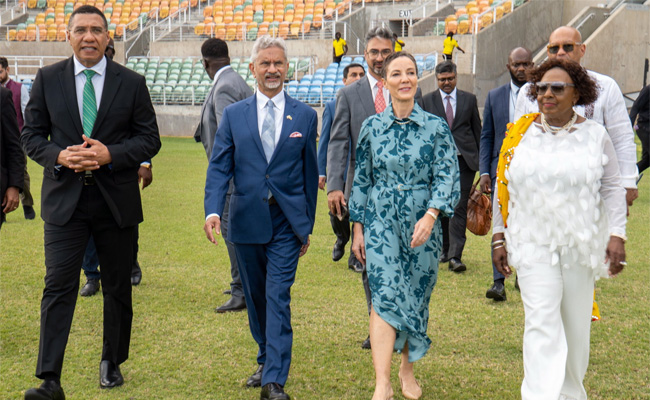
Kingston (PTI): External Affairs Minister S Jaishankar on Monday met Jamaican Prime Minister Andrew Holness and discussed ways to further deepen "political, economic and people-to-people cooperation."
Jaishankar also conveyed greetings from Prime Minister Narendra Modi to Holness.
"Pleased to call on Prime Minister @AndrewHolnessJM in Kingston. Conveyed the greetings of PM @narendramodi," Jaishankar posted on X.
"Discussed deepening our political, economic and people-to-people cooperation. Value his commitment towards further strengthening India-Jamaica relations," the post further read.
Also, the external affairs minister handed over 10 BHISHM (Bharat Health Initiative for Sahyog Hita & Maitri) Cubes as a gift to Jamaica.
"Formally handed over 10 BHISHM Cubes as a gift from India to Jamaica, in the presence of PM @AndrewHolnessJM, Health Minister @christufton and FM @kaminajsmith," Jaishankar posted on X.
"The BHISHM Cube mobile hospital system, designed for rapid deployment, will help Jamaica during disasters and emergencies. The gift of these cubes is a statement of friendship, a commitment to disaster preparedness, and an outcome of innovation," the post said.
Jaishankar arrived in Kingston on Saturday evening, marking the first leg of his nine-day tour of Jamaica, Suriname, and Trinidad and Tobago, aimed at further strengthening India's strategic and cultural ties with the Caribbean nations.
Earlier in the day, he interacted with the Indian diaspora and discussed India's ongoing transformation in infrastructure, human development and technology-driven governance and entrepreneurship with them.
He also highlighted the cricket bond between both countries as India gifted a scoreboard to Jamaica.
A scoreboard was dedicated at Sabina Park in Kingston. It is the home of the Jamaica cricket team and is the only Test cricket ground in the Caribbean island nation.
The minister expressed hope that the new scoreboard would witness many memorable innings, including those symbolising the enduring friendship between the two countries.
Cricket has long been a strong cultural bridge between India and Jamaica, which is part of the West Indies cricket team.
Jamaican players, including Chris Gayle, Courtney Walsh and Michael Holding, have played a major role in shaping the legacy of West Indies cricket in the international arena, contributing to its dominance in earlier decades and its continued global appeal.