Drug administration drive against lymphatic filariasis launched in 14 Jharkhand districts
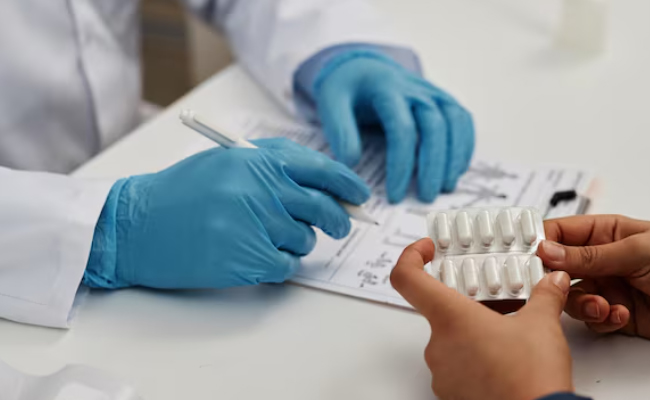
Ranchi (PTI): A 16-day mass drug administration (MDA) drive to eliminate lymphatic filariasis was launched in 14 districts of Jharkhand on Tuesday, with the aim of making the state free from the disease by 2029, an official said.
The drive will be conducted from February 10 to February 25 in Ranchi, Bokaro, Deoghar, Dhanbad, East Singhbhum, Garhwa, Giridih, Gumla, Ramgarh, Sahibganj, Lohardaga, Koderma, Pakur and Simdega.
Lymphatic filariasis or elephantiasis is an infectious disease that typically spreads through mosquito bites. It can lead to fluid retention and disfigurement.
ALSO READ: Delhi Police files FIR over circulation of ex-chief of Army staff Narvane's unpublished book
State Programme Officer (Vector-Borne Disease) Dr Birendra Kumar Singh said health workers will administer anti-filariasis drugs to eligible beneficiaries through booths and door-to-door visits. Children below two years of age, pregnant women and seriously ill persons will be excluded from the campaign, he said.
Jharkhand Health Minister Irfan Ansari has said the state has set a target to eliminate filariasis by 2029.
In Ranchi, drugs will be administered at 619 booths or camps set up in four affected blocks – Rahe, Sonahatu, Tamar and Kanke – Deputy Commissioner Manjunath Bhajantri said in a statement.
A total population of 4,91,014 has been identified for administration of diethylcarbamazine (DEC) and albendazole, it said.
The drive is being carried out in these four blocks following detection of filariasis cases during a recent transmission assessment survey, an official said.
Let the Truth be known. If you read VB and like VB, please be a VB Supporter and Help us deliver the Truth to one and all.
Rickelton's ton in vain as SRH beat MI by 6 wickets
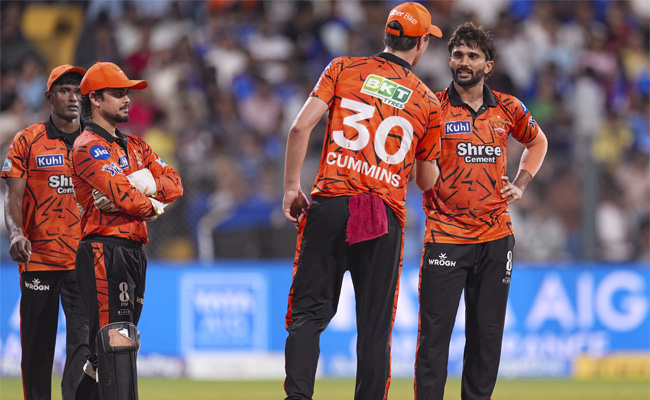
Mumbai (PTI): Ryan Rickelton's whirlwind unbeaten ton was overshadowed by Heinrich Klaasen's unbeaten 65 as Sunrisers Hyderabad defeated Mumbai Indians by six wickets in an IPL match here on Wednesday.
Chasing an imposing 244-run target, Travis Head (76 off 30) and Abhishek Sharma (45 off 24) shared 129 runs for the opening wicket to set the platform for SRH.
Klaasen (65 not out off 30 balls) then displayed his all-round hitting abilities to guide SRH home with the help of Nitish Kumar Reddy (21) and Salil Arora (30 not out off 10) in 18.4 overs.
Earlier, Rickelton's knock powered MI to 243 for five.
MI rode on a 93-run stand between Rickelton (123 not out off 55 balls) and Will Jacks (46 off 22) in 7.1 overs for the opening stand to power the side.
MI skipper Hardik Pandya scored a valuable 31 off 15 balls before being dismissed.
Praful Hinge (2/54), Eshan Malinga (1/29), Sakib Hasan (1/39) and Nitish Kumar Reddy (1/31) were the wicket-takers for SRH.
Brief Scores:
Mumbai Indian: 243 for 5 in 20 overs (Ryan Rickelton 123 not out; Praful Hinge 2/54).
Sunrisers Hyderabad: 249 for 4 in 18.4 overs (Travis Head 76, Heinrich Klaasen 65 not out; AM Ghazanfar 2/51).