DSP’s red hair earns criticism, Odisha Police asks him to maintain decorum
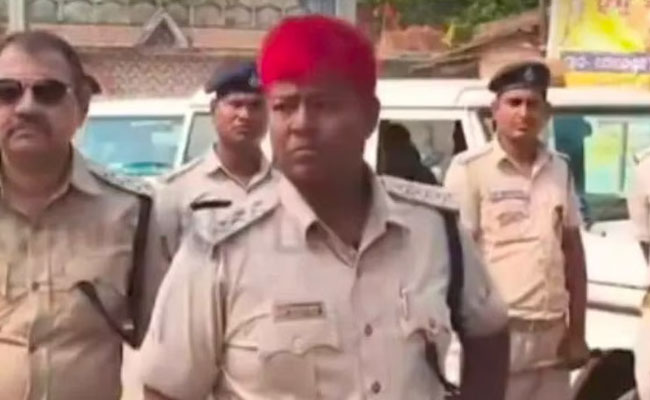
Bhubaneswar (PTI): Odisha Police has found itself in a spot after some of its personnel, including senior officers, were criticised on social media for sporting coloured and unconventional hairstyles.
The latest incident was reported from Jagatsinghpur district, where a DSP-rank officer was trolled online for his red-coloured hair, putting the police administration in an awkward position, a senior officer said.
The officer, identified as Rashmi Ranjan Das, saw his hairstyle go viral on social media, drawing criticism from several quarters.
Some users termed the look "unprofessional", while others questioned whether such an appearance befitted a uniformed officer, alleging it undermined the authority and seriousness associated with the khaki.
"After finding the DSP being trolled on social media, I have instructed the Jagatsinghpur SP to tell the officer to maintain decorum and keep his hairstyle decent, befitting a man in uniform," Inspector General of Police (Central Range) Satyajit Naik told PTI.
Naik, however, said the police department has not yet issued any circular or order in this regard.
"We have told the officer to maintain decency. Everything cannot go by written orders. From constables to senior officers, everyone in the police service should respect the uniform and give utmost priority to decency," he said.
Another senior police officer said women police personnel across the country, including Odisha, are also seen colouring their hair in shades such as coffee, chocolate, ash, auburn, caramel and golden.
"One cannot issue an order to keep hair black always. There are people who have natural brown hair. This apart, greying is also a natural phenomenon. What can be done in these cases? Therefore, no order can be issued with regard to hair colour," the officer said, adding that it depends on individual police officers.
A woman police officer in the city, who has coloured her hair ash, said no law or rule prohibits such choices.
"We are in the police and perform our duties responsibly. People should not comment on a person’s hairstyle. We welcome criticism if we commit mistakes, but colouring hair is not a crime," she said.
A retired IPS officer said that while the police manual does not explicitly prescribe hairstyles, personnel are expected to maintain the image of a security force.
"Creating a controversy over a non-issue serves no purpose," another serving officer remarked.
Let the Truth be known. If you read VB and like VB, please be a VB Supporter and Help us deliver the Truth to one and all.
AIITA welcomes Karnataka’s ban on obscene songs in school events
Bhatkal: The Karnataka unit of the All India Ideal Teachers Association (AIITA) has welcomed the Karnataka government’s decision to strictly ban school children from dancing to obscene songs during educational and cultural programmes in government, aided, and private schools across the state.
AIITA Karnataka State President M. R. Manvi congratulated the government for taking what he termed an important step to preserve the sanctity of education.
“Such decisions to safeguard the dignity of school children and uphold the values of education are the need of the hour. This rule should not be limited to government schools alone but must be strictly implemented in all private educational institutions as well,” he said.
He further urged the government to address other concerns within school programmes.
“The government should not only prohibit obscene dances in the name of school anniversaries, but also ensure that plays and dialogues that incite religious hatred are avoided. Schools should be centres of harmony, not platforms for spreading hatred,” he added.
According to a recent circular issued by the Department of School Education and Literacy, obscene dances are adversely affecting the mental health and moral values of students.
In this regard, schools have been advised to use songs that promote nationalism, positive thinking, the greatness of Kannada culture, and value-based traditions instead of inappropriate content during programmes.
The circular also emphasises that students should be dressed in decent attire.
AIITA also backed the department’s warning that disciplinary action would be taken against head teachers if such guidelines are violated. The association has further demanded that district Deputy Directors of Public Instruction strictly monitor the implementation of these rules.