Eat carrots, food items rich in antioxidants: Health Minister amid Delhi air pollution
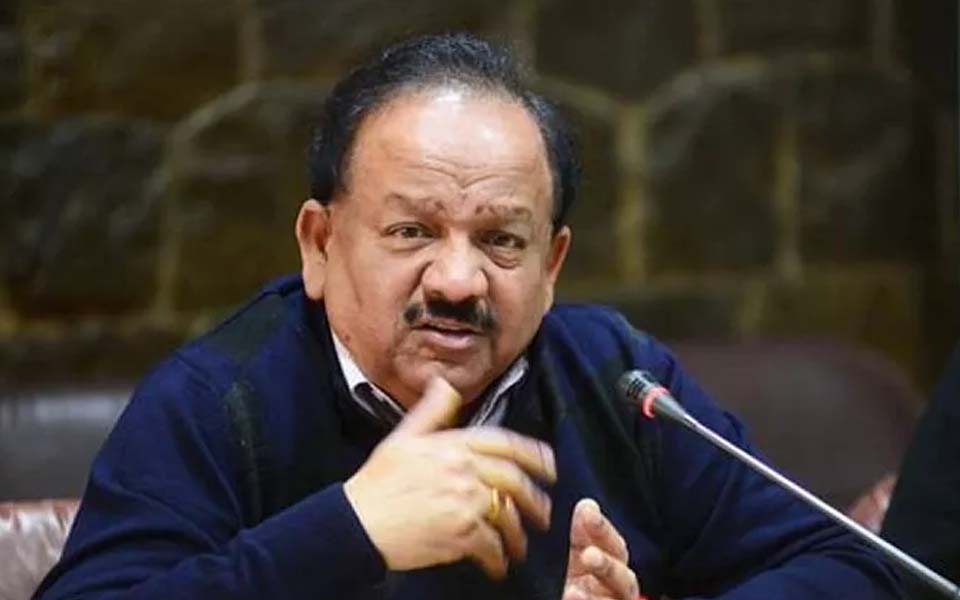
New Delhi, Nov 4: As the national capital continues to grapple with severe levels of air pollution, Union Health Minister Harsh Vardhan took to Twitter to impart some advice on how to counter pollution-related problems.
Vardhan, who is a doctor by profession, suggested eating carrots and food items with high level of antioxidants to combat pollution-related health issues.
In a tweet on Monday, Vardhan said oxidative stress triggered by various pollutants has serious negative effects on human health.
"One positive action is to include food items with high level of antioxidants that can neutralise this. Of course, the solution lies in exposure prevention and control," he said.
On Sunday, he had tweeted, "Eating carrots helps the body get Vitamin A, potassium and antioxidants which protect against night blindness common in India. Carrots also help against other pollution-related harm to health."
Pollution level in Delhi peaked to a three-year high on Sunday notwithstanding claims of heightened checks and curbs by authorities.
According to the Central Pollution Control Board (CPCB), the national capital's 24-hour average air quality index (AQI) stood at 494 at 4 pm on Sunday, the highest since November 6, 2016 when it was 497.
All schools up to Class 12 have been closed in the National Capital Region till Tuesday due to the spike in pollution level.
The Delhi government also issued a health advisory and asked people to avoid outdoor activities as much as possible, especially during the morning and late evening hours and keep activity levels low.
The advisory said the air pollution might cause respiratory problems in healthy people on a prolonged exposure and pronounced respiratory or other serious illnesses for the vulnerable population even on a short exposure.
"The general public is, therefore, advised to avoid outdoor physical activities, especially during morning and late evening hours," it stated.
The dos and don'ts asked people to remain indoors and reschedule their outdoor activities, consult doctors in case of breathlessness, giddiness, cough, chest discomfort or pain and irritation in the eyes.
Using N95 masks, avoiding heavy traffic and polluted areas, keeping doors and windows closed in the morning and late evening were also advised by the government.
It also asked people to use public transport, avoid driving two-wheelers and other vehicles, and stop smoking.
#EatRightIndia_35
— Dr Harsh Vardhan (@drharshvardhan) November 4, 2019
Oxidative stress triggered by various pollutants has serious negative effects on human health.
One positive action is to include food items with high level of Antioxidants that can neutralise this.
Of course, the solution lies in exposure prevention & control. pic.twitter.com/Uu3FvAwtX3
Let the Truth be known. If you read VB and like VB, please be a VB Supporter and Help us deliver the Truth to one and all.
India-bound LPG tanker clears Hormuz
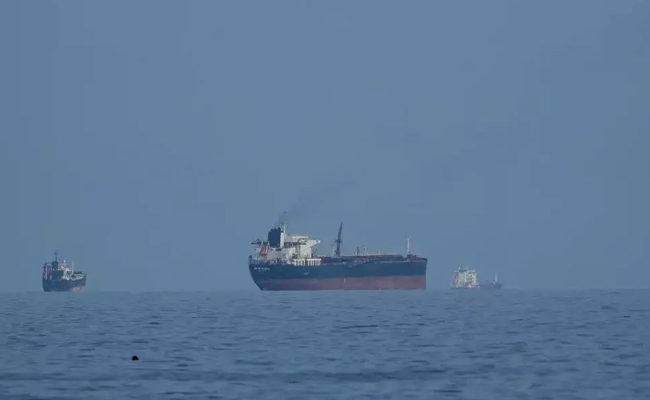
New Delhi (PTI): A tanker carrying liquefied petroleum gas (LPG) for India has sailed out of the Strait of Hormuz and is now headed towards the country, an official statement said on Sunday.
The Marshall Islands-flagged LPG carrier MT Sarv Shakti, loaded with 46,313 tonnes of LPG and staffed by 20 crew, including 18 Indians, cleared the key shipping chokepoint on May 2 and is expected to reach Visakhapatnam on May 13, it said.
The cargo -- enough to meet half a days requirement of the country -- will partly tide over supply constraints being faced since the start of the West Asia conflict more than two months back.
Ship-tracking data showed its position in Oman Gulf on Sunday evening.
The very large gas carrier has previously made runs between the Persian Gulf and Indian ports, has been chartered by state-owned Indian Oil Corporation (IOC).
Sarv Shakti is the first India-linked tanker to cross the war zone since a weeks-old US blockade of ships tied to Iran began, pushing transits through Hormuz back down to almost zero.
There are as many as 14 Indian flagged or India-owned vessels still stranded on the west side of the Strait of Hormuz.
The statement said no incident involving Indian-flagged vessels has been reported in the past 24 hours. The Ministry of Ports, Shipping and Waterways is working closely with the Ministry of External Affairs, Indian missions and maritime stakeholders to ensure crew welfare and uninterrupted operations.
The Directorate General of Shipping (DG Shipping) control room has handled 8,373 calls and more than 17,965 emails since activation, including 38 calls and 127 emails in the last 24 hours.
India has also facilitated the repatriation of more than 2,953 seafarers so far, including 31 in the past day from across the Gulf region.
Port operations across the country remain normal with no congestion reported, the statement added.