EC directs West Bengal DGP to ensure safety of poll officials during SIR exercise
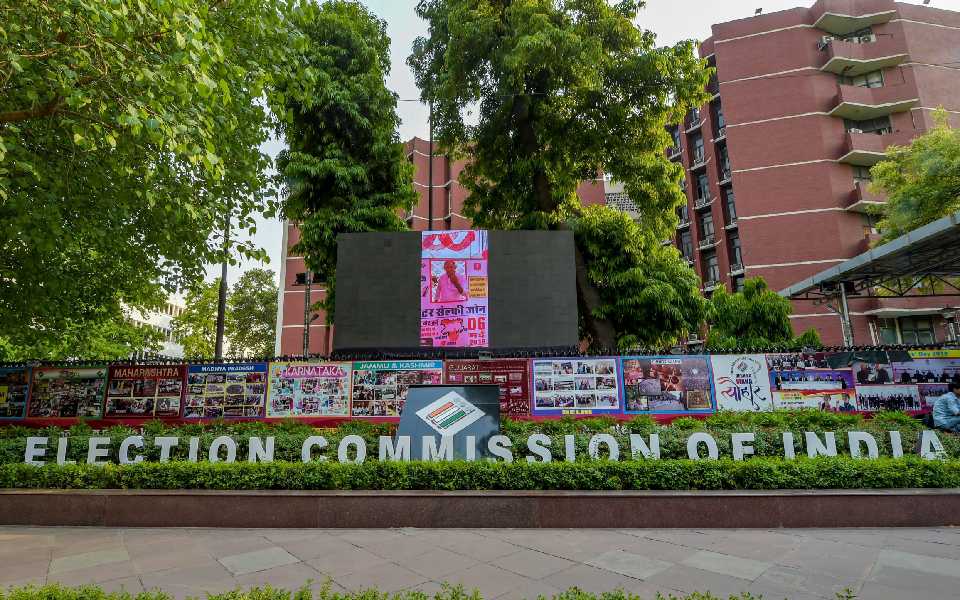
Kolkata (PTI): The Election Commission wrote to West Bengal DGP Rajeev Kumar, directing him to ensure the security of Booth Level Officers (BLOs) during the SIR exercise after receiving reports that there is "an apparent threat" to their safety.
This is EC's second letter to the state government in three days, expressing concern over the security of poll officials in West Bengal.
On Wednesday, the EC wrote to Kolkata Police Commissioner Manoj Kumar Verma over a "serious security breach" at the CEO's office, following an agitation by a section of BLOs against "excessive work pressure".
The EC wrote to the DGP on Friday as state BJP chief Samik Bhattacharya urged Chief Election Commissioner Gyanesh Kumar to immediately visit the state and personally assess what he alleged was an "atmosphere of fear, coercion and intimidation" of BLOs by the ruling Trinamool Congress.
"It has come to the notice of the Election Commission of India from various quarters that there is an apparent threat to the safety and security of the lives of Booth Level Officers and other field functionaries. This may prevent them from discharging their statutory duties towards the conduct of SIR," said the letter sent by EC secretary Sujeet Kumar Mishra.
"The Commission is concerned about the safety and security of Booth Level Officers and other field functionaries engaged in SIR work and therefore directs that all possible measures will be taken by police authorities to ensure the safety and security of these officers and staff," it added.
The EC insisted that the state must ensure there is no "perceptible atmosphere of fear, threat and undue influence" on the field functionaries and that no untoward incident occurs at any place.
Over 80,000 BLOs are currently engaged in the distribution, collection and digitisation of enumeration forms for the special intensive revision (SIR) of electoral rolls in the state.
Accusing the TMC of unleashing a "threat culture" to manipulate the process, the BJP state president alleged that the BLOs were being forced to work under duress, often pressured to upload false data, and said that the EC "cannot monitor West Bengal's volatile ground reality from Delhi with a few routine statements and phone calls".
Meanwhile, a senior officer at the Chief Electoral Officer's (CEO's) office said that in the wake of the recent "security breach" at the central Kolkata building, the EC has directed that the process of the shifting of the office to a security-appropriate location, which had already been set in motion before, now be expedited.
"The EC has also directed the Kolkata Police commissioner to ensure complete security of the existing as well as the new office of the CEO, West Bengal," he said.
Let the Truth be known. If you read VB and like VB, please be a VB Supporter and Help us deliver the Truth to one and all.
Firms being arm-twisted to divert investment from Karnataka: Priyank Kharge
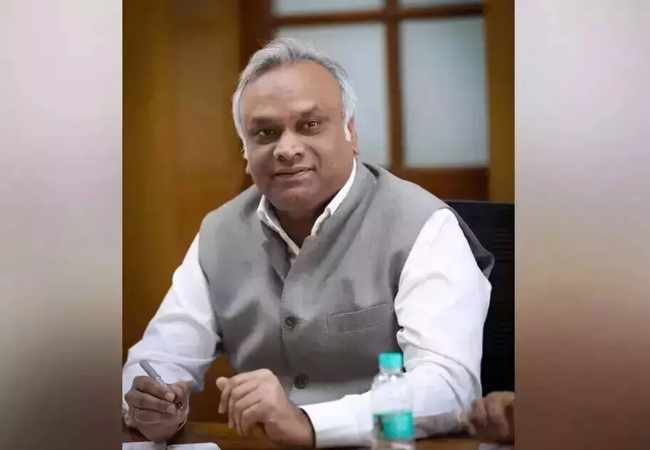
New Delhi (PTI): Companies are being arm-twisted to divert their investments from Karnataka despite the state having the best talent ecosystem, state's IT, biotech and rural development minister Priyank Kharge said on Friday.
The minister said it has taken 40 years to develop the entire ecosystem in the state that suits investors.
"Why is semiconductor going to Gujarat, Assam? That's my question? That's what I have been asking. Why is it going to Gujarat? Why is it going to Assam? When PLI comes, they have to choose their state. The name is Karnataka. How does it become Gujarat by the time the application reaches Delhi? They are coming to my state. Why are they being arm-twisted to Gujarat?" Kharge said.
He was speaking to reporters on the sidelines of a roadshow in the national capital for the Bengaluru Tech Summit 2026 to be held in November.
"They are coming to our state only. They want to invest in our state. It works out for them. It is profitable for them. Our human resource is one of the most agile and best in the world. But yet, they are going to be pushed to Gujarat," Kharge said.
During the event, Kharge said Karnataka is planning to rejig policy on data centres to promote sustainable data centres.
"There is a serious need for states and the central government to bring up policies for sustainable data centres. That's exactly what the government of Karnataka intends to do," Kharge said.
_vb_18.jpeg)
_vb_38.jpeg)