EC initiates delimitation of assembly, parliamentary constituencies in Assam
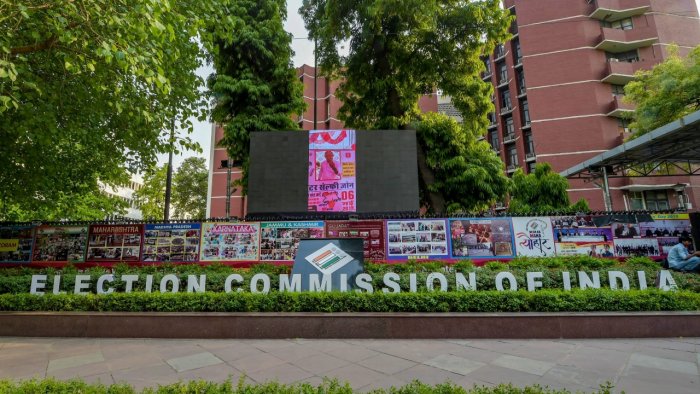
New Delhi, Dec 27: The Election Commission on Tuesday said it has initiated the delimitation of assembly and parliamentary constituencies in Assam and will use the 2001 census figures for the readjustment of seats.
The Commission said a ban has been put in place effective January 1, 2023 on the creation of new administrative units in the state till the exercise is completed.
Under the provisions of the Delimitation Act, 1972, the last delimitation of constituencies in Assam was effected on the basis of 1971 census figures by the then Delimitation Commission in 1976, the poll panel noted.
The move to redraw the assembly and parliamentary seats of Assam as per Section 8A of the Representation of the People Act, 1950 has been initiated following a request from the Union Law Ministry.
Delimitation is the process of fixing limits or boundaries of the territorial constituencies in a country or a state with a legislative body.
"The Commission led by Chief Election Commissioner Rajiv Kumar and Election Commissioners Anup Chandra Pandey and Arun Goel has directed the Chief Electoral Officer of Assam to take up the matter with the state government to issue a complete ban on the creation of new administrative units with effect from January 1, 2023 till the completion of delimitation exercise in the state.
"As mandated under Article 170 of the Constitution, census figures (2001) shall be used for the purpose of readjustment of parliamentary and assembly constituencies in the state.
"Reservation of seats for the Scheduled Castes and Scheduled Tribes will be provided as per Articles 330 and 332 of the Constitution of India," the poll panel said in a statement.
The Commission will design and finalise its own guidelines and methodology for the purpose of delimiting the constituencies.
During the delimitation exercise, the Commission will keep in mind the physical features, existing boundaries of administrative units, facility of communication and public convenience, and as far as practicable, the constituencies will be kept as geographically compact areas, the statement noted.
Once a draft proposal for the delimitation of constituencies is finalised by the Commission, it will be published in the central and state gazettes for inviting suggestions and objections from the general public.
"In this regard, a notice will also be published in two vernacular newspapers of the state specifying the date and venue for public sittings to be held in the state," the poll panel said.
The term of the current Assam Legislative Assembly will end on May 20, 2026. The state has 14 Lok Sabha, 126 assembly and seven Rajya Sabha seats.
On February 28, 2020, the central government cancelled its earlier notifications which deferred delimitation in Assam, Nagaland, Manipur and Arunachal Pradesh due to security issues, saying the exercise could be carried out "now" as the previous circumstances cease to exist.
Later in March 2020, a delimitation commission was formed under former Supreme Court judge Ranjana Prakash Desai to redraw Lok Sabha and assembly constituencies of the Union Territory Jammu and Kashmir and the northeastern states of Assam, Arunachal Pradesh, Manipur and Nagaland.
But when the delimitation panel was given a one-year extension on March 3, 2021, a Law Ministry notification said that now the panel would look only into the delimitation of the Union territory of Jammu and Kashmir.
"In exercise of the powers conferred by Section 3 of the Delimitation Act, 2002 ... the Central Government hereby makes the following amendments in the notification . . . dated the 06th March 2020, namely:- In the said notification, (i) in the opening paragraph, (a) the words, and the States of Assam, Arunachal Pradesh, Manipur and Nagaland, shall be omitted," the had notification read.
Sources had then attributed various reasons, including court cases, for the omission of the four northeastern states from the delimitation exercise.
Later, in its letter dated November 15, 2022, the Law Ministry requested EC to conduct the delimitation of parliamentary and assembly constituencies in Assam.
Let the Truth be known. If you read VB and like VB, please be a VB Supporter and Help us deliver the Truth to one and all.
AIITA welcomes Karnataka’s ban on obscene songs in school events

Bhatkal: The Karnataka unit of the All India Ideal Teachers Association (AIITA) has welcomed the Karnataka government’s decision to strictly ban school children from dancing to obscene songs during educational and cultural programmes in government, aided, and private schools across the state.
AIITA Karnataka State President M. R. Manvi congratulated the government for taking what he termed an important step to preserve the sanctity of education.
“Such decisions to safeguard the dignity of school children and uphold the values of education are the need of the hour. This rule should not be limited to government schools alone but must be strictly implemented in all private educational institutions as well,” he said.
He further urged the government to address other concerns within school programmes.
“The government should not only prohibit obscene dances in the name of school anniversaries, but also ensure that plays and dialogues that incite religious hatred are avoided. Schools should be centres of harmony, not platforms for spreading hatred,” he added.
According to a recent circular issued by the Department of School Education and Literacy, obscene dances are adversely affecting the mental health and moral values of students.
In this regard, schools have been advised to use songs that promote nationalism, positive thinking, the greatness of Kannada culture, and value-based traditions instead of inappropriate content during programmes.
The circular also emphasises that students should be dressed in decent attire.
AIITA also backed the department’s warning that disciplinary action would be taken against head teachers if such guidelines are violated. The association has further demanded that district Deputy Directors of Public Instruction strictly monitor the implementation of these rules.