EC rejects Congress allegations on Haryana polls: ‘Frivolous, unfounded doubts’
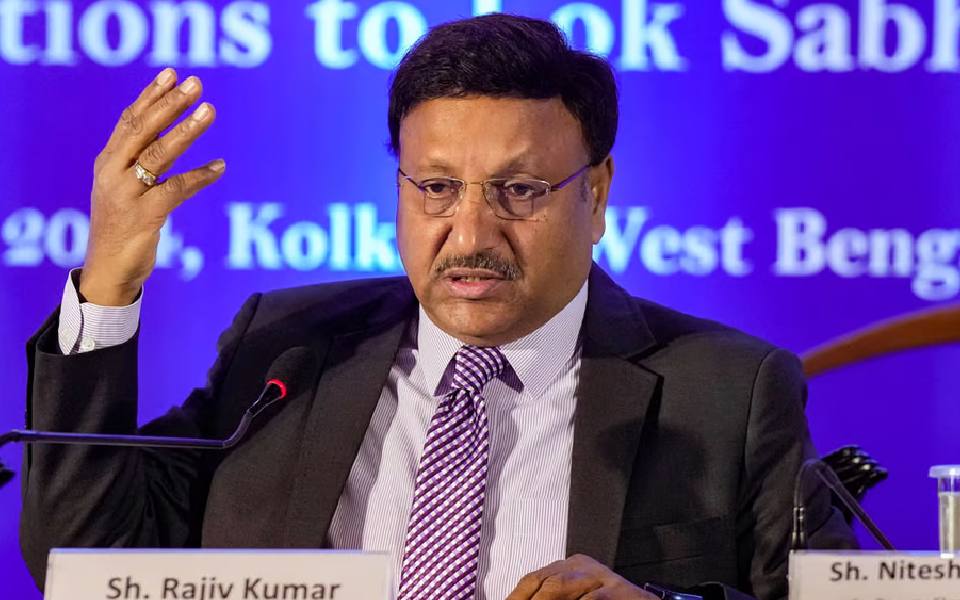
New Delhi, Oct 29: The Election Commission on Tuesday rejected allegations levelled by the Congress over irregularities in the just-held Haryana assembly polls, saying the party was raising "the smoke of a generic doubt" about the credibility of an entire electoral outcome like it did in the past.
In a strongly-worded letter to Congress president Mallikarjun Kharge, the poll panel said such "frivolous and unfounded" doubts have the potential of creating "turbulence" when crucial steps like polling and counting are in live play, a time when both public and political parties' anxiousness is peaking.
The BJP retained power in Haryana winning 48 of the 90 seats in the October 5 assembly elections with the Congress bagging 37, INLD two and Independents three seats.
According to the eight-page letter, the Congress had sought clarification on "perceived lack of clarity" on display of 99 per cent battery status on the control unit of electronic voting machines during counting in some polling stations of 26 assembly seats in Haryana.
"Embedded in this concern was the apprehension of replacement of control unit itself," EC noted.
In its meeting with EC, the party delegation also pointed out that during the counting process in several assembly constituencies, Congress candidates or their representative brought this fact to the notice of returning officers, including through written representations in six constituencies.
Responding to the allegations, the poll authority said, "This is least expected of a national political party. The commission appreciates the criticality of the considered views of political parties in sustaining and strengthening electoral democracy in the country and assures that it will remain committed towards timely grievance redressal."
The poll authority said that "once again", it was compelled to note that with "no evidence whatsoever" of any statutory electoral step being compromised, the Congress has "once again raised the smoke of a generic doubt" about the credibility of an entire electoral outcome "exactly in a similar manner as it has done in recent past".
"At the same time, the commission sincerely urges INC to take firm and concrete steps, matching with the party's long and illustrious standing, to amend their ... approach...," it added.
After a thorough reverification by returning officers of all the 26 assembly constituencies under question, EC told the party that each step in electoral process in Haryana was flawless and done under the watch of party candidates or agents.
Response from EC officials to Congress run into 1600 pages with evidence that authorised representatives of party candidates were present at all stages including placing the battery at time of commissioning and continuously for 7-8 days thereafter till counting was over.
Rubbishing claims of status of battery display in EVM, the EC clarified that battery voltage and capacity have no relevance or connection whatsoever for EVMs vote count operations and integrity. The display of the status of battery on control unit is solely a feature to assist technical teams in monitoring power levels, ensuring that device functions smoothly throughout polling operations.
Any insinuation that battery levels affect voting outcomes is preposterous, the EC said.
It also pointed to instances of Congress picking on ordinary aspects of EVM functioning or electoral process and positioning them as new questions to be answered.
The EC quoted a gist of 42 judgements by constitutional courts which after examining various materials on record and conveyed their faith in the EVM
Let the Truth be known. If you read VB and like VB, please be a VB Supporter and Help us deliver the Truth to one and all.
Sujit Nair raises concerns over speculation of DMK-AIADMK understanding to block TVK
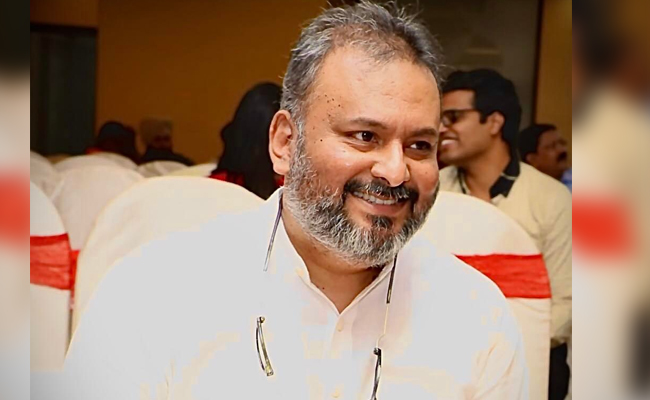
Chennai: Journalist and political commentator Sujit Nair has expressed concern over speculation that the Dravida Munnetra Kazhagam and the All India Anna Dravida Munnetra Kazhagam could explore a post-poll understanding to prevent Vijay-led Tamilaga Vettri Kazhagam from forming the government in Tamil Nadu.
In a social media post, Sujit Nair said the election verdict in Tamil Nadu reflected a clear public demand for political change and argued that the mandate should be respected irrespective of political preferences.
Referring to reports and political discussions surrounding a possible understanding between the DMK and AIADMK, he said he hoped such developments remained only speculative conversations and did not turn into reality.
Nair stated that if such an alliance were to take shape, it would raise serious questions about ideological politics in the country. He said TVK had emerged through a democratic electoral process and that the legitimacy to govern in a parliamentary democracy comes from the people’s verdict.
According to him, attempts to prevent an electoral winner from forming the government through unexpected political arrangements may be constitutionally valid, but many people could view them as politically opportunistic.
He further said that such a move could particularly affect the political image of the DMK, which has historically projected itself around ideology, social justice and opposition politics. Nair said that in ideological terms, the DMK appeared closer to TVK than to the AIADMK, and joining hands with its long-time political rival only to remain in power could weaken its broader political narrative.
He added that the same questions would apply to the AIADMK as well, as the party had spent decades positioning itself against the DMK and such an arrangement could create discomfort among its cadre and supporters.
Drawing a comparison with Maharashtra politics in 2019, Nair said he had expressed similar views when the Shiv Sena formed an alliance with the Indian National Congress and the Nationalist Congress Party after the Assembly elections.
He said post-poll alliances between long-standing political rivals often create a public perception that ideology and electoral mandates become secondary when political power equations come into play.
Nair also said such developments increase public cynicism towards politics and reinforce the belief among voters that ideology is often sidelined after elections.
He maintained that the Tamil Nadu verdict was emphatic and said respecting both the spirit and substance of the mandate was important for the credibility of democratic politics.