ED detects 'unaccounted' cash deals worth Rs 1,000 crore in TASMAC operations in Tamil Nadu
New Delhi, Mar 13 (PTI): The Enforcement Directorate Thursday said it has found "multiple irregularities" in the operations of TASMAC that has monopoly over liquor trade in Tamil Nadu, including "manipulation" in the tender processes and "unaccounted" cash transactions worth Rs 1,000 crore through distillery companies.
The federal agency claimed in a statement that it got "evidence" suggesting these corrupt practices after it raided the employees, corporate offices of distilleries and plants of the Tamil Nadu State Marketing Corporation Limited (TASMAC) on March 6.
ED sources, on the day of the raids, had said the searches were also conducted against "key associates" linked to prohibition and excise department minister Senthil Balaji.
The ED said it found "incriminating" data related to transfer postings, transport and bar licence tenders, indent orders "favouring" few distillery companies, excess charge of Rs 10-30 per bottle by TASMAC outlets, with the "involvement" of TASMAC officials, during the searches.
It said this data shows "manipulation" in TASMAC's transport tender allocations where a "glaring" issue was the "mismatch" between the KYC details of the applicant and the demand draft (DD), suggesting that the final successful bidder did not even obtain the requisite DD before the application deadline.
Tenders were awarded despite having only a single applicant in the final bid. TASMAC paid over Rs 100 crore annually to transporters, as per the ED.
In the case of allocation of bar licence tenders by TASMAC, "evidence" related to "manipulation" of tender conditions was found including a "glaring" issue of applicants without any GST/PAN numbers and KYC documentation being allotted the final tenders, it said.
The agency said it found records to show "direct" communication between distillery companies and higher TASMAC officials, exposing efforts to secure increased indent orders and "undue" favours.
The searches also found "large-scale" financial fraud involving distillery companies like SNJ, Kals, Accord, SAIFL, and Shiva Distillery and bottling entities such as Devi Bottles, Crystal Bottles and GLR Holding, the ED alleged.
The distilleries "systematically inflated" expenses and "fabricated" bogus purchases, particularly through bottle-making companies, to siphon off over Rs 1,000 crore in "unaccounted" cash.
These funds were then used as "kickbacks" to secure increased supply orders from TASMAC, as per the ED.
In the case of the bottling companies, the ED found that they "inflated" sales figures, allowing distilleries to route excess payments, which were later withdrawn in cash and returned after deducting commissions.
"This collusion between distilleries and bottling companies was done through manipulation of financial records, concealed cash flows, and systematic evasion.
"The findings confirm a network where unaccounted cash was deliberately generated through inflated and bogus expenses and subsequently utilized for purposes leading to huge profits," the agency alleged.
Let the Truth be known. If you read VB and like VB, please be a VB Supporter and Help us deliver the Truth to one and all.
Sujit Nair raises concerns over speculation of DMK-AIADMK understanding to block TVK
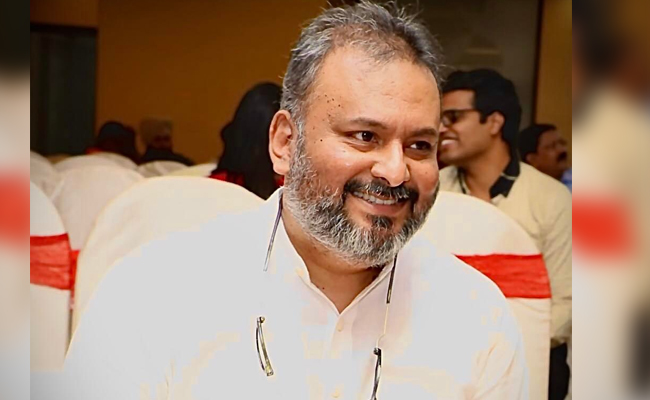
Chennai: Journalist and political commentator Sujit Nair has expressed concern over speculation that the Dravida Munnetra Kazhagam and the All India Anna Dravida Munnetra Kazhagam could explore a post-poll understanding to prevent Vijay-led Tamilaga Vettri Kazhagam from forming the government in Tamil Nadu.
In a social media post, Sujit Nair said the election verdict in Tamil Nadu reflected a clear public demand for political change and argued that the mandate should be respected irrespective of political preferences.
Referring to reports and political discussions surrounding a possible understanding between the DMK and AIADMK, he said he hoped such developments remained only speculative conversations and did not turn into reality.
Nair stated that if such an alliance were to take shape, it would raise serious questions about ideological politics in the country. He said TVK had emerged through a democratic electoral process and that the legitimacy to govern in a parliamentary democracy comes from the people’s verdict.
According to him, attempts to prevent an electoral winner from forming the government through unexpected political arrangements may be constitutionally valid, but many people could view them as politically opportunistic.
He further said that such a move could particularly affect the political image of the DMK, which has historically projected itself around ideology, social justice and opposition politics. Nair said that in ideological terms, the DMK appeared closer to TVK than to the AIADMK, and joining hands with its long-time political rival only to remain in power could weaken its broader political narrative.
He added that the same questions would apply to the AIADMK as well, as the party had spent decades positioning itself against the DMK and such an arrangement could create discomfort among its cadre and supporters.
Drawing a comparison with Maharashtra politics in 2019, Nair said he had expressed similar views when the Shiv Sena formed an alliance with the Indian National Congress and the Nationalist Congress Party after the Assembly elections.
He said post-poll alliances between long-standing political rivals often create a public perception that ideology and electoral mandates become secondary when political power equations come into play.
Nair also said such developments increase public cynicism towards politics and reinforce the belief among voters that ideology is often sidelined after elections.
He maintained that the Tamil Nadu verdict was emphatic and said respecting both the spirit and substance of the mandate was important for the credibility of democratic politics.