ED files charge sheet against 'conman' who duped people in name of PMO, contacts with politicians
New Delhi (PTI): A charge sheet under the anti-money laundering law has been filed against alleged conman Sanjay Prakash Rai alias Sanjay Sherpuria for "cheating" several people by portraying himself to be close to the PMO, senior bureaucrats and politicians, the ED said on Wednesday.
The prosecution complaint was filed before a special Prevention of Money Laundering Act (PMLA) court at the Patiala House Courts in Delhi on July 28 and the court took cognisance of it on July 31, it said in a statement.
The money laundering case stems from an FIR filed by the Lucknow Police alleging that Rai "duped" huge amount of money from general public by portraying himself close to senior politicians and bureaucrats and claiming to be an influencer, a social worker and associated with the Prime Minister's Office (PMO).
The ED had arrested Rai few months back after it conducted searches at 42 locations in Delhi, Gurugram, Faridabad, Noida, Ghazipur, Pune and Gandhidham.
In one instance, the agency alleged, Rai "duped" businessman Gaurav Dalmia and his family to the tune of Rs 12 crore by instilling in him a fear of arrest in an ongoing investigation conducted by the ED.
An amount of Rs 6 crore out of the total amount was received in the bank account of the Youth Rural Entrepreneur Foundation (YREF) in January, 2023 from Dalmia Family Office Trust, wherein Gaurav Dalmia is a trustee, the ED said.
Rai, according to the ED, incorporated the YREF under the Companies Act as a not for profit company on February 16, 2019 and the registered address of YREF was village Karaila, Post Saheri in Ghazipur district of Uttar Pradesh.
However, the actual operational activities of YREF are being done from house No 1, Delhi Riding Club, Safdarjung Road, New Delhi which is also the residential address of Rai, it said.
Although Rai does not hold any official position in YREF, he controls the day-to-day affairs of the company and is the ultimate beneficiary, the agency said.
The said payment of Rs six crore was received by Rai "under the guise of donation in YREF from Dalmia Family Office Trust".
Rai is alleged to have forged documents in respect of payments of Rs 6 crore received from Dalmia Family Office Trust to conceal the true nature of transactions.
In addition to the Rs six crore received in the account of YREF, a sum of Rs six crore was received "in cash" by Rai from Dalmia which was subsequently "layered and placed" in the bank accounts of his sons Yash Sanjayprakash Rai and Sujal Sanjayprakash Rai in the form of accommodation (hawala) entries from certain Delhi based jewellers in the garb of sale of old jewellery, the ED alleged.
In another instance, Rai is alleged to have cheated Mohit Singh, Managing Director of Shipra Estate Ltd, by showing his contacts with senior politicians and bureaucrats and "duped" him to the tune of Rs 1 crore by making false promises.
The payment of Rs 1 crore was received in the bank account of YREF "under the garb of donation", the ED alleged.
Rai also "duped" Naveen Kumar Malhotra, Director of Bindu Fashion Pvt Ltd to the tune of Rs 1 crore and Sunil Chand Goyal, Director of Metadesign Solution Pvt Ltd, to the tune of Rs 51.50 lakh by "making false promises and impressing them by portraying himself as an influencer, a social worker and associated with PMO."
The ED had earlier attached assets worth more than Rs 14.54 crore of Rai.
Let the Truth be known. If you read VB and like VB, please be a VB Supporter and Help us deliver the Truth to one and all.
CCTVs in police stations: SC asks amicus to convene meeting on utilisation of funds
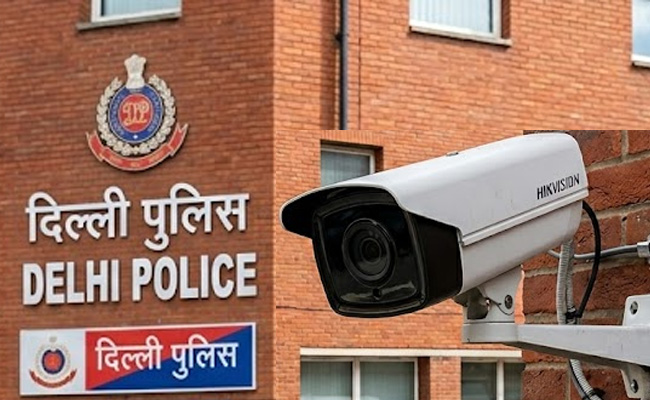
New Delhi (PTI): The Supreme Court on Tuesday said that a meeting be convened on May 6 to deliberate on the aspect of utilisation of funds by the states on installation of CCTVs in police stations across the country.
A bench of Justices Vikram Nath and Sandeep Mehta asked senior advocate Siddhartha Dave, who is assisting it as an amicus curiae in a suo motu matter concerning lack of functional CCTVs in police stations, to hold a meeting on May 6 with the Centre, all states and Union Territories.
"We are of the view that a meeting be convened by the amicus, as done earlier, in which the home secretary of the central government or his nominee not below the rank of joint or additional secretary and the home secretary of states/Union Territories will participate," the bench said.
The issue cropped up after the amicus flagged the aspect of utilisation of funds by the states.
Dave told the bench that in UTs, the Centre gives 100 percent funds while in hilly states, the central government gives 90 percent funding.
He said in remaining states, the Centre gives 60 percent while the rest 40 percent funding is by the respective state.
"Why don't we get responses of the states only on utilisation of funds?" the bench said.
The top court suggested that the amicus can convene a meeting with the Centre, states and UTs on the issue.
It posted the matter for hearing on May 13 and said that a report be submitted before it.
On April 7, the Centre told the top court that all issues concerning installation of CCTVs in police stations would be sorted out within two weeks.
Attorney General R Venkataramani had told the bench that he was taking stock of the issue and a lot of things were happening.
On February 26, the apex court directed the Centre and others to participate in a meeting to deliberate upon the feasibility, modalities and implementation framework of the issues, including creation of a centralised dashboard and standardisation of CCTV infrastructure in police stations.
The top court had earlier directed registration of a suo motu case over the lack of functional CCTVs in police stations after taking cognisance of a media report.
The apex court had in 2018 ordered the installation of CCTV cameras across police stations to check human rights abuses.
In December 2020, the top court directed the Centre to install CCTV cameras and recording equipment at the offices of investigating agencies, including the Central Bureau of Investigation (CBI), the Enforcement Directorate (ED) and the National Investigation Agency (NIA).
It said that states and UTs should ensure that CCTV cameras were installed at every police station, at all entry and exit points, main gate, lock-ups, corridors, lobby and reception, as well as in areas outside the lock-up rooms so that no part was left uncovered.
The top court said that CCTV systems must be equipped with night vision and have audio as well as video footage.
The court made it mandatory for the Centre, states and the UTs to purchase such systems which allow storage of data for at least one year.